Grief rarely arrives with the courtesy of logic.
You can spend a decade studying animal physiology, memorizing blood panels, and logging thousands of hours beside an enclosure wall, and none of that clinical preparation will save you when the creature you bottle-fed at three in the morning simply stops breathing. When a zookeeper speaks about the "unfairness" of an animal's death being "hard to bear," they are not offering a polite soundbite for the evening news. They are confessing to a specific, suffocating kind of heartbreak that the rest of the world only ever sees through a pane of thick acrylic.
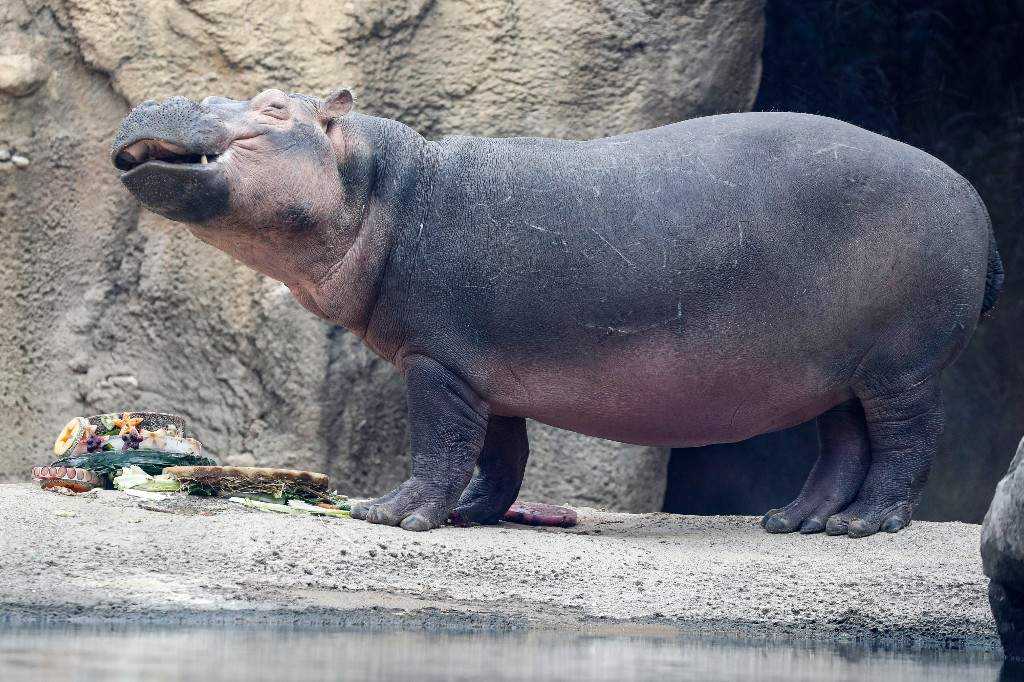
To understand why the loss of a beloved animal—or the looming shadow of mortality around a global icon like Cincinnati’s famous hippo, Fiona—cuts so deeply, you have to step behind the public viewing glass. Out here, on the visitor side of the habitat, an animal is a symbol. It is a plush toy in the gift shop, a viral video playing on a phone during a lunch break, a triumphant story of beating impossible odds. Inside the concrete corridors of the holding barn, where the air smells sharply of wet hay, chlorine, and warm skin, that same animal is a daily, breathing responsibility.
The Architecture of Impossible Survival
Think back to January 2017. When Fiona entered the world at the Cincinnati Zoo & Botanical Garden six weeks premature, weighing just twenty-nine pounds—roughly twenty-five pounds lighter than the lowest recorded surviving birth weight for a Nile hippopotamus—nobody expected her to see spring. Survival, in those early weeks, was not a grand cinematic victory. It was an exhausting, minute-by-minute war of attrition fought by veterinary technicians, nutritionists, and keepers who slept on cots near her stall.
They tubed her for fluids. They monitored her temperature around the clock. They celebrated a single ounce gained on a digital scale as if they had discovered a cure for an incurable disease.
When you pour that much human willpower into keeping a fragile life tethered to the earth, something irreversible happens to the bond between caregiver and creature. In veterinary medicine and zoo husbandry, there is an unspoken truth that every seasoned keeper eventually learns the hard way. The harder you fight to pull an animal back from the brink at the beginning of its life, the heavier the debt becomes when nature inevitably comes to collect at the end.
Consider a hypothetical scenario that plays out in zoos and wildlife sanctuaries every single year. Imagine a keeper—let us call her Elena—who has spent twelve years tending to the same aging mammal. Elena knows the exact cadence of the animal’s breathing when it is content versus when it is hiding pain. She knows which side of its jaw favors soft hay and how its ears flick just before a thunderstorm rolls in. To the three million visitors who walk past the exhibit each year, the animal looks eternal, majestic, and untouchable. To Elena, every subtle hesitation before stepping into the pool is a quiet alarm bell ringing in her chest.
Animals, by evolutionary design, are masters of concealment. In the wild, showing weakness is an invitation to predators, so even creatures raised entirely in human care instinctively mask discomfort until their bodies can no longer compensate. By the time a keeper notices that an animal is slowing down, the underlying biological reality has often been advancing in silence for months.
Why Unfairness Feels Personal
When a keeper uses the word unfair to describe a death, critics from the outside sometimes bristle. Nature, after all, is neither fair nor unfair. A Nile hippopotamus in the wild typically lives between forty and fifty years, navigating droughts, territorial battles, and parasites along the rivers of sub-Saharan Africa. Under human care, shielded from predators and given tailored nutrition, hippos frequently reach their fifties or even sixties.
So why does loss feel so profoundly unjust to the people holding the feeding buckets?
Because human care rewrites the emotional contract. When humans intervene to save a premature calf, rehabilitate an injured raptor, or manage a chronic condition in an aging primate, we temporarily suspend the cold arithmetic of natural selection. We replace indifference with devotion. We build entire routines around the radical premise that this specific life matters enough to bend schedules, budgets, and sleep cycles to preserve it.
Then, one Tuesday morning, biology reasserts itself. A sudden complication, an untreatable infection, an organ system that simply gives out despite world-class diagnostics—and all that accumulated love hits a brick wall.
There is a particular cruelty in watching an animal die prematurely, or watching the keepers who raised a miracle confront the limits of modern medicine. In the public imagination, a miracle story is supposed to have a clean, permanent arc. You survive the crisis, you grow strong, and you live happily ever after while millions of people watch your birthday livestreams. Real biology does not respect narrative structure. Real bodies remain vulnerable long after the headlines fade.
The Invisible Weight of Public Mourning
Most people experience grief in private rooms surrounded by family who share the same memories. Zookeepers experience grief in a fishbowl.
When an iconic animal falls ill or passes away, the public reaction is immediate, intense, and often overwhelming. Millions of fans who felt a genuine emotional connection from afar flood social media with tributes, questions, and occasionally, misplaced anger. People want to know what went wrong. They want to know why the veterinarians could not fix it. They want an explanation that makes the tragedy feel preventable, because believing someone made a mistake is psychologically easier than accepting that even our best efforts cannot conquer mortality.
Meanwhile, the people who actually held the animal’s head, who cleaned its wounds, and who had to make the agonizing clinical decisions are expected to remain composed. They have to answer press inquiries while their boots are still damp from the barn floor. They have to show up the next morning at six o'clock because forty other animals in their care still need breakfast, enrichment, and medication, and animals do not pause their needs for human sorrow.
This phenomenon has a clinical name among veterinary professionals and animal care workers: compassion fatigue compounded by disenfranchised grief.
For decades, society treated the mourning of an animal as a lesser category of sorrow—something you were supposed to brush off quickly so you could get back to "real" responsibilities. Even today, while people readily understand grieving a family dog or cat, the bond between a keeper and a three-thousand-pound megafauna species remains strangely misunderstood. Keepers do not cuddle hippos or big cats; safety protocols and respect for wild instincts forbid it. Yet the intimacy built through years of daily training, medical conditioning, and non-verbal communication runs just as deep as any household bond.
When a hippo voluntarily opens its massive jaws so a keeper can inspect its molars without anesthesia, that is not mere conditioning. That is trust earned across thousands of patient repetitions. When that animal dies, the keeper loses not just a charge, but a daily dialogue that existed nowhere else on earth.
What Happens Behind the Barn Doors
To grasp the sheer physical and emotional toll of caring for large, charismatic animals, it helps to look at what a typical day actually requires. Long before the gates open to families pushing strollers, keepers are already hauling fifty-pound bales of hay, scrubbing algae off underwater viewing windows, testing water filtration chemistry, and preparing precise vitamin supplements hidden inside hollowed-out melons or fish.
Every interaction is an exercise in hyper-vigilance. Keepers track fecal consistency, appetite shifts down to the gram, subtle changes in gait, and social dynamics within a herd or pod. In a facility like Cincinnati’s hippo cove, where mother Bibi, young Fritz, and Fiona share space, keepers are constantly reading body language to ensure harmony in a confined environment.
Think of a keeper’s awareness like the dashboard of a commercial airliner. To a passenger sitting in row twenty-two, the flight feels smooth, quiet, and effortless. Up in the cockpit, the pilots are scanning dozens of gauges, monitoring pressure differentials, wind shear, and fuel burn every few seconds. When an animal gets sick, the keeper is in that cockpit watching the warning lights blink on one by one, knowing full well that sometimes, no matter how skillfully you fly the plane, you cannot outrun the storm.
And when the loss finally happens, there is no bereavement leave built into the ecosystem of a zoo. You cannot lock the doors and close the building for a week to mourn. The surviving animals in the habitat notice the absence immediately. Hippos, elephants, primates, and birds are acutely perceptive creatures; they recognize when a companion is missing from the routine. Keepers must manage their own heartbreak while simultaneously supporting the surviving animals through behavioral changes, stress, or confusion.
The Paradox of Loving What We Cannot Keep
Why do people choose this work, knowing how it almost always ends?
Because human beings are hardwired to care for what is placed in our hands. Every keeper who walks through the back gates of a sanctuary or zoological park knows the math going in. Unless you work with giant tortoises or certain parrots, you will likely outlive almost every animal you ever love. You are signing up for a career defined by recurring goodbyes.
Yet knowing the outcome does not dull the blade when it falls. In fact, the longer you do the work, the more acutely you feel the fragility of every healthy day. You stop taking a normal appetite for granted. You linger for an extra thirty seconds watching an animal float lazily in sunlit water, memorizing the ripple of the surface and the slow blink of heavy eyes, because you know how quickly a normal afternoon can turn into an emergency call at midnight.
Public figures like Fiona carry an extra burden on top of this already heavy reality. Because she became an international symbol of resilience during a divided, anxious era, millions of people projected their own hopes onto her survival. She was proof that something small and seemingly doomed could fight its way into the light. When a keeper speaks candidly about how hard it is to bear the unfairness of death, that honesty strips away the fairy tale and reminds us of the raw humanity holding the entire enterprise together.
We owe it to those caregivers—and to the animals themselves—to look past the cute postcards and appreciate the true cost of devotion. Conservation, veterinary science, and modern animal care are not sterile technical fields driven solely by data spreadsheets and habitat blueprints. They are powered by ordinary people willing to break their own hearts over and over again so that another species gets a fighting chance to thrive.
Out beyond the viewing glass, the water settles back into stillness, and the morning shift begins again with a fresh bucket of feed and an empty stall that still smells faintly of hay.