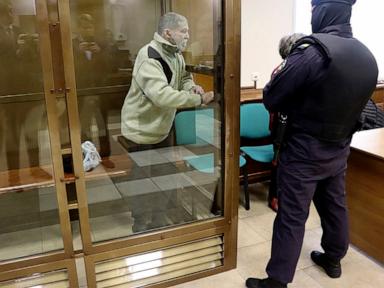
Cold.
That is the first memory everyone brings back from a Russian detention cell—not the steel doors, not the fluorescent hum overhead, not the sudden knock of a guard at three in the morning, but the way the cold seeps straight through wool socks and settles into the marrow of your shins until you forget what warm toes feel like. For a different look, check out: this related article.
When a wire headline flashes across a screen saying that Washington is nearing a deal with Moscow to free multiple jailed Americans, most readers skim it over lukewarm coffee. A line about anonymous sources. A mention of high-level talks. A quiet sense of relief that maybe, finally, some names will be crossed off a grim ledger.
Yet behind every "deal" sits a ledger written in human hours, diplomatic trade-offs, and agonizing math. When governments barter for prisoners held abroad, no one walks away with clean hands or simple victories. Every release comes at a cost that is rarely printed in bold type—and for the families waiting at home, hope is the sharpest blade in the room. Similar reporting on this matter has been shared by Associated Press.
I have sat across from parents and spouses who spent years refreshing embassy portals and counting holidays by how many empty chairs sat around a kitchen table. Their exhaustion is bone-deep. You learn quickly that when a loved one is locked up thousands of miles away under accusations that feel like theater, ordinary life splits in two: there is what happens on the news, and there is what happens inside a family's chest every time an unknown number lights up a phone screen.
Even I catch myself doubting the whispers of a breakthrough. After enough false dawns—a rumor in a hallway, a stalled backchannel, a sudden silence from officials—skepticism becomes a form of self-protection. If you don't let yourself believe the tarmac is waiting, the disappointment hurts a little less when the plane doesn't land.
How a Name Becomes Bargaining Chips
To understand why these negotiations drag out for months or years, you have to look at how leverage works when two powers are locked in deep geopolitical rivalry.
Consider a hypothetical character to ground this reality—let's call him David Miller, a mid-career engineer from Ohio who traveled abroad for work or family and found himself swept into a dispute he barely understood. One moment he is booking a return flight; the next he is staring at a barred window in a city where the legal system answers to politics first and evidence second.
In diplomatic terms, David is no longer just a private citizen with a passport and a family back home. He becomes a chip on a table.
Negotiators rarely trade in pure goodwill. Instead, they trade in asymmetry. One side holds people; the other holds sanctions relief, frozen assets, intelligence concessions, or individuals convicted of serious offenses in its own courts. When a government agrees to release detainees, it almost always demands something concrete—or at least face-saving—in return.
A useful analogy is a tense poker game played in the dark with markers that aren't printed in dollars. Every player knows the pot is steep, and every player worries that folding too early signals weakness while calling too high invites a worse trap. The tragedy is that the cards on the table have pulse rates, memories, and birthdays.
What "Nearing a Deal" Actually Means Behind Closed Doors
When sources tell reporters that a deal is "nearing," the phrase can mean several very different things. Sometimes it means lawyers and envoys have narrowed down the list of names and the exact sequence of transfers. Other times it means a political window has cracked open, even if final sign-off still depends on one stubborn sticking point.
History shows how fragile those final stages can be. Prisoner swaps have collapsed over a single name, a dispute over where a transfer takes place, or a sudden flare-up in broader tensions. Negotiations often happen through quiet intermediaries, third countries, or discreet diplomatic channels long before any official announcement reaches the public.
This is where confusion creeps in for ordinary people watching from afar. Why doesn't a government just demand freedom unconditionally? Because demanding something and securing it are two different worlds. When you do not control the prison gates on foreign soil, persuasion, pressure, and trade-offs become the primary tools available—even when those tools feel distasteful to the public.
The Moral Knot No Family Should Have to Untie
Talk of a multi-person release brings a distinct kind of ache: the fear of who is on the manifest and who is left behind.
Imagine a second hypothetical figure—let's call her Hannah, whose brother has been detained in another facility across the country. When news breaks that multiple Americans could come home soon, Hannah's heart leaps before her mind can stop it. Then the second thought arrives, cold and heavy: Multiple doesn't always mean all.
That split emotion is one of the cruelest parts of hostage and wrongful-detention crises. Families often form tight bonds, sharing legal tips, translating notices, and leaning on one another through sleepless nights. When a deal takes shape that includes some detainees but excludes others, relief and grief collide in the very same breath.
Critics also raise a hard question that refuses to go away: when a country trades for detained citizens, does it inadvertently encourage foreign powers to detain more people in the future? It is not a theoretical debate among pundits. It is a genuine strategic dilemma that weighs short-term rescue against long-term deterrence.
There is no painless answer to that tension. Leaving citizens behind in harsh conditions violates a basic moral instinct—the promise that your country will fight to bring you home. Yet giving adversaries a reliable blueprint for extracting concessions carries real risks down the road. Governments wrestle with that paradox every time they weigh a deal.
Why Secrecy Shadows Every Step
If you have ever wondered why officials speak in riddles right up until an aircraft touches down on friendly soil, the answer comes down to fragility.
Premature leaks can spook negotiators, invite domestic pushback, or give hardliners on either side an excuse to derail a delicate arrangement. A single public boast can turn a quiet compromise into a political trap. So diplomats keep their mouths shut, families hold their breath, and reporters rely on careful sourcing and guarded phrasing.
For the rest of us, waiting in the dark feels maddening. We want clarity. We want names, timelines, and guarantees. Instead, we get fragments—a shift in tone, a quiet diplomatic movement, a hint that talks are advancing.
And yet, when a deal finally crosses the finish line, the fog lifts all at once. One day a name is trapped in bureaucratic limbo and prison walls; the next, someone is stepping onto a plane, hearing an accent that sounds like home, and feeling the air shift from dread to disbelief.
A single streetlamp flickers on against early winter dusk, throwing a pool of amber light across fresh snow where no footsteps have disturbed the quiet yet.


