It usually starts at two in the morning.
You are lying flat on your back, staring at the faint glow of the hallway nightlight, when a bird suddenly gets trapped behind your ribs. It doesn't beat in a steady, reliable rhythm—the kind you barely notice while walking the dog or carrying groceries up the stairs. Instead, it flutters. It thrashes against your sternum with erratic, frantic wings, skipping a beat, then slamming three into the space where one belongs.
If you have ever lived with atrial fibrillation, you know that specific brand of midnight terror.
For millions of people, AFib isn't just a clinical entry on a cardiologist’s clipboard; it is a low-grade, persistent haunting. It is the reason you hesitate before booking a flight to visit your grandkids. It is the quiet calculation you make every time you reach for a cup of coffee or walk up a steep hill, wondering if this will be the trigger that sends your pulse spiraling into a chaotic 160 beats per minute.
For decades, fixing this electrical storm inside the heart required a crude kind of violence. Doctors had to go inside the chest and either burn the misfiring tissue or freeze it dead. Now, a team of Canadian researchers has pioneered a fundamentally different approach—one that doesn't rely on extreme heat or cold, and one that might finally rewrite the rules of cardiac care.
The Architecture of a Broken Rhythm
To understand why this Canadian breakthrough matters, you first have to picture what is actually happening inside an arrhythmic heart.
Think of a healthy heart like a symphony orchestra. There is a conductor at the top—a tiny cluster of cells called the sinoatrial node—that taps a baton and sends a clean, unified electrical wave down through the upper chambers (the atria) and into the lower chambers (the ventricles). Lub-dub. Lub-dub. Smooth, synchronized, effortless.
In atrial fibrillation, that conductor loses control. Rogue electrical signals erupt from the tissue surrounding the pulmonary veins, flooding the upper chambers with static. Instead of contracting smoothly to push blood downward, the atria just quiver.
Imagine a crowded room where fifty people suddenly start shouting different instructions at the exact same time. Nothing gets done. Blood pools in the corners of those quivering chambers, thickening, waiting to clot. That is why AFib increases the risk of stroke fivefold. Over 37 million people worldwide—and roughly 200,000 Canadians alone—carry this ticking clock inside their chests.
Historically, when medications failed to quiet the noise, electrophysiologists turned to catheter ablation. They threaded thin, flexible wires up through a vein in the groin, guided them into the heart, and built a literal scar wall around the pulmonary veins to trap the rogue signals.
To build that wall, they had two weapons: radiofrequency energy, which cooks the tissue using intense heat, or cryoablation, which destroys it with freezing temperatures. Both work. Both have saved countless lives.
Both also carry a terrifying catch.
The Collateral Damage of Fire and Ice
When you apply extreme heat or freezing cold inside the paper-thin walls of the human heart, the energy doesn't always stop where you want it to. Thermal energy spreads. It bleeds outward into the surrounding neighborhood.
Consider a hypothetical patient—let's call him Arthur, a 64-year-old retired carpenter from Ontario. Arthur has lived with paroxysmal AFib for six years. The beta-blockers leave him exhausted, wading through every afternoon like he is knee-deep in wet cement. He decides to get a traditional thermal ablation. He goes into the catheterization lab hoping to get his life back, fully aware of the standard risks printed on the consent form.
What happens if that thermal energy drifts just a few millimeters too far?
Directly behind the left atrium sits the esophagus. Too much heat can burn a hole straight through the wall separating the heart and the food pipe—a rare, catastrophic complication called an atrio-esophageal fistula that is fatal more than half the time. A fraction of an inch to the right runs the phrenic nerve, which controls the diaphragm; freeze it accidentally, and the patient wakes up unable to take a full breath. Even the pulmonary veins themselves can scar down and narrow, strangled by the very procedure meant to heal them.
For years, cardiologists accepted this tightrope walk as the price of admission. To stop the electrical chaos, you had to destroy the tissue, and destroying tissue with heat or cold meant risking everything nearby. Doctors had to dial back their power near sensitive structures, sometimes leaving tiny gaps in the scar wall—gaps that allowed the AFib to sneak back in months later, forcing patients like Arthur onto the operating table a second or third time.
We were fighting a precision electrical problem with a blowtorch and an ice pick.
Enter the Microsecond Pulse
This is where the Canadian medical community stepped in and changed the physics of the operating room.
Across major cardiac centers in Canada—including groundbreaking clinical trials and early commercial adoptions led by electrophysiologists in Vancouver, Montreal, and Toronto—specialists have been spearheading the use and refinement of Pulsed Field Ablation (PFA), alongside novel single-shot mapping and delivery systems developed with heavy Canadian clinical leadership.
Forget heat. Forget ice.
Pulsed Field Ablation uses irreversible electroporation. Instead of cooking or freezing heart cells, the catheter delivers ultra-rapid, high-voltage electrical pulses—each lasting mere microseconds.
To understand how this works, imagine walking through a dense forest where every species of tree has a different threshold for wind. A hurricane—thermal ablation—flattens everything: the oaks, the pines, the undergrowth, the wildlife. Pulsed Field Ablation is a custom-tuned gust of wind that only knocks down one specific type of tree while leaving every other plant completely untouched.
Every cell type in the human body has a different electrical threshold. Heart muscle cells (cardiomyocytes) happen to be uniquely sensitive to high-voltage, microsecond electrical fields. When the catheter fires these rapid pulses, it punches microscopic, permanent pores into the membranes of the misfiring heart cells. The cells lose their integrity and quietly shut down.
Meanwhile, the esophagus right next door? Unharmed. Its cells require a much higher electrical threshold to be damaged.
The phrenic nerve? Untouched.
The delicate lining of the blood vessels? Completely intact.
It is tissue-selective. For the first time in the history of cardiac electrophysiology, doctors can eliminate the exact cells causing atrial fibrillation without worrying about burning a hole into adjacent organs.
Speed Changes Everything
There is another, less obvious revolution happening inside these Canadian catheterization labs, and it comes down to the clock.
A traditional radiofrequency ablation is a painstaking, point-by-point exercise. The electrophysiologist has to maneuver the tip of the catheter to one tiny spot on the heart wall, hold it steady while the heart beats beneath it, apply heat for twenty or thirty seconds, move two millimeters over, and do it again. And again. Sometimes eighty or a hundred times to complete a single ring around the pulmonary veins.
A single procedure routinely stretches to three or four hours. That means three or four hours under general anesthesia. Three or four hours of fluids pumping into the patient's bloodstream. Three or four hours of the surgical team standing in heavy lead aprons under X-ray fluoroscopy.
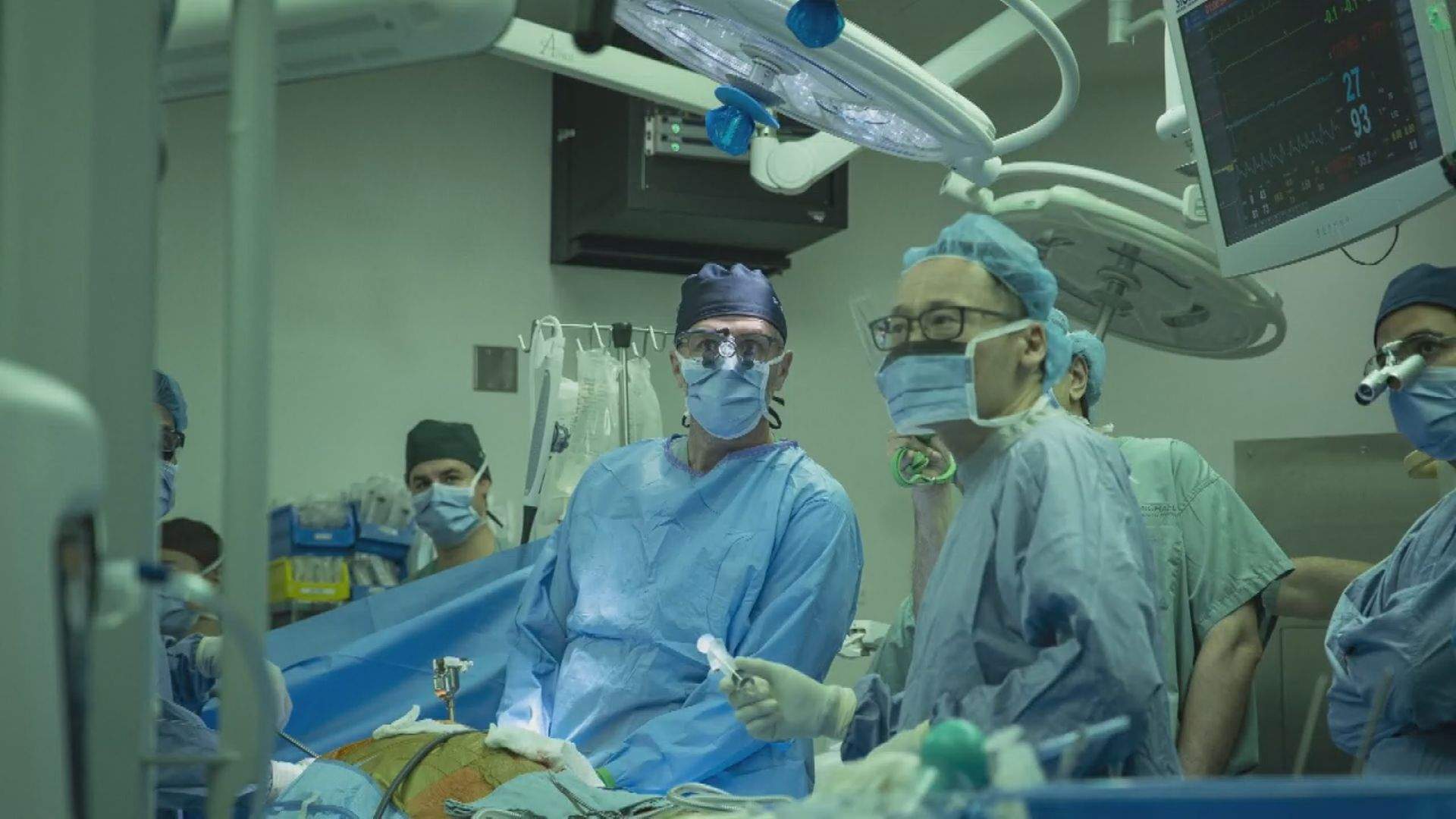
With the new Canadian-trialed PFA catheters—many shaped like expandable baskets or flower petals that press gently against the opening of the pulmonary vein—a doctor doesn't have to dot the map one millimeter at a time. They position the array, verify contact, and deliver a burst of pulses that treats the entire circumference in seconds.
Procedures that used to consume half a morning are now being completed in under an hour.
When you cut a heart procedure from four hours down to fifty minutes, the ripple effects are enormous. Anesthesia risks plummet. Patients wake up clearer, recover faster, and frequently walk out of the hospital the very same day. And in a publicly funded healthcare system like Canada’s—where surgical waitlists can stretch for months while patients sit at home enduring terrifying episodes of arrhythmia—tripling the number of procedures a lab can perform in a single day isn't just a technical metric. It is the difference between a patient getting treated this autumn or suffering a preventable stroke next spring.
What It Actually Feels Like to Be Fixed
Let's go back to Arthur, our hypothetical carpenter, sitting in recovery after undergoing this new procedure.
In the old paradigm, recovery from an ablation often felt like being kicked in the chest by a mule. Because thermal ablation triggers a massive inflammatory response—the body reacting to actual burns inside the heart—patients frequently spent weeks dealing with chest soreness, fatigue, and "blanking period" arrhythmias as the swollen tissue slowly healed.
With Pulsed Field Ablation, because there is no thermal burn, there is virtually no collateral inflammation. The cells don't char; they simply undergo programmed cell death and clear away cleanly.
Arthur wakes up. He touches his chest. There is no deep, aching burn behind his breastbone. The nurses check his groin where the catheter entered, monitor his rhythm for a few hours, and by dinner time, he is sitting at his own kitchen table.
Three weeks later, he is back in his workshop. He lifts a heavy sheet of birch plywood. He waits for that familiar, sickening lurch in his throat—the sensation of the trapped bird waking up.
Nothing happens. Just a steady, quiet, unremarkable thump. Sixty-four beats a minute.
The Doubts and the Fine Print
It is tempting, whenever a medical breakthrough makes headlines, to treat it like a magic wand. We want clean victories. We want to believe that a terrifying, chronic disease has been solved overnight.
We need to be honest about what this technology is—and what it isn't.
First, it is not a cure for everyone. Atrial fibrillation is a progressive beast. If someone has lived with persistent, continuous AFib for a decade, their heart muscle has often remodeled itself, stretching and scarring in ways that no single catheter procedure can completely reverse. While clinical trials in Canada and globally show success rates around 75% to 85% for early-stage (paroxysmal) AFib—matching or beating the best thermal ablations while slashing serious complication rates to near zero—patients with advanced, long-standing AFib still face tougher odds and sometimes need follow-up interventions.
Second, new technology brings new questions. Because the electrical pulses are so intense, they can occasionally cause temporary spasms in nearby coronary arteries if fired too close to them, though doctors easily manage this with standard nitroglycerin. And while the short- and medium-term data are extraordinary, electrophysiologists are still tracking five- and ten-year durability curves to ensure those microsecond pores stay permanently closed over decades.
Even the rollout itself faces real-world friction. Specialized PFA generators and single-use catheters carry steep upfront price tags. Hospital administrators across Canada and North America have to weigh the higher cost of the equipment against the massive downstream savings of shorter operating times, fewer overnight hospital stays, and almost zero catastrophic complications.
Why This Moment Matters
If you have never felt your own heart lose its mind, it is hard to appreciate how deeply an arrhythmia hijacks a human life.
People think of heart disease as a sudden, dramatic event—a clutching of the chest in a movie scene. AFib is rarely like that. It is an erosion of confidence. It turns your own body into an unreliable narrator. You stop trusting your pulse. You sleep propped up on three pillows because lying on your left side seems to trigger the flutter. You smile through family dinners while secretly pressing two fingers against your carotid artery under the table, counting beats, praying the rhythm holds until dessert.
For thirty years, the best answer medicine could offer those people was a choice between lifelong blood thinners and rate-control drugs that dulled their energy, or an invasive procedure that used extreme heat or freezing cold to burn away the problem—hoping the damage stayed strictly inside the lines.
That trade-off is finally collapsing.
By trading fire and ice for microsecond electrical precision, the teams advancing this technology in Canadian labs and hospitals have done something rare in modern medicine: they made a complex procedure both dramatically safer and radically faster at the exact same time.
Somewhere tonight, at two in the morning, someone is going to wake up staring at the ceiling, waiting for that frantic fluttering behind their ribs to begin—only to realize, for the first time in years, that the room is completely quiet.