The grease under a machinist’s fingernails does not wash off with soap. You need pumice, hot water, and a stiff brush, and even then, a dark crescent stays wedged beneath the nail bed for days.
For anyone who has ever stood on a concrete factory floor for ten hours, watching the clock hands crawl while the vibration of a stamping press hums straight up through the soles of rubber-soled boots, politics rarely feels like a grand philosophical debate. It feels like the price of cooking oil on a Tuesday evening. It feels like whether the overtime check clears before the rent is due. It feels like the quiet, gnawing fear that the machine you operate today will be sold off for scrap next spring.
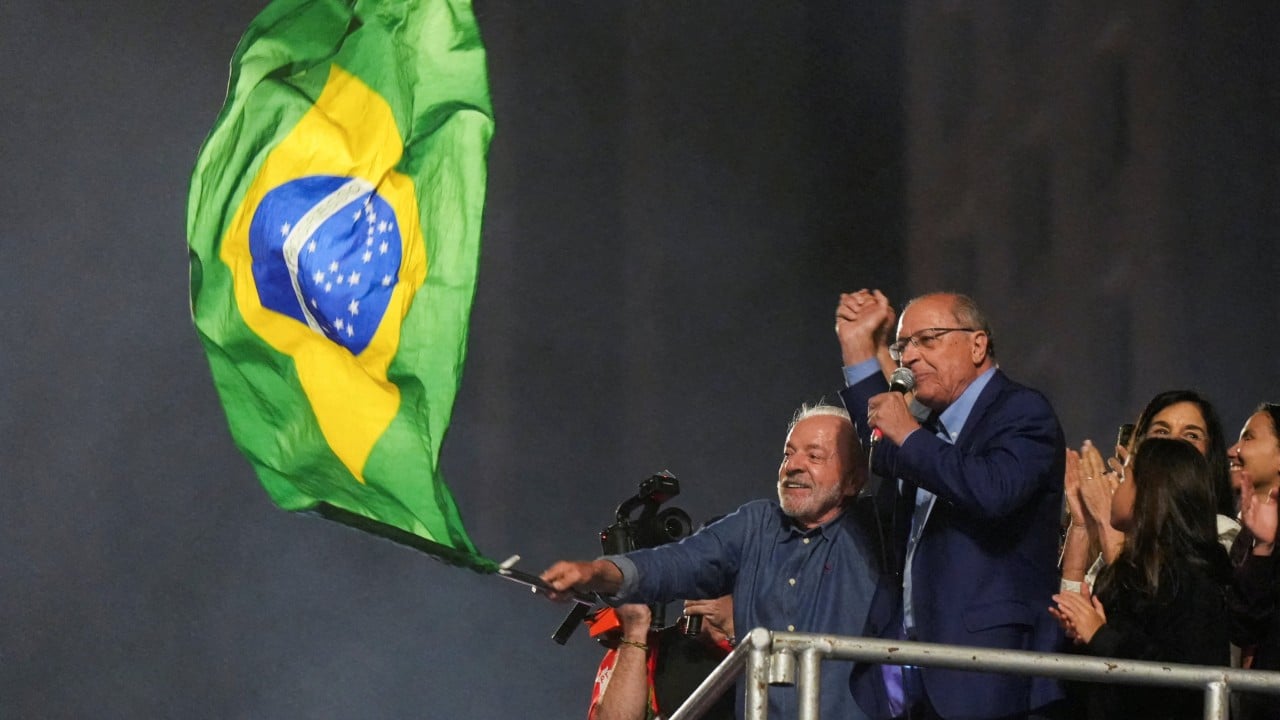
When news broke out of Brasília that Luiz Inácio Lula da Silva had secured an unprecedented fourth presidential term in Brazil, the headlines in the financial press were predictable. Markets reacted to fiscal projections. Analysts debated commodity prices, trade balances, and legislative coalitions. Yet, thousands of miles away—from union halls in the American Midwest to port docks in southern Europe and textile workshops across Latin America—a very different conversation was taking place.
Left-leaning leaders and labor organizers around the world wasted no time in hailing Lula’s fourth victory as a rare beacon of hope for workers’ movements. To understand why a man in his eighties winning an election in South America sparked such immediate resonance among labor advocates globally, you have to look past the ballot tallies and understand the biography that sits behind the name.
The Man Who Lost a Finger to the Lathe
Long before he wore a presidential sash, Lula was a metalworker in São Bernardo do Campo, the industrial heartland outside São Paulo. In the 1960s, working a night shift on a lathe, an accident severed the little finger of his left hand. According to historical accounts of his early life, he had to walk to multiple clinics before receiving proper medical care—an experience that permanently shaped his view of how industrial economies treat the people who actually build them.
That missing finger became more than a physical mark; it became a shorthand for a specific kind of political legitimacy. In an era when heads of state across the globe increasingly emerge from elite law schools, investment banks, or multi-generational political dynasties, Lula’s rise from an impoverished childhood in Pernambuco to the leadership of the Metalworkers' Union in the late 1970s remains an anomaly. During Brazil’s military dictatorship, he led massive strikes that defied authoritarian bans, standing on sound trucks to address tens of thousands of auto workers demanding wages that kept pace with inflation.
When international labor leaders point to his fourth win today, they are not merely applauding a party platform. They are reacting to the survival of a political archetype they feared had gone extinct: the working-class leader who governs without abandoning the vocabulary of the shop floor.
Consider a hypothetical scenario to see why this distinction matters so deeply to modern labor organizers. Imagine a logistics warehouse worker—let’s call her Elena—sorting packages on a midnight shift in a major port city. Over the last decade, Elena has watched her real wages stagnate while the cost of housing and groceries climbed steadily. She has seen algorithms dictate her bathroom breaks and temporary contracts replace permanent jobs with benefits. When mainstream politicians speak to Elena, they often talk about macroeconomic growth, digital transformation, or deregulation. They rarely talk about dignity, collective bargaining, or the right to a predictable life.
For organizers trying to unionize Elena’s warehouse, the hardest obstacle is not always management’s opposition; it is fatalism. Workers frequently believe that the global economy is a force of nature, like gravity or weather, entirely beyond human negotiation. A victory by a former union leader in the world’s fifth-most populous nation interrupts that fatalism. It serves as proof of concept that organized labor can still contest—and win—state power.
What Left Leaders Are Actually Celebrating
Following the election results, statements of congratulations poured in from progressive presidents, European left-wing parliamentarians, and international trade union federations. According to public statements from these leaders and labor coalitions, their optimism rests on three specific pillars that extend well beyond Brazil’s borders.
First is the principle of wage-led growth. During his earlier presidencies between 2003 and 2010, Lula’s administration implemented policies that significantly raised the real minimum wage—linking adjustments to inflation plus GDP growth—while expanding social transfer programs like Bolsa Família. According to data from the World Bank and Brazil’s own statistical agencies during that period, tens of millions of Brazilians moved out of extreme poverty, and domestic consumption surged because low-income families immediately spent their extra earnings on food, clothing, and home repairs.
For economists aligned with labor movements, this model directly challenges decades of supply-side orthodoxy, which argues that cutting corporate taxes and holding down wages is the only reliable path to prosperity. Seeing the architect of Brazil’s minimum-wage formula return to office gives left-wing policymakers in other countries fresh ammunition to argue that putting money in workers’ pockets strengthens, rather than weakens, an economy.
Second is the revitalization of collective bargaining. Around the world, union density has been declining for decades, squeezed by automation, gig-economy misclassification, and restrictive labor laws. In Brazil, following the 2017 labor reforms passed under a previous administration, union funding and collective bargaining power were sharply curtailed. Left leaders globally view Lula’s fourth term as a test case for whether a government can rebuild institutional protections for workers—bringing unions, employers, and the state back to the negotiating table—without triggering capital flight.
Third is environmental justice tied to jobs. The global green transition has often been framed as a bitter choice between protecting the planet and protecting working-class livelihoods. Coal miners, autoworkers, and agricultural laborers frequently worry that climate policies will leave them stranded. Lula’s coalition has consistently argued that preserving the Amazon and investing in green reindustrialization can generate unionized, high-value jobs. International progressive figures have seized on this framing as a blueprint for uniting environmental activists and blue-collar unions, two groups that have often viewed each other with mutual suspicion.
The Skeptics and the Invisible Stakes
Yet, to treat Lula’s fourth victory as an unalloyed triumph is to ignore the immense pressures closing in on his administration—and on left-wing governments everywhere. Even among sympathetic observers, there is a sober recognition that the world of the 2020s is far less forgiving than the commodity boom years of the early 2000s.
Critics from the political center and right, both inside Brazil and across international financial institutions, raise pointed warnings. They argue that heavy public spending and aggressive state intervention risk inflating fiscal deficits, driving up interest rates, and deterring the private investment needed to create sustainable jobs. Business associations in Brazil have frequently cautioned that rolling back labor market flexibility could make it harder for small and medium-sized enterprises to hire formal workers, potentially pushing more people into the informal economy—where there are no pensions, no paid leave, and no safety standards at all.
Meanwhile, a more radical wing of the labor movement harbors its own doubts. Governing a deeply polarized country requires forming broad legislative alliances, often with conservative or centrist parties that have little interest in sweeping labor reforms. Compromises are inevitable. When a left-wing government must water down a pension bill or restrain public spending to satisfy a fractured congress, the very workers who celebrated on election night can quickly feel disillusioned.
Think of the economy not as a machine that a president can simply steer with a single wheel, but as a massive cargo ship navigating narrow straits in crosswinds. Turning the rudder takes miles of open water, and every adjustment shifts the cargo below deck. A leader may intend to steer toward higher wages and stronger social safety nets, yet still find themselves constrained by global interest rates, bond markets, and domestic political deadlocks.
Why a Fourth Term Matters Beyond Brasília
Despite those constraints, the symbolic and practical weight of a fourth term cannot be dismissed. In modern democratic politics, longevity at the top is exceedingly rare, especially for leaders who openly identify with the labor movement. Most progressive administrations in recent years have faced swift backlashes, economic headwinds, or internal divisions that cut their tenures short.
Lula’s political trajectory—from union leader to two-term president, through a controversial imprisonment on corruption charges that were later annulled by Brazil’s Supreme Court, and back to the presidency for a third and now fourth term—reads like an endurance test of modern populism and institutional politics.
For workers’ movements worldwide, the lesson they are drawing is not that one leader can rescue labor from structural economic shifts. No single election in South America will stop artificial intelligence from reshaping clerical work, nor will it automatically unionize delivery drivers in London, Madrid, or Chicago.
What it does offer is proof that working-class politics has not been permanently erased from the map. When left leaders hail Lula’s win as a source of hope, they are pointing to a simple, stubborn reality: as long as people trade their hours, their backs, and their focus to keep the world’s factories, ports, and warehouses running, the demand for a fair share of what they produce never truly disappears.
Somewhere tonight, a night-shift machinist will finish a ten-hour run, walk over to a metal sink, and scrub the dark grease from beneath their fingernails before heading home into the cool morning air. They may never read a diplomatic cable or a market forecast, yet the quiet tug-of-war over what their labor is worth remains the central story of politics everywhere.