Silence.
That is the first thing they warn you about inside an isolation chamber, long before the rocket engines ever ignite, long before the crushing weight of three Gs pins your chest to a custom-molded fiberglass couch. It is not the peaceful silence of a library or a snowfall, nor the gentle quiet of an empty house at midnight, but a heavy, pressurized vacuum that forces you to listen to the rhythmic, slightly frantic thumping of your own carotid artery against your collar.
For decades, that specific, terrifying silence belonged to a very small, very exclusive club.
If you grew up in Lahore, Islamabad, or a dusty coastal neighborhood on the edge of Karachi during the late twentieth century, space was not a career path. It was a broadcast. You watched grainy, delayed footage of Americans planting flags in gray dust or Russians floating effortlessly through cylindrical metal tubes, and you understood, with the quiet resignation that geography often imposes on ambition, that the stars were someone else’s territory. Space belonged to superpowers with bottomless treasuries and cold-war anxieties. Your job, if you were lucky enough to have a clear roof and an unobstructed view of the night sky, was simply to look up and marvel from a polite, terrestrial distance.
Until February 2025, when a quiet bilateral signing ceremony in Islamabad rewrote the orbital map.
The headlines, when they finally broke, were characteristically dry, wrapped in the stiff, bloodless phrasing of diplomatic communiqués and aerospace press releases. The China Manned Space Agency and Pakistan’s Space and Upper Atmosphere Research Commission—known locally as SUPARCO—had formalized an agreement. Under its terms, China would train two Pakistani astronauts, and one of them would fly aboard the Tiangong space station as a payload specialist, becoming the first foreign national ever to cross the hatch into Beijing’s modular orbital outpost.
Read those sentences again, slowly, and strip away the bureaucratic varnish.
An individual born and raised in a developing nation of over 240 million people—a country routinely reduced in international headlines to its economic turbulence, political friction, or climate vulnerability—is going to strap into a Shenzhou spacecraft, ride a controlled explosion through the upper atmosphere, and live and work 250 miles above the Earth.
To understand why this matters, you have to step away from the geopolitical chessboards that foreign policy analysts love to draw on whiteboards. You have to look at the human architecture of the achievement, the grueling physical toll of getting there, and the subtle, seismic shift happening in the vacuum above our heads.
The Anatomy of a Selection
Imagine, for a moment, a hypothetical candidate—let us call him Tariq, a thirty-four-year-old aerospace engineer and former Pakistan Air Force test pilot sitting in a sterile, fluorescent-lit medical facility in Beijing.
In reality, the selection process launched between SUPARCO and Chinese space authorities mirrors the ruthless, multi-stage filtering that every spacefaring agency uses to separate romantic dreamers from the statistically improbable few who can actually survive orbital flight. When Beijing and Islamabad opened the pipeline, they were not looking for celebrities or political appointees. They were hunting for a biological and psychological unicorn: someone with the iron cardiovascular resilience of a fighter pilot, the analytical precision of a research scientist, and the emotional equilibrium of a deep-sea saturation diver.
Consider what Tariq’s body endures during the screening alone.
First comes the centrifuge. You sit inside a cramped capsule at the end of a massive steel arm that spins faster and faster until gravity multiplies by four, six, eight times. Your cheeks sag toward your jawbone. The blood drains from your retinas, turning your peripheral vision gray, then tunnel-narrow, then black if you fail to execute the exact muscle-tensing and breathing maneuvers required to keep oxygen flowing to your brain. One momentary lapse in concentration, one flutter of panic, and you black out, instantly disqualifying yourself from a dream you have carried since childhood.
Then comes the vestibular testing—the spinning chairs that tilt your head at disorienting angles while rotating at high speeds, deliberately scrambling the fluid in your inner ear to trigger violent, nauseating vertigo. Space sickness is not a minor inconvenience; in a microgravity environment where vomiting can become a lethal choking hazard inside a pressurized helmet, your nervous system must prove it can absorb sensory chaos without shutting down.
And beneath all the physical torture lies the harder, quieter test: language and culture.
Aboard the Tiangong space station, every switch, every emergency checklist, every warning chime on the central flight console is written and spoken in Mandarin. Unlike the International Space Station, which operates primarily in English and Russian, Tiangong is an exclusively Chinese-engineered ecosystem. For a Pakistani payload specialist to step inside that station—not as a passive space tourist strapped to a seat, but as an active crew member responsible for complex scientific experiments and emergency protocols—requires mastering technical Mandarin under extreme cognitive load.
Think about the sheer mental friction of that. When a cabin depressurization alarm blares at three in the morning while you are tethered inside a sleeping bag, you do not have time to translate vocabulary in your head. You have to think, read, and react in a second language while weightless and half-asleep.
Why Tiangong Matters More Than the Headlines Admit
To grasp the deeper weight of this mission, you have to look at the orbital neighborhood itself.
For more than a quarter-century, the International Space Station has served as humanity’s primary address in low-Earth orbit—a sprawling, football-field-sized marvel built by a coalition led by the United States and Russia, alongside Europe, Japan, and Canada. Yet the ISS is aging. Its structural fatigue is real, its modules are showing the wear of decades of brutal thermal cycling between scorching sunlight and freezing orbital night, and NASA plans to deorbit the massive complex into the Pacific Ocean around 2030.
Meanwhile, China spent the last decade quietly assembling Tiangong—literally "Heavenly Palace"—a sleek, T-shaped, three-module station completed in late 2022. Excluded from the ISS program by a 2011 U.S. congressional restriction known as the Wolf Amendment, Beijing did not retreat from human spaceflight; it built its own independent highway to orbit.
Now, as the ISS approaches its twilight, Tiangong is positioning itself as the open-door laboratory of the next decade.
For decades, space cooperation operated like an exclusive country club with astronomical membership dues. If a smaller nation wanted to send an experiment or a citizen to orbit, it had to navigate staggering financial barriers or wait years for a rare seat on a partner’s manifest. China’s offer to Pakistan—covering the intensive training in China and the launch slot itself—flips that script entirely. It transforms human spaceflight from a luxury reserved for the wealthiest industrial powers into an accessible tool for the Global South.
Of course, skeptics and Western defense analysts rarely view such milestones through a purely idealistic lens. Whenever Beijing and Islamabad deepen their technological ties—whether through the multibillion-dollar infrastructure corridors linking western China to the Arabian Sea, or through joint satellite launches—critics immediately point to strategic alignment, soft-power diplomacy, and the dual-use nature of aerospace technology.
Those concerns are not imaginary. Rockets that lift scientific payloads into low-Earth orbit share fundamental physics and engineering DNA with ballistic systems, and diplomatic alliances in space always cast long shadows on the ground. Pretending that geopolitics disappears at the Kármán line—the invisible boundary sixty-two miles up where the atmosphere thins out and space begins—would be naive.
Yet reducing a human being’s journey into orbit to nothing more than a geopolitical chess move misses the most potent force in human history: inspiration.
The View From the Ground
Walk into an engineering lecture hall in Rawalpindi or a crowded science classroom in Peshawar, and ask the students what they are building.
For generations, Pakistan’s brightest technical minds suffered from a chronic, quiet hemorrhage known as brain drain. Young physicists, software architects, and mechanical engineers earned their degrees at home and immediately bought one-way tickets to Houston, Munich, Toronto, or Dubai, convinced that high-level innovation was something that happened elsewhere. You could study the equations of orbital mechanics in Pakistan, they figured, but you could never actually touch the hardware.
History shows us what happens when that psychological ceiling cracks.
In 1961, when Yuri Gagarin orbited the Earth, or in 1984, when Rakesh Sharma became the first Indian citizen to fly to space aboard a Soviet Soyuz spacecraft, the immediate scientific output of those short missions was modest. What changed overnight was the collective imagination of millions of children who suddenly saw a face that looked like theirs staring back from a pressurized helmet.
When a Pakistani payload specialist floats inside Tiangong’s Wentian or Mengtian laboratory modules—conducting microgravity experiments on protein crystallization, space agriculture, or materials science designed by Pakistani universities—every physics textbook in the country instantly becomes real. The equations on the chalkboard are no longer abstract exercises meant to pass an exam; they are the exact mathematics keeping a fellow citizen alive as they hurtles around the planet at 17,500 miles per hour.
And notice the specific role this astronaut will fill: payload specialist.
In human spaceflight, a commander flies the ship, while a payload specialist exists to turn an orbital outpost into a working laboratory. Microgravity is a magic wand for materials and biology because it removes sedimentation and convection—the invisible downward pull that causes heavy particles to sink and warm fluids to rise on Earth. Without gravity interfering, crystals grow larger and more uniform, revealing molecular structures that help researchers design better pharmaceuticals. Alloys mix without separating, creating stronger, lighter metals. Plant seeds germinate under cosmic radiation, offering clues on how to breed hardier crops for a warming, drought-stressed planet—a particularly urgent question for a country like Pakistan, which sits squarely on the front lines of catastrophic glacial melt and monsoon flooding.
The science conducted during those days in orbit will not solve every challenge back home. A single spaceflight does not fix an electrical grid, balance a national budget, or build rural hospitals. Anyone who claims otherwise is selling a fairy tale.
What it does is infinitely harder to measure on a spreadsheet, yet infinitely more durable: it proves competence. It demonstrates that a nation’s engineers, doctors, and scientists can meet the most unforgiving safety and technical standards human beings have ever devised. In spaceflight, there is no room for corner-cutting, no margin for polite excuses, and no forgiveness for sloppy math. Either the seals hold, or they do not. Either the calculations are exact, or the mission fails.
Crossing the Hatch
Picture the final moments before the journey reaches its crescendo.
Inside the cramped descent module of a Shenzhou spacecraft, strapped into a seat contoured to the exact millimeter of their spine, the Pakistani astronaut listens to the final countdown in Mandarin. Outside the reinforced hull, the vast, arid expanse of the Gobi Desert stretches toward the horizon at the Jiuquan Satellite Launch Center.
Four, three, two, one.
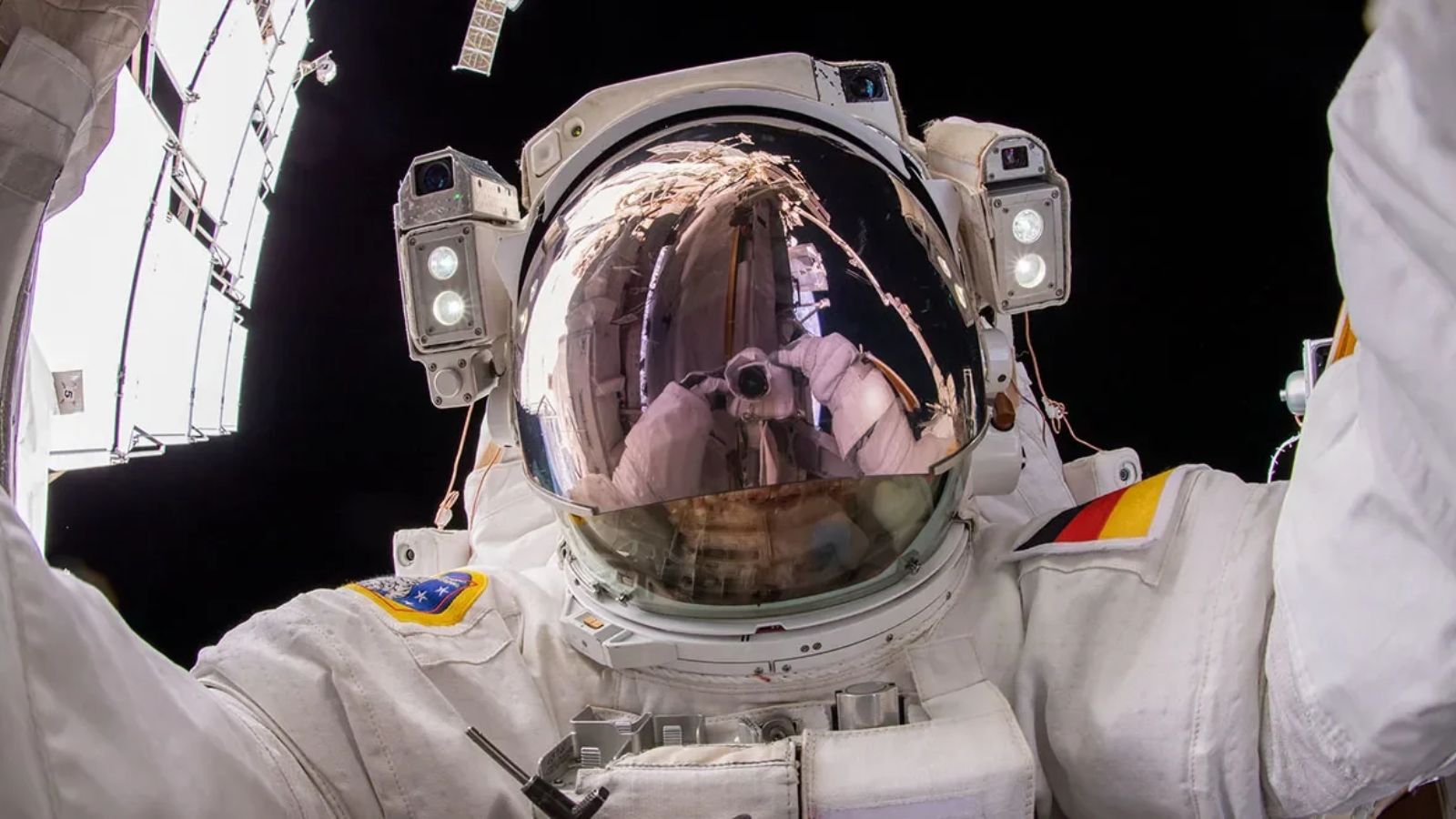
Ignition does not feel like a smooth upward glide; it feels like a violent, rattling explosion beneath your feet, a relentless mechanical roar that vibrates through your teeth and presses an invisible concrete slab onto your sternum as the Long March 2F rocket claws its way through the dense lower atmosphere. For roughly nine minutes, you are riding a controlled detonation, accelerating from zero to nearly five miles per second.
Then, abruptly, the engines cut out.
The roaring vibration vanishes. Your arms float upward in front of your chest, suspended by nothing at all. A pen tethered to your checklist drifts lazily past your visor like a dandelion seed in summer air.
Hours later, after a series of delicate orbital burns aligns the spacecraft with Tiangong’s docking port, the heavy metal latches clank shut, the pressure equalizes with a soft hiss, and the forward hatch swings open. For the first time in human history, a Pakistani citizen pulls themselves weightlessly into an orbital space station, greeted by Chinese taikonauts smiling upside down against the ceiling panels.
Through the small, thick quartz viewport of the core module, the Earth rolls silently underneath—a breathtaking, fragile curve of deep cobalt ocean, swirling white cloud bands, and the unmistakable, jagged white spine of the Karakoram mountains separating northern Pakistan from western China, looking from 250 miles up like nothing more than a delicate brushstroke of frost on blue glass, completely devoid of borders, checkpoints, or the noise we make down below.