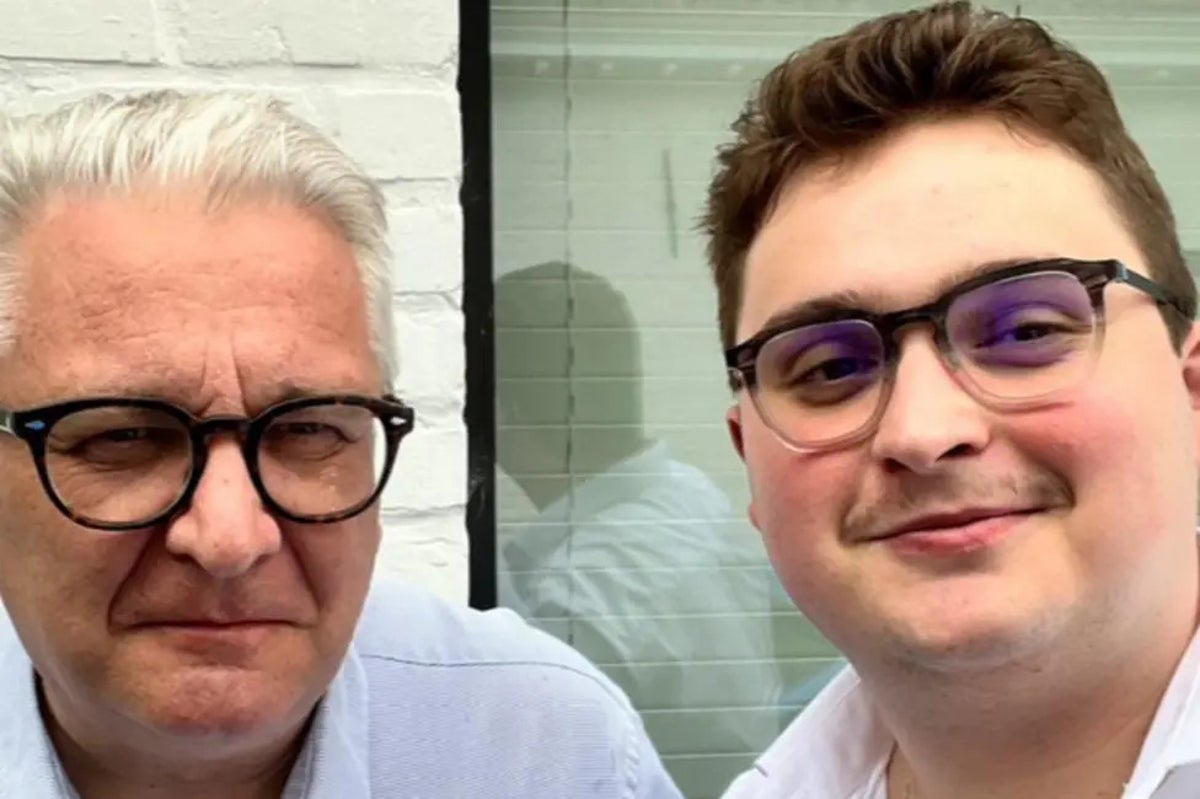
For years, Clément Vandenkerckhove spent his weekdays walking a polished showroom floor in Deinze, talking strangers into sedans and hatchbacks. He was a young man selling cars, trading on pleasantries, finance rates, and horsepowers. He wore a name tag that read just his first name, lived in an ordinary apartment, and worried about the same mundane bills as anyone else his age. He did not know that his blood carried a crown.
Then came a cotton swab, a quiet hospital visit, and a 99.5 percent match.
The math of genetics is entirely indifferent to protocol. It does not care about palace gates, prime-time television scandals, or dynastic survival. In a single stroke of molecular confirmation, the former car salesman was legally bound to Prince Laurent of Belgium, the younger brother of King Philippe. Overnight, the showroom floor vanished, replaced by the heavy, complicated architecture of European royalty.
History has a strange habit of repeating its own awkward ironies. Long before Clément ever picked up a clipboard on a dealership lot, the Belgian royal family was wrestling with the ghosts of hidden lineages. Prince Laurent’s own father, former King Albert II, fought a grueling, multi-year public paternity battle before finally acknowledging artist Delphine Boël as his daughter. That bitter fight played out under the harsh glare of tabloid headlines and courtrooms. But Clément’s story unfolded differently, born out of silence rather than a courtroom brawl.
Born in August 2000, Clément was the child of a past relationship between Prince Laurent and Flemish singer Iris Vandenkerckhove, widely known as Wendy Van Wanten. For the first sixteen years of his life, the truth remained locked away. When his mother finally revealed his biological father’s identity, the revelation did not bring immediate liberation. It brought terror.
Imagine carrying a secret that belongs to a kingdom while you are still trying to figure out who you are at sweet sixteen. Sworn to secrecy to protect a fragile status quo, Clément suffered severe anxiety and panic attacks. The weight of an unacknowledged name pressed down on him, turning everyday life into a performance where he had to pretend the blood humming in his veins did not exist. Years passed in this psychological purgatory. By the time he turned twenty, the secrecy had become heavier than the truth could ever be. He decided to make the call.
He dialed his father’s number.
What followed was not a dramatic cinematic confrontation, but a series of tentative phone calls, followed by a face-to-face meeting that stripped away the myth of royalty to reveal two men trying to bridge a lifetime of absence. When the topic of a DNA test finally arose, Prince Laurent made a quiet gesture that changed everything. To ease the young man's anxiety, the prince stepped forward and provided his own hospital sample first.
Six months ago, inside the unassuming walls of a local town hall, a private civil ceremony quietly cemented what the science had already proven. Clément Vandenkerckhove was officially recognized as a prince of Belgium.
Yet, this is not a fairy tale where a humble working-class hero inherits a throne and a bottomless vault of gold. Modern monarchies operate on strict bookkeeping. Clément’s new title comes with precise boundaries. He sits entirely outside the line of succession. He carries no official royal duties, no state-funded public allowance, and no keys to a palace. He is a prince without a portfolio. He is entitled to a share of private inheritance, but his daily reality remains grounded by choice.
Consider the surname. The royal family tree dictates a transition to the historic house of Saxe-Coburg. Yet Clément has hesitated. He looks at his mother—the singer who raised him through the storms of anonymity and public curiosity—and sees her sacrifice written into every letter of her last name. To drop it, he has noted, would feel like a betrayal of the woman who held his world together when there was no prince to protect them.
He still loves fast cars and horses. He still remembers what it means to stand on a concrete floor and talk a nervous buyer into a reliable engine. The title changed his legal status, but it did not rewrite his memories.
Blood can grant a name, but it cannot buy a history. In the quiet space between a car showroom in Deinze and a royal lineage centuries in the making, Clément remains suspended in the most human of places: trying to figure out who he is, holding tight to the mother who raised him, while the world insists on looking at the crown he never asked to wear.