Silence.
In a museum, silence isn't an absence of sound—it is a texture, thick and reverent, woven from the shuffle of wool coats, the faint hum of climate control protecting nineteenth-century brushstrokes, and the whispered awe of a grandmother explaining a battle scene to her grandson.
Now imagine that exact silence shattered not by a dropped brochure, nor a toddler’s sudden cry, but by the cold, metallic reality of a diplomatic cable.
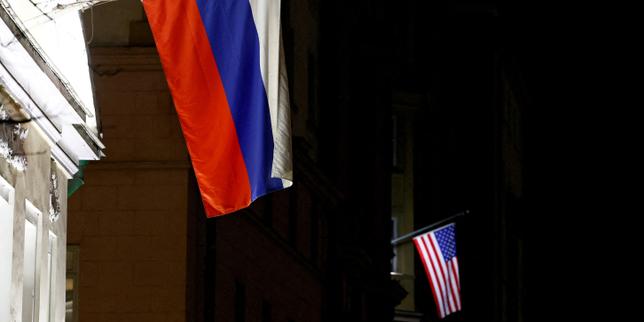
On a crisp morning in Moscow, while commuters hurried past the neoclassical facades of the city center and tourists queued beneath grey skies to see icons, oil paintings, and gilded artifacts, an unusual alert began circulating behind closed embassy doors. The United States Embassy in Russia had issued an urgent security warning: intelligence pointed to a credible threat of an imminent attack targeting a museum in the Russian capital.
To the casual observer reading a three-paragraph wire dispatch, it sounds like another routine line item in an era of relentless geopolitical friction. A headline to scan over morning coffee before scrolling to the weather.
But step inside the shoes of the people standing beneath those vaulted gallery ceilings, and the story transforms entirely.
The Anatomy of a Whispered Warning
When intelligence agencies use the phrase "credible threat," they are not engaging in theatrical speculation. In the quiet, fluorescent-lit corridors of diplomatic security, words are weighed like gold bullion. To issue a public or semi-public warning to citizens—and by extension, to alert a host government with whom relations are already frozen at historic lows—requires crossing a high evidentiary threshold.
Consider a hypothetical Saturday afternoon at one of Moscow’s premier cultural institutions, such as the Pushkin State Museum of Fine Arts or the State Tretyakov Gallery. Let us place an ordinary visitor there—call her Elena, a secondary school art teacher from Yaroslavl who saved for months to spend a weekend walking the halls she has only ever shown her students on a flickering classroom projector.
Elena isn't thinking about intelligence intercepts. She isn't thinking about diplomatic backchannels or the legal obligations under U.S. intelligence doctrine—specifically the "duty to warn," a long-standing directive requiring American intelligence agencies to notify intended victims, even adversaries or foreign populations, when they uncover credible threats of impending mass violence.
She is looking at the brushwork on a canvas. She is checking her phone to see if the museum café has closed.
Meanwhile, thousands of miles away and across encrypted lines in Moscow, analysts are piecing together fragments of signals intelligence, human sources, and digital chatter. When the U.S. Embassy warns of an attack on a museum in Moscow, it exposes a chilling paradox of modern security: the softer the target, the louder the psychological shockwave.
Military bases have perimeters. Embassies have blast walls, concrete bollards, and armed marines. Museums have velvet ropes and elderly docents sitting on folding chairs in the corners of rooms.
Why Cultural Sanctuaries Are Chosen
Why a museum? Why target a repository of memory rather than a seat of power?
History offers a grimly consistent answer. Extremist networks and violent actors rarely seek purely tactical victories; they seek symbolic rupture. When violence enters a space dedicated to beauty, heritage, and shared human achievement, the message is unmistakable: nowhere is neutral, and nothing is sacred.
We have seen this pattern repeat across decades and continents. In 2015, gunmen stormed the Bardo National Museum in Tunis, turning halls filled with Roman mosaics into a trap for international visitors. Years earlier, cultural landmarks from Cairo to Paris found themselves suddenly reclassified from tourist itineraries to high-risk zones.
In Moscow, the vulnerability carries a distinctly sharp edge. The Russian capital is home to some of the densest concentrations of art, historical archives, and national treasures on earth. On any given weekend, tens of thousands of families, students, and foreign visitors funnel through narrow security checkpoints designed to catch pocketknives and water bottles—not coordinated assaults.
I have walked through those exact security arches in European and Eurasian capitals during periods of heightened alert. You notice the subtle shifts first. The metal detector beeps a little more frequently because the sensitivity has been cranked up. The guards at the coat check stop making small talk. Their eyes dart not to your ticket, but to your hands, your backpack, the bulk of your winter coat. You feel a strange, creeping guilt simply for carrying a leather satchel near a glass display case.
That tension is invisible in a standard news brief, yet it is the precise currency of terrorism. Even if an attack never materializes—even if the warning itself forces conspirators to abort, scatter, or go dark—the psychological objective has already been partially achieved.
The Diplomatic Tightrope
What makes a U.S. security warning in Moscow uniquely complex is the geopolitical frost surrounding it.
When Washington warns Moscow of an impending threat, the message travels across an abyss of mutual suspicion. In normal times, intelligence sharing on counterterrorism operates through established liaison channels—quiet phone calls between security services, devoid of press releases.
When diplomatic trust has collapsed, however, public warnings become a blunt instrument of necessity. Remember March 2024, when the U.S. Embassy in Moscow issued a stark warning about imminent extremist threats targeting large gatherings and concert halls in the city. Days later, Russian officials publicly dismissed the alerts as provocative attempts to destabilize society—right up until gunmen attacked Crocus City Hall, killing over 140 people in one of the deadliest assaults in modern Russian history.
That memory hangs like smoke over every subsequent embassy dispatch.
For American diplomats still stationed in Moscow—operating with skeleton staffs after years of tit-for-tat expulsions—every alert is a high-wire act. Warn too broadly, and you induce panic without actionable detail. Stay silent to avoid diplomatic friction, and you risk waking up to catastrophe knowing you held the match that could have lit a flare.
For Russian authorities, the dilemma is equally acute. Acknowledging a warning from Washington carries political friction; ignoring it invites catastrophic accountability. Behind the scenes, regardless of public rhetoric, the warning triggers immediate, tangible consequences: unmarked vans idling near cultural districts, plainclothes officers blending into ticket queues, and heightened surveillance across metro stations feeding into museum districts.
The Invisible Cost to the Public
Wait.
Think about what happens to a city when its sanctuaries require armed escorts.
When people ask whether diplomatic security alerts actually protect the public, the honest answer is messy and uncomfortable. An embassy warning does not erect a force field around a building. It cannot tell a mother which exact exhibition hall to avoid at 2:15 in the afternoon. Most diplomatic advisories intentionally withhold granular intelligence to protect sources and methods—meaning the public receives a silhouette of danger rather than a map.
So what are ordinary people supposed to do with a silhouette?
If you are an American citizen living in Moscow, the guidance is clear: avoid crowds, monitor local media, keep a low profile, review personal security plans. You cancel your Sunday plans. You stay inside your apartment.
If you are a Muscovite—or a teacher like our hypothetical Elena from Yaroslavl—you often don't even see the foreign embassy notice unless it ripples through Telegram channels or independent news feeds. You walk up the stone steps of the museum, buy your paper ticket, hand over your heavy coat, and step into the quiet warmth of the gallery.
And that is where the true emotional weight of this story lives.
Culture is supposed to be the antidote to fear. We build museums precisely because human history is violent, chaotic, and fleeting; we need stone buildings where fragile things—watercolors, porcelain, manuscripts, bronze—can survive the storms outside. We go to them to remind ourselves that humanity is capable of creating things that outlast our worst impulses.
When intelligence cables turn those very buildings into coordinates on a threat assessment, something vital inside a society quietly erodes. The visitor stops looking up at the ceiling frescoes and starts looking over their shoulder at the fire exits. The docent stops watching the paintings and starts watching the doors.
A museum guard in Moscow stands beside a doorway, hands clasped behind his back, listening to the slow, steady rhythm of footsteps echoing across parquet floors, watching the crowd file past a canvas painted two hundred years ago—and wondering, for the first time in his shift, who among them might not be here for the art.


