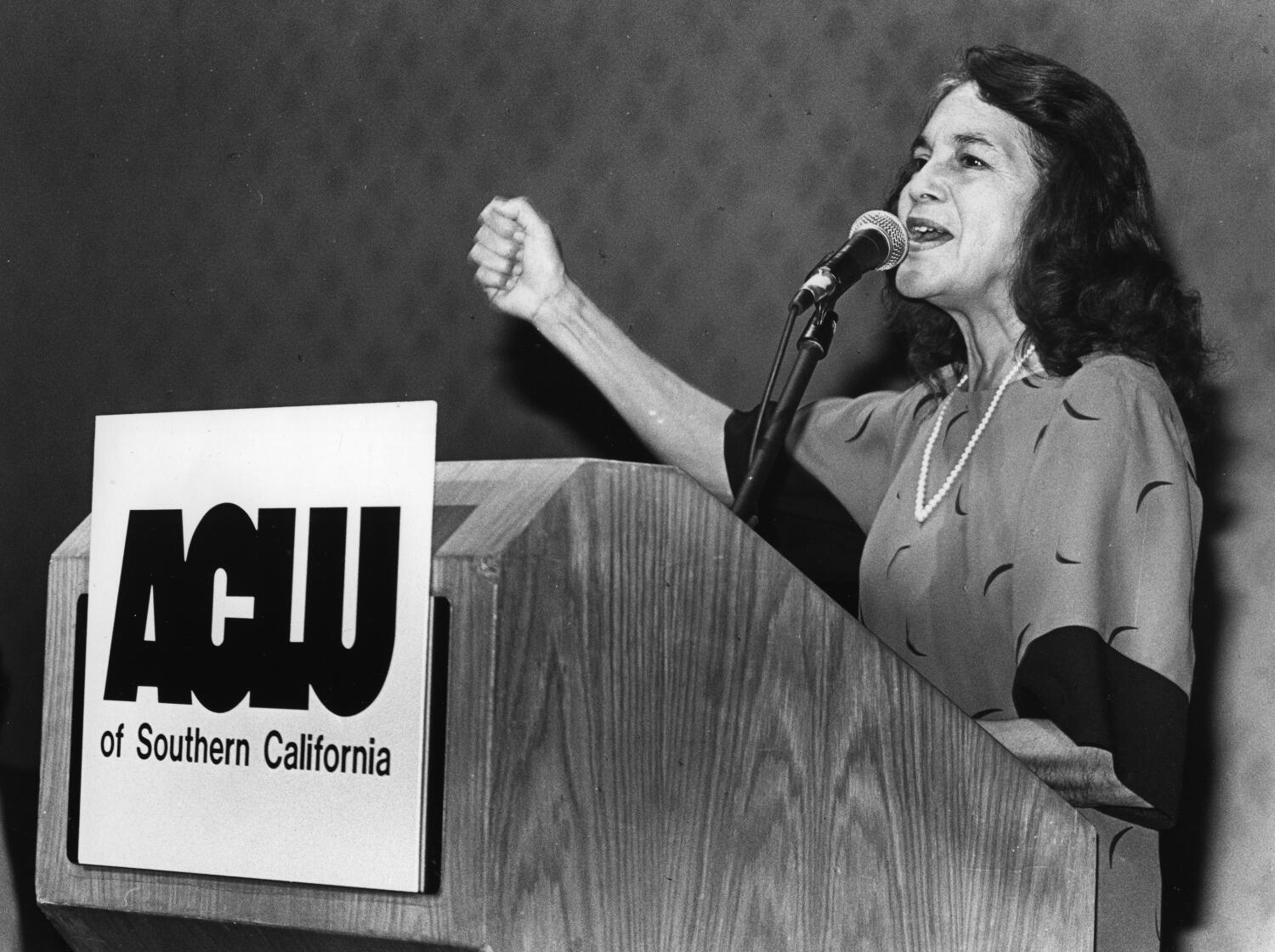
The prevailing cultural memory of Dolores Huerta has been smoothed down to fit on a postage stamp, a mural wall, and a motivational greeting card. To understand the real Dolores Huerta, you have to strip away the soft-focus nostalgia and look at the ruthless, unrelenting political operator who spent six decades breaking entrenched power structures from the inside out. While mainstream tributes often cast her as the gentle maternal counterweight to Cesar Chavez, the historical record tells a much sharper story. Huerta was the primary architect of the United Farm Workers' legislative strategy, a street-smart negotiator who terrified agribusiness executives, and a radical feminist who frequently clashed with the very movement she helped build.
Sanitization is the standard fate of aging civil rights icons. Once a revolutionary poses no immediate threat to the status quo, institutions rush to claim them. Cities name elementary schools after them. Governors declare commemorative holidays. In the case of Huerta, this institutional embrace has largely erased the jagged edges of her career—the fierce ideological purges within the union, the personal toll on her eleven children, and her refusal to soften her rhetoric even in her nineties.
The Myth of the Gentle Sidekick
History loves a singular hero. In the story of the American farmworker movement, Cesar Chavez was cast as the ascetic saint, leaving Huerta to be misremembered by casual observers as his loyal secretary or secondary spokesperson. That narrative is not just inaccurate; it is an inversion of how the union actually functioned on the ground.
Chavez was the spiritual center and the master of the moral spectacle—the fasts, the pilgrimages, the discipline of nonviolence. Huerta was the operational hammer. When the union needed to turn moral outrage into binding legal contracts, they sent Huerta into the room. She was the chief negotiator during the historic 1970 Delano grape strike settlements, sitting across the table from growers who viewed a Mexican American woman dictating labor terms as an affront to the natural order of California agriculture.
Growers hated negotiating with her. Unlike Chavez, who could be quiet and enigmatic, Huerta was relentless, loud, and armed with an encyclopedic knowledge of labor law, agricultural subsidies, and supply chain vulnerabilities. She understood that appeals to conscience only worked when backed by severe economic pain. Under her direction, the grape boycott evolved from a localized picket line into an international consumer blockade that choked off distribution channels in New York, Chicago, and London.
Inside the Union's Internal Wars
To treat Huerta purely as an external warrior against corporate agriculture ignores the equally brutal battles she fought inside the movement. The United Farm Workers was never a monolithic utopia of solidarity. It was a pressure cooker of competing egos, strategic disagreements, and ideological shifts.
Huerta operated at the center of this storm, and she was not immune to the union's authoritarian turns. During the late 1970s and early 1980s, as the UFW struggled with internal paranoia and the controversial influence of Synanon—a rehabilitation group turned cult whose methods Chavez adopted—the union suffered a massive exodus of its most experienced organizers and legal minds. Huerta remained fiercely loyal to Chavez throughout this turbulent era, a decision that alienated many of her longtime allies and tarnished the union's reputation among progressive labor circles.
Acknowledging this period does not diminish her achievements; it makes her human. She was a pragmatic politician who believed the survival of the institution outweighed individual grievances. Yet that same pragmatism occasionally blinded her to the collateral damage inflicted on loyal staffers who questioned the leadership's increasingly erratic directives.
The Cost of Total Devotion
Journalists who cover labor history often gloss over the domestic wreckage left behind by full-time activism. Huerta did not balance work and family. She sacrificed one for the other, and she has been unapologetically honest about that choice.
Raising eleven children while living on a union stipend of five dollars a week—plus room and board—meant that her kids were frequently shuffled between relatives, sympathetic supporters, and communal housing in La Paz. While Chavez's wife, Helen, maintained a traditional domestic anchor for their family, Huerta rejected the expectation that she should step back from the front lines to fulfill maternal duties.
Her critics—both inside the conservative Mexican American community and among traditional labor men—attacked her relentlessly for this. They called her a bad mother. They questioned her morality through two divorces and subsequent relationships. Huerta absorbed the abuse and kept organizing, effectively forcing the Chicano movement to confront its own deeply ingrained machismo long before intersectional feminism became an academic buzzword.
How She Rewrote the Rules of Political Lobbying
Before the UFW, farmworkers were legally invisible. Excluded from the National Labor Relations Act of 1935, agricultural laborers had no federal right to organize, bargain collectively, or strike without immediate replacement. Washington and Sacramento treated agribusiness as an untouchable economic engine.
Huerta dismantled that immunity through sheer legislative persistence. Moving to Sacramento in the early 1960s, she taught herself how to read bills, track committee votes, and corner lawmakers in capitol hallways. She had no formal legal training and no corporate expense account. What she had was an unmatched ability to mobilize bodies at the ballot box and in the streets.
Her legislative track record remains one of the most consequential in modern American labor history:
- 1961: Lobbied successfully for the passage of Aid to Dependent Families, extending crucial welfare benefits to impoverished rural families regardless of citizenship status.
- 1962: Helped secure the right for California residents to take their driver's license examinations in Spanish, removing a massive barrier to rural mobility and employment.
- 1963: Played a central role in extending federal old-age pensions to agricultural workers.
- 1975: Engineered the lobbying push for the California Agricultural Labor Relations Act, the first law in the continental United States granting farmworkers the legal right to unionize and hold secret-ballot elections.
The 1975 law was the crown jewel of her legislative career. Governor Jerry Brown signed it largely because Huerta and the UFW had made it politically impossible for him not to. Yet even here, the victory was messy. Within a few years, growers learned how to game the newly created Agricultural Labor Relations Board, dragging out certification elections for years and firing organizers with minimal penalties. Huerta spent the next four decades watching the law she fought so hard to pass get hollowed out by hostile administrations and conservative courts.
The Violence That Nearly Killed Her
In September 1988, the sanitized image of the beloved community elder collided violently with reality. Huerta was 58 years old, standing outside the St. Francis Hotel in San Francisco, peacefully protesting the policies of then-Vice President George H.W. Bush.
San Francisco police moved in to clear the crowd. Officers swung their batons indiscriminately, striking Huerta repeatedly in the torso. The beating was so severe that it shattered two of her ribs and ruptured her spleen. She underwent emergency surgery and required multiple blood transfusions to survive.
The incident exposed the thin veneer of respectability granted to minority activists. Despite decades of high-profile political work, when Huerta stood on a public sidewalk challenging a Republican administration, the state responded with brute physical force. She eventually won an $825,000 settlement from the city of San Francisco—money she immediately funneled back into organizing and the creation of the Dolores Huerta Foundation.
Why the Nostalgia Trap Is Dangerous
When commentators write sentimental pieces about "the Dolores Huerta they will remember," they inadvertently lock her into the past. They frame her as an artifact of the 1960s—a relic of black-and-white newsreels, wooden apple crates, and dusty picket lines in the Central Valley.
That framing is a gift to modern corporations and political moderates. It allows politicians to praise Huerta's courage during the Delano grape strike while actively blocking contemporary legislation on heat illness protections, overtime pay, and immigration reform. You can hang a portrait of Huerta in a corporate boardroom or a city hall lobby precisely because her historical battles have been safely neutralized into generalities about "hope" and "perseverance."
Huerta herself has consistently resisted this museumification. Well into her nineties, she continued traveling across the country, getting arrested at civil disobedience actions, and calling out corporate Democrats and Republicans alike when they stalled on voting rights or reproductive freedom. Her famous slogan, "Sí se puede"—coined in 1972 during a grueling organizing drive in Arizona when local leaders told her farmworkers could never overcome state restrictions—was never meant to be a passive affirmation. It was a tactical command.
The Unfinished Business in the Fields
Look at the agricultural landscape today, and the limitations of purely symbolic remembrance become glaringly obvious. Despite the monumental victories of the 1960s and 1970s, farmworkers remain among the most exploited laborers in the United States.
Union membership in California agriculture has plummeted from its peak of roughly 70,000 workers in the 1970s to a fraction of that number today. The industry adapted. Growers shifted toward labor contractors—third-party middlemen who shield major agricultural corporations from direct legal liability for wage theft, pesticide exposure, and sexual harassment. Climate change has introduced lethal extreme heat waves into the Central Valley, turning routine harvests into life-threatening endurance tests.
Huerta knows this better than anyone. Her foundation focuses heavily on grassroots civic engagement in rural, historically disenfranchised communities like Kern and Tulare counties—the exact regions where conservative political power remains deeply entrenched. She is still doing the unglamorous, door-to-door precinct work that media pundits ignore because it lacks the cinematic sweep of a national boycott.
To remember Dolores Huerta accurately is to accept the discomfort she brings to polite society. She was never interested in being liked by people in power. She was interested in taking their power away and handing it to the people who pick the food on our tables. If we reduce her legacy to a comforting memory of a bygone era, we miss the entire point of her life's work—and we let the modern architects of labor exploitation off the hook.