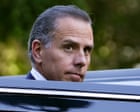
On July 10, 2026, a federal judge ordered former Overstock.com CEO Patrick Byrne to pay Hunter Biden $1.7 million in punitive damages. The ruling effectively concludes a bizarre multi-year defamation saga that began with a fabricated $800 million Iranian bribery allegation and ended with a crushing default judgment against the eccentric millionaire. US District Judge Stephen Wilson, a Ronald Reagan appointee, stripped away Byrne's defenses after the executive spent years deploying a series of transparent stalling tactics that ultimately exhausted the court's patience.
While the headline numbers focus on the seven-figure penalty, the true mechanics of this legal defeat reveal a broader truth about how conspiracy-driven rhetoric collapses when forced into a formal court of law.
The Fabricated Plot That Blunted a Corporate Legacy
The underlying dispute traces back to statements Byrne published and amplified across social media platforms, including X. Byrne claimed that in the fall of 2021, Hunter Biden approached the Iranian government. The alleged proposal was specific and highly damaging. Biden would allegedly convince his father, President Joe Biden, to unfreeze $8 billion in Iranian assets held in South Korea and ease pressure during sensitive nuclear negotiations. In return, Byrne alleged that Iran would funnel an astronomical $800 million kickback into a numbered bank account for the Biden family.
It was a staggering allegation of geopolitical treason.
When Biden filed his defamation lawsuit in late 2023, his legal team took an aggressive approach. They did not sue for massive compensatory damages, which would require the grueling process of proving specific economic or emotional harm. Instead, they sought a symbolic $1 in nominal damages alongside heavy punitive damages designed strictly to punish the wrongdoer. This tactical choice forced the entire legal battle to center on a single core issue: whether Byrne's narrative was a deliberate, malicious fabrication.
The Defamation Trap and the Default Strategy
Byrne attempted to shield himself under the legal standard of actual malice, arguing that he genuinely believed the allegations because an Iranian official had whispered them to him. Judge Wilson dismantled this defense. The court found that Byrne could provide no documentation, no direct link between the unnamed official and Biden, and no evidence whatsoever to support the claim. Over years of active litigation, Byrne failed to present a single shred of corroborative discovery.
The court eventually concluded that the entire narrative concerning the covert meeting with an Iranian official was manufactured.
Defamation lawsuits involving public figures are notoriously difficult to win under American jurisprudence. The plaintiff must show that the defendant spoke with knowledge of falsity or reckless disregard for the truth. Byrne made the task remarkably easy for Biden's legal team by treating the federal judiciary like a political theater. Rather than defending the merits of his claims through standard discovery and testimony, Byrne engaged in what Judge Wilson explicitly labeled a coordinated campaign of dilatory tactics.
He repeatedly dodged depositions, claiming at one point that he could not return to the United States because the Drug Enforcement Administration had warned him of a Venezuelan hit squad.
When a Three Ring Circus Backfires
The breaking point arrived when Byrne systematically dismantled his own defense teams to avoid facing cross-examination. In July 2025, on the very morning a jury trial was scheduled to commence in Los Angeles, Byrne fired his attorneys. A new legal team appeared in their place, led by an attorney who had already been disqualified from other major defamation proceedings involving Dominion Voting Systems. Judge Wilson refused to allow the new representation, leaving Byrne with no counsel on the morning of his own trial.
The judge called the behavior a three-ring circus but initially hesitated to issue a default judgment, citing a public policy preference for deciding cases on their actual merits.
By October 2025, however, Byrne's continued refusal to cooperate left the court with few options. When neither Byrne nor any authorized legal representation bothered to show up for subsequent critical hearings regarding financial sanctions, the judge entered a default judgment on liability. By refusing to play by the rules of civil procedure, Byrne legally conceded that his statements were false and malicious. The entire defense vaporized because the defendant refused to stand behind his own words under oath.
The Financial Fallout and Corporate Ruin
The $1.7 million in punitive damages is a stark reminder of Byrne's steep descent from respectable corporate leadership. Before transforming into a prominent financier of efforts to overturn the 2020 election, Byrne was widely recognized as a brilliant, if eccentric, retail pioneer. He holds a doctorate in philosophy from Stanford University and built Overstock.com into an e-commerce powerhouse.
His corporate downfall began in 2019 when he abruptly resigned from Overstock after publicly admitting to an romantic relationship with Maria Butina, a convicted Russian agent. The bizarre public statements he issued at the time sent Overstock stock tumbling, alienating institutional investors and permanently severing his ties to mainstream corporate boardrooms.
The current financial judgment stretches beyond the punitive award. Judge Wilson ordered Byrne to pay roughly $35,000 in existing court-ordered sanctions within a strict 14-day window. If he misses the deadline, the sanctions will compound by an additional $1,000 for every single day of non-compliance.
A Precedent for Online Rhetoric
This ruling serves as a stark warning to political operatives who view social media as a zone of absolute immunity. Hunter Biden's attorney, Bryan Sullivan, made it clear that this judgment represents a baseline rather than a conclusion. If the rhetoric continues, the legal machinery is already greased to initiate further actions.
The federal court has demonstrated that while public figures face a high bar to protect their reputations, that bar is easily cleared when a detractor relies entirely on fiction and subsequently flees the courtroom. Wealth can fund a massive online audience, but it cannot purchase an exemption from the rules of federal civil procedure.