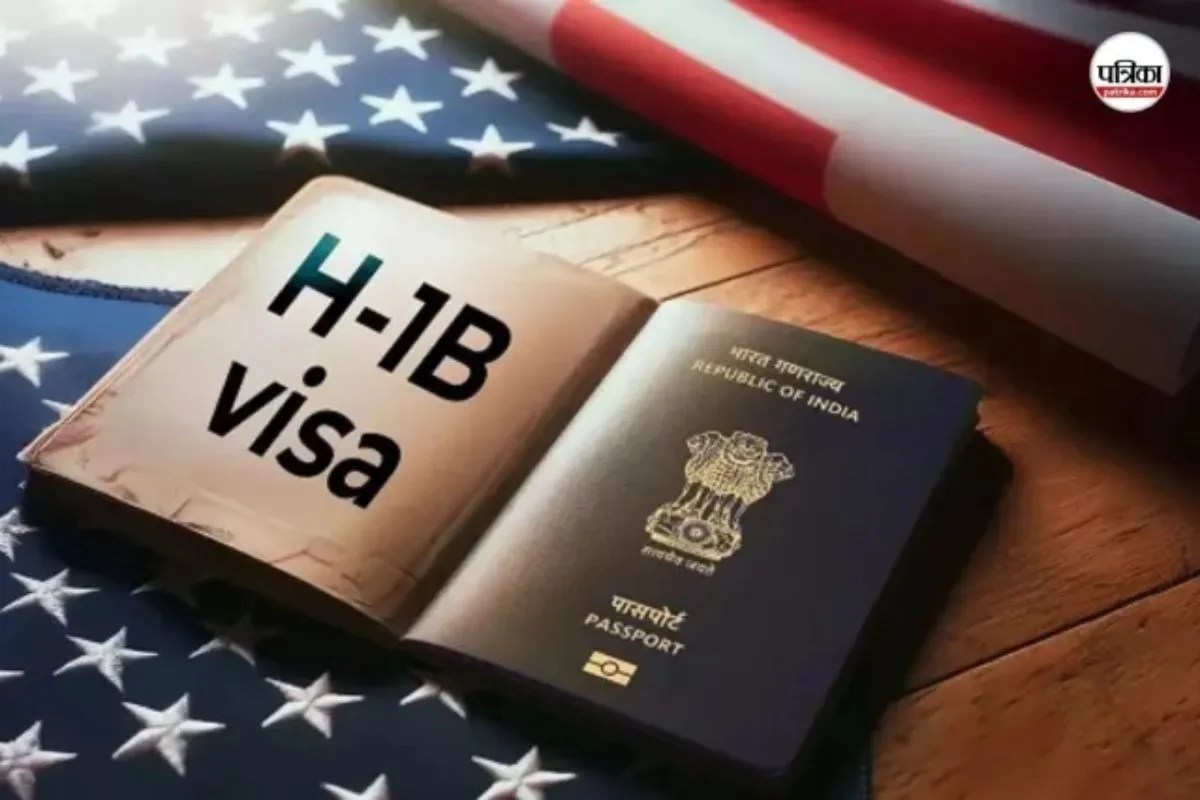
A federal judge in Boston recently dismantled the White House's most aggressive attempt to throttle skilled foreign labor, striking down a staggering $100,000 application fee for new H-1B visas. The ruling blocks a policy designed to make importing foreign talent prohibitively expensive for American companies, providing immediate financial relief to Silicon Valley, public hospitals, and academic institutions. While the decision prevents an economic shock for corporate giants and the Indian tech sector, the underlying battle over skilled migration is far from over. A closer look reveals that executive overreach, rather than sound economic policy, ultimately doomed the administration's plan.
The Constitutional Overreach Masked as Reform
The administration framed the unprecedented fee as a regulatory mechanism to shield domestic workers and curb the reliance on foreign tech labor. However, U.S. District Judge Leo Sorokin looked past the political rhetoric to examine the financial mechanics of the mandate. For a closer look into similar topics, we recommend: this related article.
Prior to the September 2025 proclamation, base filing fees for an H-1B visa hovered between $960 and $7,595 depending on company size. Multiplying that cost exponentially overnight did not look like a administrative fee to the court. It looked like a tax.
Under the U.S. Constitution, the power to levy taxes belongs exclusively to Congress. The administration attempted to utilize the Immigration and Nationality Act, which grants the executive branch broad powers to restrict the entry of foreign nationals, as a legal justification. Yet the court ruled that this authority does not include the power to create massive financial levies without legislative approval. When the administration designated the payment an administrative fee, it failed to demonstrate how a six-figure sum correlated with the actual bureaucratic cost of processing a visa application. To get more details on this issue, comprehensive reporting can be read on MarketWatch.
The Collateral Damage Beyond Silicon Valley
Public debate surrounding the H-1B visa often centers on major technology companies hiring software engineers. The reality of the program is much broader, and the legal opposition reflected that diversity. A coalition of 20 state attorneys general led the legal challenge, focusing on the severe disruptions the fee caused outside the tech sector.
- Public Education: School districts, especially those in rural regions, utilize H-1B visas to recruit certified teachers to fill persistent vacancies in math and science.
- Higher Education: Public universities and research labs depend on international scholars and faculty to lead academic projects.
- Healthcare: Rural hospitals and community clinics rely on international medical graduates to staff underfunded facilities.
For a multi-billion-dollar technology corporation, a $100,000 fee is a severe financial penalty. For a rural school district or a regional hospital, it is an absolute hiring freeze. The coalition of states demonstrated that the financial barrier threatened to worsen labor shortages in essential public services, creating a compelling argument for the nationwide injunction.
The Fragmented Legal Landscape
The Boston ruling introduces a direct conflict into the federal court system. In December, a federal judge in Washington, D.C., rejected a separate challenge brought by the U.S. Chamber of Commerce, concluding that the executive branch held the authority to impose the fee.
| Federal Court Location | Ruling Status | Core Legal Interpretation |
|---|---|---|
| Washington, D.C. | Upheld the Fee | Interpreted executive immigration authority broadly under federal statute. |
| Boston, Massachusetts | Struck Down the Fee | Defined the fee as an unconstitutional tax bypassing Congress. |
This legal split creates an uncertain environment for corporate compliance officers and immigration attorneys. A third lawsuit filed by labor unions and religious groups is currently pending in San Francisco. With contradictory rulings active in different federal circuits, the final determination on executive fee-setting authority will likely require a ruling from the Supreme Court.
The Minimal Economic Revenue
Internal government data presented during the litigation indicates that the policy failed to achieve its stated economic goals before being blocked. The administration argued the fee would incentivize companies to hire American citizens while generating revenue from businesses that insisted on hiring abroad.
The strategy did not work. Data from U.S. Citizenship and Immigration Services revealed that the government received only 85 of the $100,000 payments between September and mid-February.
Instead of paying the fee, employers simply paused their high-skilled hiring initiatives or deferred foreign placements. The policy did not shift hiring practices toward domestic workers; it halted specialized hiring altogether. For the Indian technology sector, which historically secures nearly 70 percent of available H-1B visas, the fee served as a temporary barrier that disrupted the placement pipeline rather than a long-term revenue generator for the U.S. government.
The Looming Appellate Battle
The White House has confirmed its intention to appeal the Boston decision to the U.S. Court of Appeals for the First Circuit, seeking an emergency stay to reinstate the fee while litigation continues. If the appellate court grants the stay, employers will face the $100,000 fee once again, forcing companies to reconsider their recruitment timelines for the upcoming fiscal cycle.
Immigration attorneys are advising corporate clients to submit pending H-1B petitions immediately while the fee remains blocked. The temporary window of relief allows businesses to clear backlogs of specialized talent without the threat of a six-figure penalty, but the long-term viability of the hiring channel hinges entirely on the next judicial review.
Federal judge voids Trump’s $100,000 fee requirement for H-1B visas
This video provides an investigative look into the federal court's decision to strike down the administration's high-stakes visa fee hike.