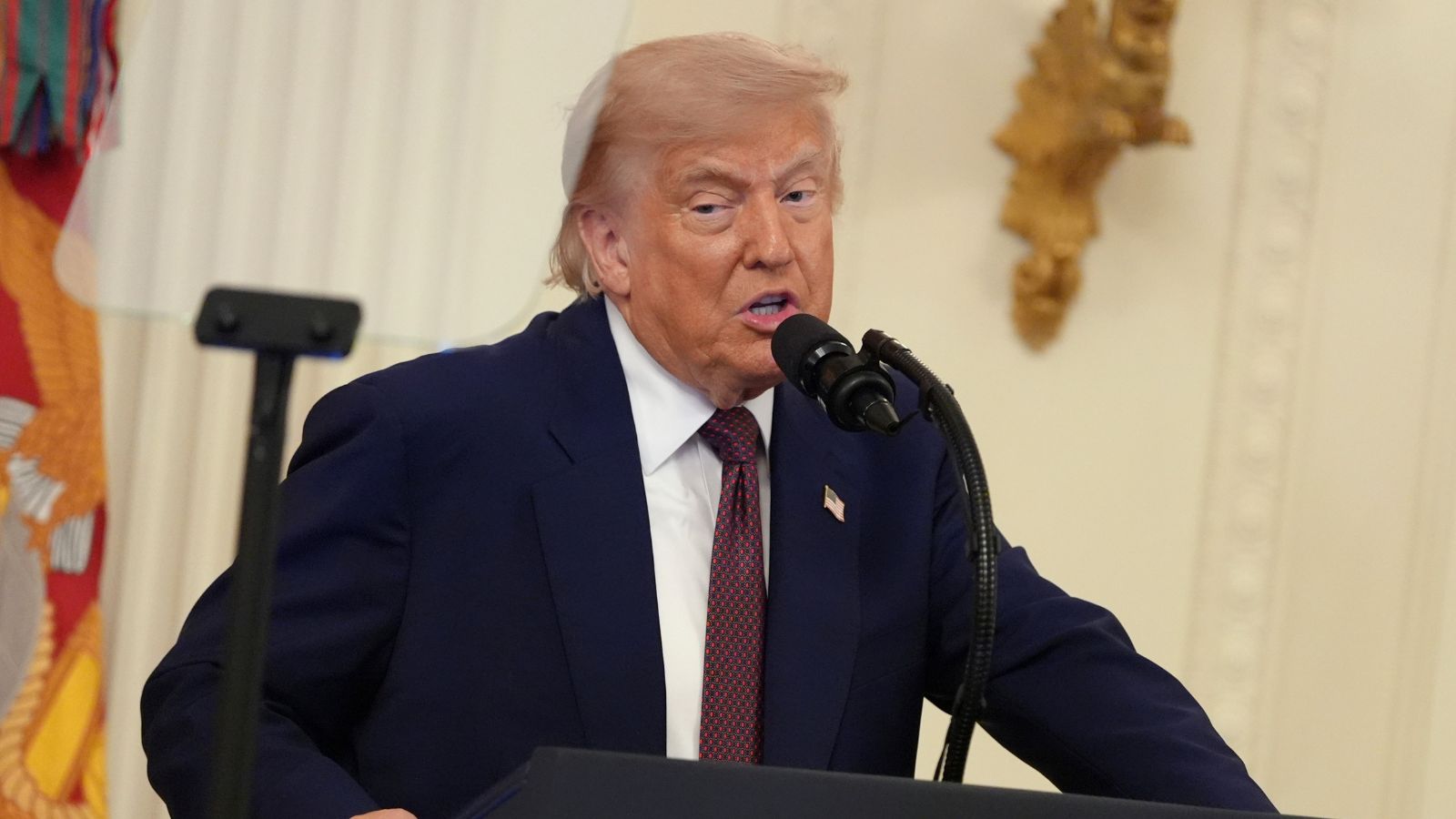
The sudden, late-night signing of the U.S.-Iran memorandum of understanding just past 1 a.m. at the Palace of Versailles was driven by a stark domestic reality: the intense fear of a severe economic downturn ahead of the upcoming midterm elections. While official rhetoric framed the June 17, 2026, ceremony as a grand diplomatic triumph born of absolute military pressure, the frantic rush to finalize the 14-point framework reveals a White House deeply rattled by collapsing global oil reserves, a severe energy crisis, and the heavy political toll of a multi-month naval blockade.
By bypassing a meticulously planned, formal signing ceremony scheduled just two days later in Lucerne, Switzerland, the administration sought to force an immediate reopening of the Strait of Hormuz to arrest a dangerous domestic economic slide.
The decision to execute the signing in the middle of a G7 state dinner caught foreign diplomats and domestic aides entirely off guard. It exposed the immense friction building behind the scenes between short-term economic survival and long-term geopolitical strategy.
The Shadow of Herbert Hoover
National security decisions are rarely isolated from domestic economic indicators. In the weeks leading up to the Versailles signing, internal White House polling and economic modeling painted an increasingly grim picture for the incumbent party. The U.S. naval blockade of Iranian ports, initiated after hostilities flared earlier in the year, had successfully crippled Tehran’s maritime capability but at a massive cost to the global energy supply chain. With roughly 20 percent of the world’s crude oil blocked from passing through the Strait of Hormuz, global energy markets spiraled.
Retail gas prices in the United States reached heights that threatened to stall consumer spending entirely. Behind closed doors, advisers presented the president with data showing that prolonged economic stagnation could decimate legislative majorities in the fast-approaching midterms. Trump himself later acknowledged the weight of these projections, privately invoking the specter of Herbert Hoover and the catastrophic political fallout of the Great Depression as a primary motivation to close the deal instantly.
The planned Swiss route in Lucerne was discarded not because of a sudden diplomatic breakthrough, but because the administration could not afford 48 more hours of market volatility. Every day the Strait of Hormuz remained closed deepened the risk of an irreversible manufacturing and transport slowdown. The pressure to present a definitive market-stabilizing headline overrode standard diplomatic protocol.
Concessions in the Hall of Mirrors
The rush to secure an immediate signature resulted in an optimization problem where long-term strategic leverage was traded for immediate economic relief. A hard look at the structural mechanics of the 14-point "Islamabad Memorandum" reveals concessions that surpass the very parameters of the 2015 Joint Comprehensive Plan of Action that the administration previously dismantled.
+-------------------------------------------------------------------------+
|                    THE VERSAILLES TRANSITION MATRIX                     |
+-------------------------------------------------------------------------+
| WAR FOOTING (Pre-June 17)           | VERSAILLES MOU FRAMEWORK          |
+-------------------------------------+-----------------------------------|
| Naval Blockhold of Iranian Ports    | Immediate Unconditional Reopening |
+-------------------------------------+-----------------------------------|
| Total Sanctions Enforcement         | Broad Sanctions Waivers on Oil   |
+-------------------------------------+-----------------------------------|
| Military Objective: Zero Enrichment  | 60-Day Technical Negotiation Window|
+-------------------------------------+-----------------------------------|
| Kinetic Containment of Proxies      | $300B Rehabilitation Fund Commitment|
+-------------------------------------------------------------------------+
The immediate benefits granted to Tehran raise serious verification issues. Under the terms of the memorandum, the United States agreed to lift its naval blockade and allow Iran to sell its crude oil freely, alongside moving to waive wide-ranging economic sanctions. Most controversial is the inclusion of a proposed $300 billion economic rehabilitation and reconstruction fund for Iran, a provision that quickly drew fierce blowback from hawkish congressional allies.
The administration’s strategic calculation hinges on a 60-day window to negotiate the permanent dismantling of Iran's nuclear infrastructure, specifically the handling of its highly enriched uranium stockpile. However, by front-loading the primary economic incentives—restored oil revenue and sanctions waivers—the U.S. team surrendered its most potent compliance levers before the technical talks even commenced in earnest.
Tactical Noise and the Spoilation of Diplomacy
The final path to Versailles was further complicated by an intricate web of regional friction points and tactical interference. Senior intelligence officials trace the breakdown of the original Swiss itinerary to a sequence of military escalations that nearly tanked the talks entirely. In early June, a mid-air collision between a U.S. helicopter and an Iranian drone triggered a rapid cycle of retaliatory strikes that required intense, round-the-clock mediation by Qatari and Pakistani officials to cool down.
Simultaneously, a high-stakes Israeli airstrike targeting Beirut during the president’s birthday weekend caused severe friction within the American delegation. U.S. officials privately suspected the kinetic operation was a deliberate attempt by regional allies to derail the pending diplomatic settlement. The strike triggered a 17-hour emergency diplomatic marathon in which Qatari intermediaries successfully dissuaded Tehran from launching a retaliatory ballistic missile volley.
The fragility of the entire process was mirrored in the hyper-specific, almost bizarre terms demanded by the Iranian delegation, including a strict prohibition against announcing the deal on the president's birthday. This friction explains why Vice President JD Vance was forced to postpone his scheduled European departure, and why Secretary of State Marco Rubio found himself frantically printing out final document copies in a back room of Versailles while the state dinner was already underway.
The Verification Vacuum
The true vulnerability of the Versailles accord lies in what remains unwritten. While the framework mandate forces the International Atomic Energy Agency to monitor the downblending of Iran's 60 percent enriched uranium, the operational details are completely absent. The deal does not specify who will physically oversee the removal or destruction of the hundreds of kilograms of enriched material buried deep within hardened subterranean facilities like Fordow and Natanz.
This lack of specificity has created profound skepticism among senior defense and intelligence leaders. Figures like CIA Director John Ratcliffe and Defense Secretary Pete Hegseth are reportedly highly doubtful that Tehran will comply once the immediate economic pressure is lifted. The administration has defended the ambiguity by framing the memorandum as a flexible instrument, noting that if compliance falters, military options remain on the table. Yet, reinstating a global naval blockade and reversing oil market integration is infinitely more difficult than pausing them.
By prioritizing a rapid domestic economic fix to safeguard an election cycle, the administration has entered a high-stakes strategic gamble. It has gambled that temporary economic relief at home will not pave the way for a permanently armed nuclear adversary abroad.
The 60-day clock is running.
The late-night signing at the Palace of Versailles capped off a high-stakes G7 summit, bringing an immediate halt to hostilities and a reopening of critical global shipping lanes. To see the raw footage of the event, watch Trump signs deal to end Mideast war at the Palace of Versailles, which documents the actual moment the memorandum was signed amid intense international scrutiny.