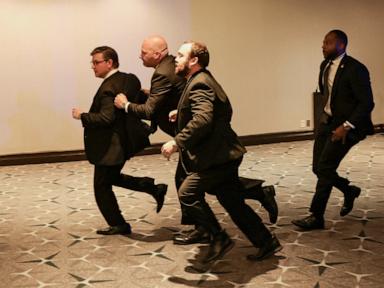
The gunshots that rang out at the Washington Hilton on April 25, 2026, were more than just a security breach; they were the inevitable result of a government that has effectively defunded its own shield. While the Secret Service successfully neutralized 31-year-old Cole Tomas Allen before he could reach the main ballroom, the chaos exposed a Department of Homeland Security (DHS) that is currently eating itself from the inside.
For over two months, the DHS has operated under a partial government shutdown, leaving agencies like the Secret Service, TSA, and the Coast Guard to function on fumes and IOUs. The shooter, armed with a 12-gauge shotgun and a semi-automatic handgun, managed to charge a security checkpoint during the White House Correspondents’ Dinner—the very event where the nation’s political and media elite gather to signal stability. That stability is now a proven fiction.
The Shell Game of Federal Funding
The current crisis stems from a legislative deadlock that has lasted since mid-February. While billions of dollars were funneled into Immigration and Customs Enforcement (ICE) and Customs and Border Protection (CBP) through the "One Big Beautiful Bill" last year, the rest of the DHS was left out in the cold. This created a dangerous imbalance. We have a border that is heavily funded and an interior security apparatus that is essentially bankrupt.
The Secret Service agents who tackled Allen at 8:36 p.m. are among the 260,000 DHS employees currently working without guaranteed paychecks. It is a grim irony. These men and women are expected to take a bullet for the President and his Cabinet while their own families wonder if the mortgage payment will clear. The "Friendly Federal Assassin," as Allen called himself in his manifesto, targeted an administration that is currently overseeing the longest funding lapse in the department's history.
Broken Lines and Bare Magnetometers
Investigative leads suggest that Allen was staying at the Hilton as a guest, a tactical choice that allowed him to bypass many of the external perimeters that usually define high-level events. When he made his move toward the main magnetometer screening area, he wasn't just fighting guards; he was exploiting a system under immense stress.
Security isn't just about the person holding the gun; it’s about the infrastructure behind them. When funding is cut, training cycles are the first to go. Maintenance on high-end surveillance tech is deferred. Morale, the intangible bedrock of any elite force, begins to erode. One law enforcement officer was struck in his bullet-resistant vest during the scuffle. He is expected to recover, but the equipment that saved his life is part of a dwindling inventory that the DHS currently has no budget to replace.
The shooter’s manifesto, sent to family members and later recovered from his hotel room, detailed a plan to target administration officials "prioritized from highest-ranking to lowest." This was not a random act of madness. It was a calculated strike against a vulnerable target at a time when the federal government is more divided than it has been in decades.
The Reconciliation Trap
The political fight on Capitol Hill is no longer about whether to fund the DHS, but how to do it without handing the opposition a win. Senate Republicans are attempting to use the reconciliation process to bypass the 60-vote threshold, a move that Democrats claim "breaks the appropriations process."
Democrats, led by Senate Minority Leader Chuck Schumer, have refused to sign off on any funding that doesn't include strict reforms for ICE and CBP—agencies they claim have become "lawless." They point to the January killings of two U.S. citizens during an ICE raid in Minneapolis as proof that the department needs a leash, not just a checkbook.
The result is a stalemate where national security has become a bargaining chip. While politicians argue over body camera mandates and racial profiling bans, the Secret Service is forced to manage "America 250" celebrations and a pending World Cup with a budget that doesn't exist.
Beyond the Ballroom
The Hilton shooting is the loudest alarm bell, but it isn't the only one. At airports across the country, TSA agents are holding protests, handing out "Pay TSA" tags to travelers while they process record-breaking crowds. The Coast Guard is interdicting drug shipments in the Caribbean without knowing when their next fuel shipment will be paid for.
The suspect in the Hilton shooting, a former "Teacher of the Month" from California, represents a new breed of domestic threat: the radicalized insider who knows how to navigate the very systems meant to keep them out. He didn't need a sophisticated cell or foreign backing; he just needed a hotel room and a lapse in a stretched-thin perimeter.
The DHS is currently cannibalizing its own emergency funds just to keep the lights on. Secretary Markwayne Mullin has warned that these reserves will be exhausted by early May. If a shooter can get within a few feet of the President and his entire Cabinet during a period of "heightened" security, the public should be terrified of what happens when the emergency funds actually hit zero.
The Immediate Necessity
The fallout from the April 25 shooting cannot be solved with another round of "thoughts and prayers" or a new task force. The department needs a clean funding bill that separates the operational needs of the Secret Service and TSA from the ideological battle over immigration enforcement.
If Congress continues to bundle the safety of the President and the flying public with the political volatility of the southern border, incidents like the one at the Washington Hilton will move from "shocking anomalies" to "statistical certainties." You cannot starve a watchdog and then act surprised when it fails to stop a thief.
The Hilton is now a crime scene, and the DHS is a ghost of a department. The only way to fix a failing shield is to pay for the metal.
End the shutdown before the next manifesto is written.