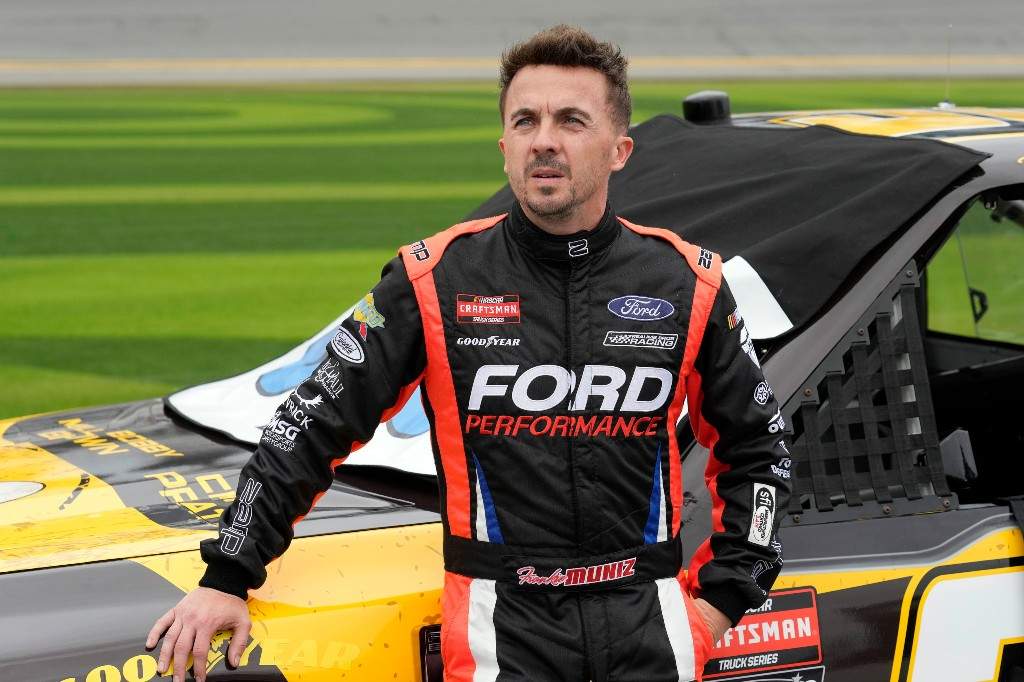
They had to cut the entire roof off his car just to pull him out. That single detail tells you everything you need to know about how violent Frankie Muniz's crash at Daytona International Speedway really was on November 11, 2026.
When news first broke that the 40-year-old actor-turned-racer had been rushed to a hospital after a practice wreck, the internet instantly assumed the worst. Most celebrity-to-racer headlines get treated like novelty fluff, right up until an ambulance leaves the infield. Yet after breaking his silence on November 12 through an emotional video update on social media, Muniz revealed a story that wasn't about Hollywood fragility at all. It was about modern motorsport engineering, a 20-minute extrication effort, and a driver who genuinely belongs on the grid.
What Happened During Practice at Daytona
Muniz wasn't running the high-banked oval that usually defines Daytona in February. He was on Daytona's infield road course, practicing for Ford's Proud to Honor Veterans Day Classic, an all-star charity exhibition race scheduled for Wednesday night. He had been paired with Team Penske NASCAR Cup Series star Austin Cindric to represent the U.S. Air Force, raising money for six nonprofits supporting military members and veterans.
Then everything went sideways in a hurry.
Because the practice session wasn't broadcast publicly, no television footage ever aired. Eyewitness accounts filled in the gaps. Van Richmond, who watched the wreck unfold from the track, told WESH 2 News that Muniz didn't appear to slow down before entering a sharp 90-degree turn. Richmond called it one of the hardest impacts he had ever seen at the facility.
The car took a massive hit to the front end and roof structure. Within moments, Daytona's safety crews swarmed the U.S. Air Force-liveried Ford Mustang Dark Horse R. Rather than risking spinal or neck trauma by pulling a driver through a mangled window opening, track emergency workers spent roughly 20 minutes cutting the entire roof off the race car to extract him safely.
Inside Frankie Muniz's Hospitalization and Health Update
Initial statements from his NASCAR Craftsman Truck Series squad, Team Reaume, kept things brief and tense. They confirmed Muniz was awake and alert while en route to a local medical facility—later identified as Halifax Health Medical Center in Daytona Beach—for further evaluation.
Hours later, Ford Racing announced he had been discharged. Still, fans didn't hear directly from Muniz until Thursday, November 12, when he posted a candid video on Instagram and X.
"I can honestly say that, you know, I'm grateful to be walking right now," Muniz admitted. He didn't downplay the severity of what he called "a pretty bad wreck," noting that he was extremely sore and still trying to process the whole ordeal.
Even so, his primary takeaway wasn't fear. It was disbelief at walking away with zero major injuries. He credited the structural integrity of the Mustang Dark Horse R for absorbing the brunt of the energy, thanked the Daytona safety workers and hospital staff, and even apologized to team owner Robert Noaker for the heavy damage done to the car. Ford factory development driver Jenson Altzman stepped in to take his seat for the exhibition race that evening.
Why Safety Crews Cut the Roof Off Race Cars
If you don't follow motorsport closely, seeing photos of a race car with its roof completely sliced off looks terrifying. Honestly, it is dramatic. What most casual observers miss, though, is that roof extrication is standard protocol—not necessarily proof that a driver is in critical condition.
When a driver experiences a violent deceleration, medical teams assume potential cervical or spinal injury until proven otherwise. Climbing out of a narrow stock car or sports car window requires twisting your spine and ducking your neck. By removing the roof pillars and peeling back the top of the cage, paramedics can secure a neck brace, slide a rigid backboard behind the driver's seat, and lift them straight upward with zero spinal flexion.
It takes patience. Twenty minutes feels like an eternity when cameras are snapping photos of rescue saws in the infield. Yet that methodical extrication, combined with FIA-homologated roll cages, HANS (Head and Neck Support) devices, and six-point harnesses, is exactly why a 40-year-old driver can endure a violent 90-degree wall impact and fly home to Phoenix the next day.
What Ford's Telemetry Data Revealed About the Crash
Whenever a car fails to decelerate before a heavy braking zone, rumors immediately swirl about mechanical failure. Did a brake line blow? Did the throttle stick?
Former NASCAR Cup Series champion Brad Keselowski addressed that exact question shortly after the incident. Speaking to FOX Sports, Keselowski confirmed that Ford Racing engineers combed through the Mustang's onboard telemetry data and found zero evidence of mechanical malfunction prior to impact.
That matters for two reasons. First, it reassured the other drivers competing in the Proud to Honor event that the fleet of Dark Horse R race cars didn't have a systemic braking or mechanical flaw. Second, it underscored how unforgiving Daytona's infield road course can be. Transitioning from high-speed straightaways into tight 90-degree infield corners leaves zero margin for error. Miss your braking marker by a fraction of a second on cold tires during practice, and the concrete barrier arrives fast.
Bryan Cranston's Reaction and Muniz's Concussion History
There was another layer to the panic surrounding Muniz's hospitalization that general sports outlets barely touched. Bryan Cranston, who played Muniz's father Hal for seven seasons on Malcolm in the Middle and reunited with him for Hulu's four-episode revival Malcolm in the Middle: Life's Still Unfair earlier in 2026, was actually at Daytona to watch him race.
Speaking to Entertainment Tonight after checking on his former TV son, Cranston joked that Muniz was being an "impatient patient" eager to get out of the hospital. Beneath the humor, Cranston admitted he still feels a deep sense of paternal protectiveness whenever Muniz straps into a race car.
Fans felt that same anxiety because of Muniz's well-documented history with head trauma. Back in 2017, Muniz opened up publicly about suffering severe memory loss—including forgetting much of his years filming Malcolm in the Middle—following a string of concussions from sports and racing accidents. Seeing him carried out of a crushed race car naturally triggered fears of another devastating neurological setback. Fortunately, post-crash evaluations confirmed he avoided any head injury or concussion this time around.
Stop Treating Frankie Muniz Like a Celebrity Tourist
Let's clear up the biggest misconception floating around social media every time Muniz makes headlines. He isn't a bored Hollywood actor cosplaying as a race car driver for publicity.
Look at his actual resume behind the wheel:
- Early open-wheel roots: Muniz stepped away from acting way back in 2006 to pursue open-wheel racing, competing in the Formula BMW USA Championship before moving up to the Champ Car Atlantic Championship from 2007 to 2009. He sat fourth in the 2009 standings with two races left before a severe crash injured his back and wrist, requiring multiple surgeries.
- Full-time stock car grind: After returning to racing in 2021, he ran a full season in the ARCA Menards Series in 2023, racking up 11 top-10 finishes.
- NASCAR Craftsman Truck Series: Across the 2025 and 2026 seasons, he anchored the No. 33 Ford full-time for Team Reaume, earning a career-best 10th-place finish in the 2025 Daytona season opener and wrapping up the 2026 season finale at Homestead-Miami Speedway in early November.
- Sports car championship pedigree: Just one month before the Daytona wreck, in October 2026, Muniz captured the 2026 Pirelli GT4 America Am class championship alongside co-driver Tyler Stone.
You don't win a national GT4 championship or survive full-time NASCAR Truck Series schedules as a publicity stunt. Muniz takes the exact same risks as every full-time professional in the garage, and he pays the same physical price when things go wrong.
How Muniz Is Bouncing Back After Daytona
Ten days after walking out of Halifax Health Medical Center, Muniz was already back in a racing paddock. On November 21, he appeared at the Formula 1 Las Vegas Grand Prix, spending time with teams and soaking in the race weekend atmosphere. While that appearance wasn't an official NASCAR competition return, it confirmed what his November 12 video already hinted at: the Daytona scare didn't shake his love for the sport.
If you want to follow his recovery and upcoming 2027 racing schedule accurately without getting misled by clickbait injury rumors, stick to primary motorsport sources rather than viral social media clips:
- Check official NASCAR and Ford Racing bulletins: Both NASCAR.com and Ford Racing issue verified medical clearance updates whenever a driver is evaluated at an infield care center or local hospital.
- Follow Muniz's verified channels directly: Muniz routinely posts unfiltered, same-day updates on his official Instagram and X accounts (
@frankiemuniz), cutting straight through tabloid exaggeration. - Watch the 2027 NASCAR Craftsman Truck Series entry lists: Keep an eye on Team Reaume's offseason announcements ahead of the February 2027 Daytona opener to see where Muniz lines up next.
Muniz summed it up best himself when he thanked fans for their prayers and promised he was already looking forward to getting back on track. Crashing hard enough to lose your roof at Daytona would make most people hand back their helmet for good—for Frankie Muniz, it was just another Wednesday at the office.