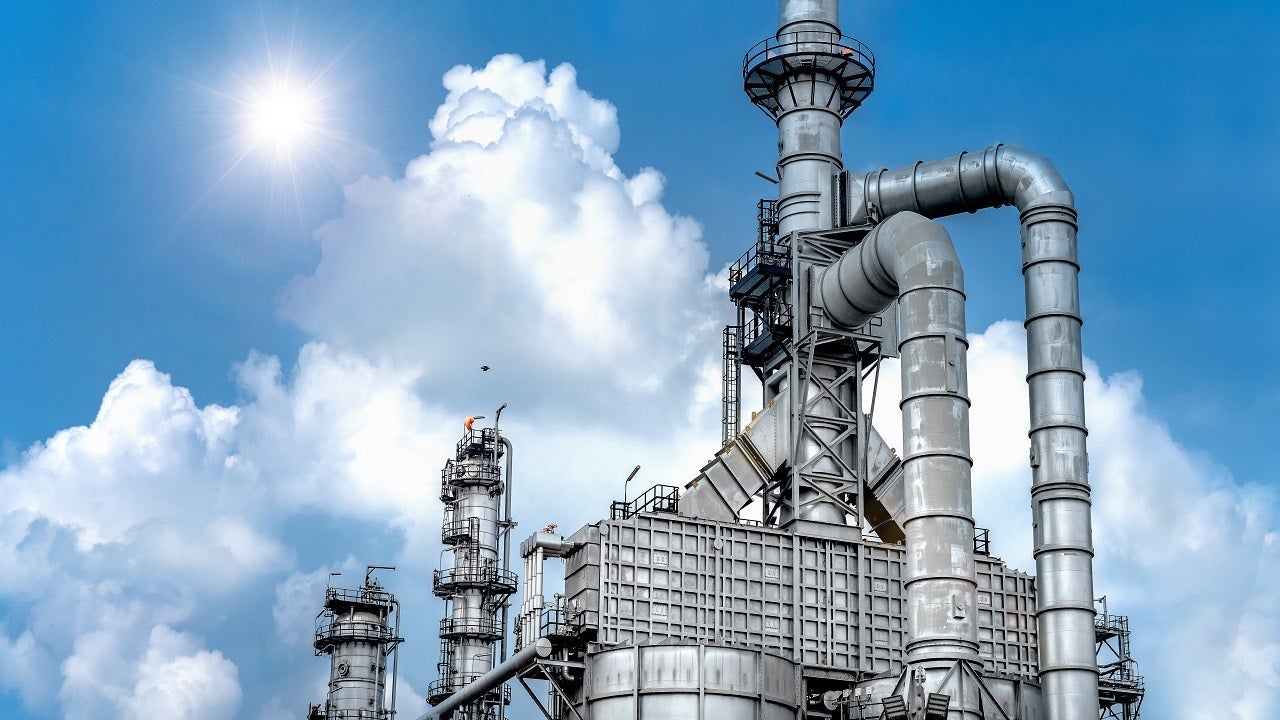
The Steel Ghost of 1970
Building a massive oil refinery in 2026 is like commissioning a state-of-the-art typewriter factory. It looks impressive on a campaign poster. It sounds like "energy independence." In reality, it is a desperate attempt to anchor the American economy to a sinking ship.
The announcement that President Trump has secured a massive investment from Reliance Industries to construct a new domestic refinery is being hailed as a triumph of industrial policy. The headlines are screaming about jobs and cheaper gas. They are lying to you. Or, at best, they are repeating a script written fifty years ago.
I have spent decades watching boardrooms chase "brick and mortar" trophies while the underlying math evaporated. This deal isn't about energy security. It is about building a monument to a legacy fuel in an era defined by a tectonic shift in how power actually moves.
The Margin Trap You Aren't Being Told About
The "lazy consensus" says more refineries mean lower prices. It’s a clean, simple Supply and Demand 101 graph. But refineries aren't simple. They are the most complex, low-margin, high-risk assets on the planet.
The economics of a new refinery are brutal. You are looking at a multi-billion dollar capital expenditure ($CAPEX$) before a single drop of gasoline leaves the gate. The construction alone takes years. By the time the ribbon is cut, the global demand for gasoline is projected to be in a freefall.
Think about the math.
- The Lead Time: Permits and construction will eat up the next 5 to 8 years.
- The Obsolescence: By 2031, solid-state batteries and cheaper lithium-iron-phosphate (LFP) chemistries will have reached mass-market parity.
- The Feedstock Risk: A refinery is only as good as its access to crude. Reliance is an expert at processing heavy, "sour" crude—the nasty stuff most people can't touch. But tethering American energy security to the ability to process imported heavy crude is not independence. It is just a different kind of dependency.
If you believe this refinery is being built for the American driver, you’re the mark. This is a play for the export market. Reliance isn't coming here to save you 10 cents at the pump. They are coming here to take advantage of American tax credits and cheaper land to refine fuel for the developing world.
The Reliance Playbook: Outsourcing Risk
Reliance Industries is brilliant. Mukesh Ambani didn't become a global titan by making sentimental bets.
Reliance operates the world’s largest refining complex in Jamnagar. They know exactly how to squeeze a penny out of a barrel of oil. Why would they want to build in the United States? It isn’t for the labor—which is more expensive. It isn't for the regulations—which are stricter.
They are here for the subsidies.
By aligning with the Trump administration’s push for "industrial rebirth," Reliance is positioning itself to capture massive federal incentives. They are offloading the risk of a dying industry onto the American taxpayer. If the refinery fails in 15 years because the world moved on to hydrogen and electrons, Reliance will have already recouped their investment through tax breaks and credits.
We are subsidizing the construction of a sunset industry.
Why "Energy Independence" Is a Flat Lie
Politicians love the phrase "energy independence." It sounds like a fortress. In reality, the global oil market is a single, interconnected pool.
If a refinery in Texas produces an extra 500,000 barrels of gasoline a day, it doesn't stay in Texas. It goes to the highest bidder. If a war breaks out in the Middle East, the price of oil spikes globally. A refinery in Ohio doesn't protect you from that.
True independence doesn't come from building more ways to process a commodity you don't control the price of. It comes from decoupling your economy from that commodity entirely.
When people ask, "How do we lower gas prices?" they are asking the wrong question. The right question is, "How do we make the price of gas irrelevant to the average worker's ability to get to their job?"
Building a refinery is doubling down on the status quo. It’s trying to win a marathon by buying more expensive sneakers instead of training a faster runner.
The Engineering Reality: Complexity vs. Reliability
A refinery is a chemical nightmare. To turn crude oil into usable fuel, you have to heat it, pressure it, and treat it with catalysts.
The standard process uses atmospheric distillation:
$$T_{boiling} = \frac{A}{B - \log P} - C$$
Where boiling points determine which "cut" of the barrel you get (naphtha, gasoline, diesel, etc.)
Older refineries in the US are aging out. They are inefficient, leaky, and prone to "unplanned maintenance" (industry speak for "it blew up"). The pro-refinery crowd argues that we need new ones to replace the old ones.
But here is the counter-intuitive truth: The capital required to build one new refinery could fund the localized microgrid infrastructure for twenty major cities. One of these options creates a resilient, decentralized power network. The other creates a massive, centralized target that depends on a global supply chain to function.
I have seen companies dump $10 billion into "upgrading" legacy systems only to realize the market moved faster than the concrete could dry. This is no different.
The Hidden Cost: Stranded Assets
In the financial world, we talk about "stranded assets." These are investments that lose their value before their expected lifespan is over because of changes in technology or law.
Imagine a scenario where the US government spends billions in incentives to get this refinery built. In 2035, global demand for refined petroleum drops by 30%. The refinery can no longer run at its "nameplate capacity." Refineries are binary: they either run at 90% plus efficiency, or they lose money every single day.
When that refinery becomes a "zombie" asset, who pays for the cleanup? Who pays for the thousands of workers who were promised "jobs for life" but got a decade of work before a bankruptcy filing?
We are setting up a future where the Rust Belt 2.0 isn't caused by overseas competition, but by a refusal to acknowledge that the era of internal combustion is over.
Stop Chasing the 1950s
The obsession with refineries is a symptom of a broader American sickness: the desire to return to a perceived "Golden Age" of industry.
We want to see smoke stacks. We want to see hard-hats. We want to see physical things being made. There is a nobility in that, sure. But there is no profit in it if the product is obsolete.
If we want to dominate the next century, we should be building the "refineries" of the future:
- Lithium processing plants (currently dominated by China).
- Grid-scale battery assembly.
- Advanced modular nuclear reactors.
These are the high-ground positions of the 21st-century economy. Instead, we are inviting an Indian conglomerate to come build a 20th-century relic on our soil.
The "Jobs" Myth
"This will create 10,000 jobs!"
No, it won't.
It will create 10,000 construction jobs for three years. Once the refinery is operational, it is a highly automated chemical plant. Modern refineries require a skeleton crew of highly specialized engineers and technicians.
The idea that a refinery is a "middle-class job engine" is a fantasy. It’s a capital-intensive business, not a labor-intensive one. We are trading long-term environmental and economic risk for a short-term bump in construction employment statistics. It is a bad trade.
The Real Energy Security
You want energy security?
- Diversify the feed: Move the fleet to electricity, which can be generated from hydro, solar, wind, and nuclear.
- Localize the storage: If the grid goes down, your car should be able to power your house. A refinery in Louisiana can't do that.
- Intellectual Property over Infrastructure: Own the patents for the next generation of energy, don't just own the pipes for the last one.
Reliance is playing the long game. They are getting the US to pay them to build an asset they can use to supply their global markets while our own domestic demand shrinks. They are taking our money to build their future.
The Trump-Reliance deal isn't a "win" for America. It’s a masterful extraction of value by a foreign entity using our own nostalgia as a crowbar.
Stop cheering for the construction of more gas stations when the rest of the world is building the internet.
Build for 2050, or don't build at all.