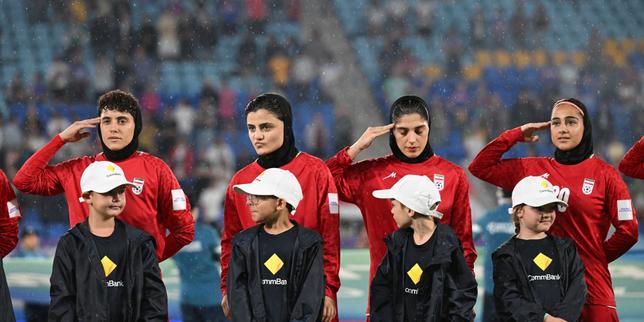
The headlines are predictable. Five Iranian women footballers seek asylum in Australia. Donald Trump fires off a Truth Social post or a campaign trail soundbite claiming he’s the only one who can "save" these athletes or "fix" the broken system that lets them flee. The media laps it up. It’s a perfect storm of geopolitical drama, gender rights, and sporting heroism.
It’s also a total fantasy. Also making headlines recently: The Mohamed Salah Decision Matrix Liverpools Financial and Sporting Equilibrium.
The mainstream narrative—the one being pushed by NDTV and every other major outlet—treats these athletes as pawns in a western moral victory. They frame the escape as a simple binary: oppressive regime versus enlightened democracy. But if you’ve spent a decade inside the machinery of international sports migration and the murky intersections of FIFA politics, you know the truth is far uglier. This isn't just about five women seeking a better life. It’s about the total failure of international sports governance and the opportunistic vultures who use human desperation to score points in a 24-hour news cycle.
The Asylum Pipeline Is Not a Career Path
Stop pretending that seeking refuge is a "win" for the sport. When five top-tier players leave a national system, that system doesn’t improve; it collapses. We’ve seen this movie before. From the Cuban baseball defectors of the 90s to the Afghan women’s team in 2021, the pattern is identical. The athletes get a week of glowing profiles, a few photoshoot opportunities, and then they hit the wall of reality. Further insights into this topic are detailed by Yahoo Sports.
The "lazy consensus" says Australia is the promised land for these players. Is it? Let’s look at the mechanics.
- Visa Purgatory: An asylum claim is not a contract with a Matildas-level club. It is a years-long legal slog.
- Athletic Atrophy: You cannot maintain elite-level fitness and tactical sharpness while living in temporary housing, worrying about family back home, and navigating a foreign bureaucracy.
- The Talent Gap: The jump from the Iranian Kowsar Women's Football League to the professional intensity of the A-League or European circuits is massive. Without a structured developmental bridge—which doesn't exist for refugees—most of these women will never see a professional pitch again.
I have seen dozens of "prodigies" from conflict zones arrive in Europe or Oceania with high hopes, only to be playing Sunday league football within two years because the "support" they were promised was just a PR stunt for a local politician.
Trump’s Rhetoric vs. Global Reality
Donald Trump’s involvement adds a layer of surrealism to an already volatile situation. His "message" isn't about the players. It’s about projecting a specific brand of American strength that ironically contradicts his own isolationist policies. You cannot claim to be the champion of oppressed foreign athletes while simultaneously advocating for the tightening of the very borders they need to cross.
It’s a classic case of political arbitrage. He is buying low on a human interest story to sell high to his base. But the problem isn't just one American politician. The problem is that the West treats these cases as "exceptions" rather than symptoms of a systemic rot in how FIFA manages member associations.
If you actually care about Iranian women's football, you don't celebrate when the best players leave. You demand why FIFA—an organization with a $4 billion reserve—allows the Iranian Football Federation (FFIRI) to continue receiving development funds while actively or passively creating an environment so toxic that its stars feel forced to vanish during an international trip.
The Myth of "Neutral" Sports Governance
FIFA loves to hide behind Article 4 of its Statutes, which claims "neutrality" in matters of politics. It’s a convenient lie. By refusing to sanction federations that systematically marginalize women, FIFA is making a political choice.
Consider the $G$ factor—the geopolitical weight—of Iran in Asian football. The AFC (Asian Football Confederation) is terrified of rocking the boat because Iran is a powerhouse in the men’s game and a massive TV market. They will sacrifice the safety and careers of a dozen women’s players to ensure the men’s World Cup qualifiers go off without a hitch.
We are told that "sport is a bridge." In reality, sport is a shield. It allows regimes to maintain a veneer of normalcy while the actual practitioners of the sport are fleeing for their lives. When these five players walked away in Australia, they weren't just seeking refuge; they were filing a physical protest against a global governing body that has ignored their emails for years.
The Australian "Fair Go" Fallacy
Australia’s involvement is equally shaded. While the Australian government and football fans are generally welcoming, the infrastructure for integrating "displaced elite athletes" is non-existent.
I’ve talked to agents who try to place refugee players. The conversation usually goes like this:
"She’s a national team starter from the Middle East."
"Great story. Can she get a work permit?"
"She’s on a protection visa."
"Call us when she’s a citizen. We don't have the international spots to waste on a project."
That is the brutal, unvarnished truth of professional sports. It is a meritocracy that requires stability—the one thing a refugee doesn't have. By cheering their "escape," we are often cheering the end of their professional careers without even realizing it.
The Nuance We’re Not Allowed to Discuss
Is Iran the villain here? Yes, but it’s not the only one.
There is a growing trend of Asylum as Strategy. Before you reach for the pitchforks, understand the logic. In a world where legal migration for Iranians is nearly impossible due to sanctions and political tension, the "defect during a tournament" move is the only lever these women have left. They aren't just fleeing oppression; they are hacking a broken immigration system.
But this hack has a cost. Every time a player defects, the screws tighten on those left behind. Security details for women’s teams will double. Chaperones will become guards. Passports will be confiscated at the airport the moment they land for away games. These five women found a way out, but they may have inadvertently welded the door shut for the next generation of Iranian girls.
Stop Sending "Messages" and Start Changing Rules
If Donald Trump or any other world leader actually wanted to disrupt this cycle, they wouldn't post on social media. They would push for a fundamental rewrite of how international sports law treats state-sponsored harassment.
- Direct Funding: Bypass the national federations. If a federation is known for harassing female players, FIFA should distribute "Women’s Development" funds directly to independent clubs or international player unions like FIFPRO.
- The "Safety Net" Visa: Developed nations (the US, Australia, UK) should create a specific, fast-track athletic visa for high-performance individuals from designated "At-Risk" federations. This removes the "refugee" stigma and allows them to sign professional contracts immediately.
- Sanction the C-Suite: Stop banning the teams; start banning the executives. If a national team player feels the need to seek asylum, the President and Board of that country's Football Federation should be banned from all FIFA activity for five years.
The Reality Check
The five women currently in Australia are likely done with elite football. They will spend the next 24 months in a blur of legal interviews, low-wage jobs to pay for rent, and the crushing weight of survivor's guilt. They will watch the next World Cup from a couch, not a dugout.
The media will have moved on to the next shiny tragedy. Donald Trump will be talking about something else. Australia will be hosting another tournament.
We aren't watching a "great escape." We are watching the slow-motion dismantling of a career, facilitated by a global community that prefers a feel-good headline to a hard-nosed policy change.
If you want to save the players, stop treating them like a news cycle. Treat them like the professional assets they are and fix the system that forced them to choose between their flag and their freedom. Anything less is just noise.
Don't clap for the escape. Cry for the necessity of it.
---