Most conservation stories move slowly. You plant trees, wait twenty years, and hope the soil holds.
Island restoration doesn't work like that. When you clear out invasive predators from a small Pacific island, the ecological rebound hits like a snapped rubber band. That's exactly what happened in Samoa on Nu'utele and Nu'ulua—two uninhabited volcanic islands off the eastern tip of Upolu—where sea turtles are nesting again after conservation teams wiped out invasive Polynesian rats. Meanwhile, you can explore similar events here: Stop Calling Gadi Eisenkot a Savior Because the General Myth Is Breaking Israeli Politics.
It sounds almost too simple. Kill the rats, save the turtles. Yet the mechanics behind why this works—and why so many Pacific restoration projects fail before they even start—tell a much bigger story about how island ecosystems actually function.
What Happened on Samoa's Aleipata Islands
Nu'utele and Nu'ulua sit inside the Aleipata Marine Protected Area. They're steep, rugged, and covered in coastal forest, making them prime real estate for native wildlife that can't survive on the main island of Upolu. To explore the full picture, check out the recent analysis by TIME.
For decades, both islands were overrun by Polynesian rats (Rattus exulans). These rodents weren't native to Samoa. Ancient seafarers brought them across the Pacific centuries ago, and once established, the rats did what invasive rodents always do on isolated islands. They ate everything they could reach.
Bird eggs vanished. Native land crabs disappeared. Insects, seeds, and reptiles got hammered.
The Samoan government's Ministry of Natural Resources and Environment (MNRE), working alongside international conservation partners like BirdLife International and the Secretariat of the Pacific Regional Environment Programme (SPREP), launched eradication operations to clear the rats out. Nu'ulua was cleared first, followed by operations on Nu'utele. After years of monitoring to confirm the islands were genuinely rat-free, field teams started seeing signs they hadn't recorded in years.
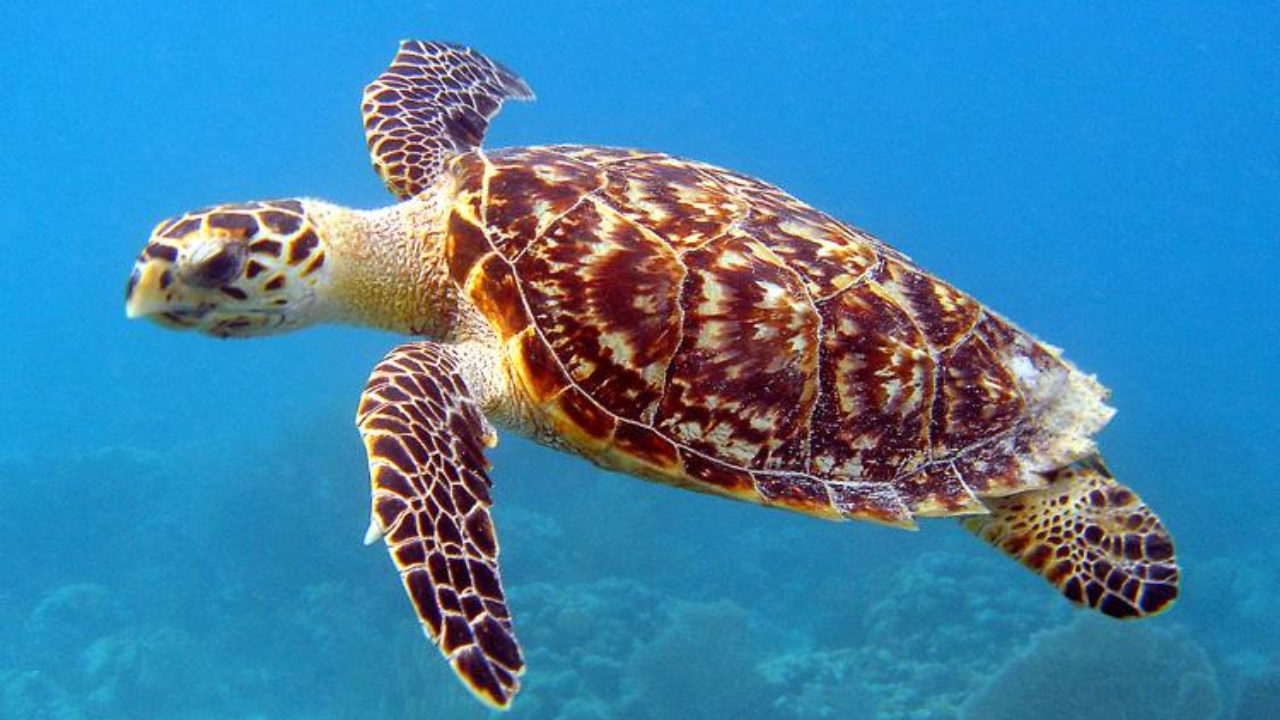
Green sea turtles (Chelonia mydas) and critically endangered hawksbill sea turtles (Eretmochelys imbricata) were coming ashore to nest again.
Not just passing through the reef. Actually hauling up onto the beaches, digging nests, and laying eggs.
Why Rats Are a Nightmare for Sea Turtles
You might wonder how a rodent weighing a few ounces threatens a marine reptile that weighs hundreds of pounds. An adult green turtle doesn't care about a rat.
The problem isn't the adults. It's the hatchlings.
When sea turtle eggs incubate in warm sand for roughly two months, the hatchlings emerge together—usually at night—and scramble toward the ocean. On a rat-infested island, that short crawl across the sand turns into a slaughter. Polynesian rats dig into shallow nests, attack hatchlings as they break through the sand crust, and pick off stragglers before they ever reach the surf.
Even worse, rats don't just eat baby turtles. They wreck the entire coastal food web that supports a healthy nesting beach.
- Seabird populations collapse. Rats eat eggs and chicks of ground- and tree-nesting seabirds like boobies, noddies, and frigatebirds.
- Nutrient cycles stall. Fewer seabirds mean way less guano washing off the island into the surrounding coral reefs.
- Reef health declines. Research across the Pacific—including landmark studies in the Chagos Archipelago published in Nature—has shown that rat-free islands have significantly healthier coral reefs and faster-growing reef fish because seabird guano fertilizes the nearshore water.
Healthy reefs mean healthy seagrass beds and sponge habitats. Those are the exact feeding grounds green and hawksbill turtles rely on. So when you remove rats from an island, you aren't just stopping predators on the beach. You're restarting the nutrient pump that feeds the entire nearshore marine ecosystem.
The Brutal Logistics of Clearing an Island
If you've never worked on an island eradication project, it's easy to underestimate how hard it is to get rid of every single rat.
Missing two rats—one male and one female—means the entire population bounces back within a couple of years. You don't get partial credit.
On flat coral atolls, teams can sometimes walk grid lines by hand to spread bait. Nu'utele and Nu'ulua aren't flat atolls. They're jagged volcanic tuff cones with vertical cliffs, dense tropical canopy, and surf crashing against basalt boulders. You can't walk a neat grid up a sheer cliff face.
To reach every square meter of habitat, Pacific island eradications rely on helicopter-slung spreader buckets using GPS flight lines. Pilots fly precise, overlapping transects across the island, dropping specialized cereal bait pellets laced with brodifacoum—an anticoagulant rodenticide—into the canopy and onto the steep slopes.
Timing is everything. Drops happen during the dry season when natural food is scarce, ensuring hungry rats take the bait immediately. Teams usually run two separate drops spaced weeks apart to catch any young rats that were still in underground burrows during the first pass.
Then comes the hardest part. Waiting.
Conservationists have to wait at least two full years after the final bait drop before declaring an island rat-free. They set up chew blocks, tracking tunnels, and trail cameras across the terrain. One tooth mark on a wax block means the operation failed and the whole process has to start over.
What Most People Get Wrong About Island Eradications
Whenever news breaks about a successful island eradication, the comment sections usually fill up with the same predictable pushback. People hear "rodenticide" and assume the cure is worse than the disease.
Honestly, that concern comes from a misunderstanding of how island ecosystems work compared to continental ones.
On a mainland continent, spreading poison across a forest would devastate native small mammals—shrews, voles, squirrels, mice. Oceanic islands like Samoa have no native terrestrial mammals at all, aside from bats. Flying foxes in Samoa eat fruit and nectar high in the canopy; they don't eat cereal pellets off the forest floor.
What about native birds and crabs? Land crabs actually have a completely different blood-clotting mechanism than mammals, so anticoagulants don't affect them the way they affect rats. Still, crabs will eat the bait, which means teams have to calculate crab density beforehand and drop enough extra pellets so the crabs don't eat all the bait before the rats get a share.
For native birds like the tooth-billed pigeon (manumea)—Samoa's critically endangered national bird—or banded rails, teams manage risk carefully. Sometimes vulnerable birds are temporarily held in aviaries during the baiting window and released once the pellets break down in the tropical rain.
The alternative is doing nothing. And on islands, doing nothing isn't neutral. It's a slow death sentence for endemic species that evolved for millions of years without mammalian predators.
The Bigger Picture Across the Pacific
Samoa's success isn't an isolated fluke. It's part of a proven playbook that has transformed island conservation over the last three decades.
New Zealand pioneered these techniques in the 1980s and 1990s, clearing rats off progressively larger islands until they proved it could work on rugged, mountainous terrain. Since then, the model has scaled across the Pacific.
Palmyra Atoll in the central Pacific went through a massive rat eradication in 2011. Within a few years, native Pisonia forests exploded with seedlings that rats had been eating for decades, land crabs rebounded by the thousands, and seabird colonies expanded. On Tetiaroa in French Polynesia, clearing rats led to measurable increases in both seabird nesting and nearshore reef productivity.
Across the globe, data compiled by organizations like Island Conservation shows that invasive mammals are implicated in roughly 86% of recorded island extinctions. Removing them consistently triggers some of the fastest, most cost-effective biodiversity recoveries anywhere on Earth.
Yet the work doesn't stop once the rats are gone. Biosecurity is the real long-term battle.
Nu'utele and Nu'ulua sit just a short boat ride from Upolu. Fishermen visit the surrounding waters. Tourists occasionally land on the beaches. All it takes is one pregnant rat jumping off a supply boat or hiding in a bundle of gear to undo years of work and hundreds of thousands of dollars in funding.
That's why local community buy-in in the Aleipata district matters way more than international funding. When village councils, local fishermen, and boat operators enforce strict gear checks—inspecting bags, sealing food containers, keeping boats moored offshore rather than beached—the islands stay clean.
How This Applies Beyond Samoa
You don't need to be running a Pacific conservation agency to take something practical from what happened on Nu'utele and Nu'ulua.
If you support conservation charities, stop pouring money exclusively into feel-good tree-planting campaigns that have zero follow-up monitoring. Look for organizations focused on invasive species removal and island biosecurity—groups like Island Conservation, BirdLife International, or SPREP. Dollar for dollar, removing invasive predators delivers measurable, permanent habitat recovery that most mainland projects can't touch.
And if you ever travel to remote islands in the Pacific, Hawaii, or the Galápagos, treat island biosecurity like airport security. Check your backpack seams for seeds, wipe mud off your hiking boots, and never bring unsealed food onto uninhabited islets. Protecting places like Samoa's turtle nesting beaches comes down to keeping the gate closed once the predators are finally out.