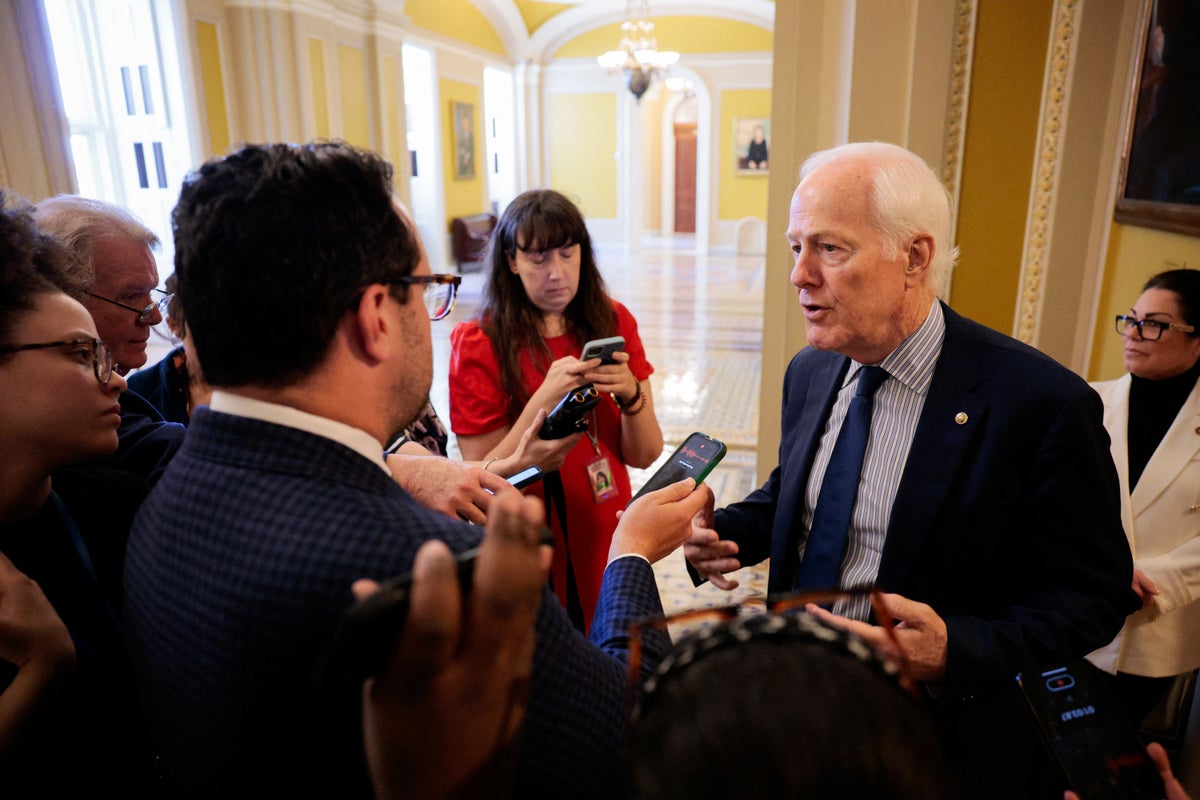
John Cornyn has spent decades mastering the polite, institutional game of the United States Senate. But after losing his Texas primary, the veteran Republican isn't holding his tongue anymore. He's furious about a year-long delay in getting Texas reimbursed for over $10 billion in border security cash that Congress already cleared. So he decided to use the one thing that still carries weight in Washington: cold, hard leverage.
As the White House tries to push a massive $70 billion immigration spending bill through the Senate, Cornyn is holding back his support. It's a classic power play, and it signals a massive shift in how outgoing lawmakers view their lame-duck status.
Playing Hardball with a President Who Prefers Turbulence
For years, congressional Republicans walked on eggshells to avoid public spats with the White House. The calculus was simple: cross the leader of the party, and you lose your next primary election. But for lawmakers who are already on their way out, that threat evaporates.
Cornyn served as the GOP whip during the first two years of the administration, a grueling role that required constant communication with the president. They talked regularly leading up to the May primary, but the phone lines went completely cold after Cornyn lost. Now, the Texas senator admits those chats weren't doing much good anyway. He noted that conversations with the commander-in-chief aren't particularly useful because the president will change his mind based entirely on the last person he spoke with on the phone.
The real friction comes down to basic leadership styles. Most lawmakers view predictability as the lifeblood of governing. The White House operates under a completely different playbook. Cornyn put it bluntly, stating that the president seems to revel in chaos, a trait he hasn't seen in any other leader. While most people try to minimize turbulence in their daily lives, the administration appears to actively lean into it.
The Broken Legislative Assembly Line
We're seeing the fallout of this approach in real time. Take the recent shakeup at the Directorate of National Intelligence. The administration's sudden move to place Bill Pulte in charge of the DNI while trying to hitch surveillance laws to new voter ID requirements has left Senate Republicans scratching their heads.
It's a pattern that makes traditional deal-making nearly impossible. Look at how things stack up for the party right now:
- The Midterm Threat: Republican insiders are deeply panicked about upcoming elections. In key battlegrounds like Ohio, high-profile candidates are trailing by significant margins in areas where the party usually wins easily.
- The Filibuster Fantasy: Outgoing senators are tired of colleagues who pitch unrealistic strategies. Cornyn called out lawmakers who act like they can simply beat the opposition into submission, noting flatly that the Senate just doesn't work that way.
- The Unchecked Executive: Traditional norms around Cabinet selections are under immense pressure. While nominees like Todd Blanche face intense vetting over sensitive issues—like potential Department of Justice tax audit immunity agreements with the IRS—the institutional willingness to rubber-stamp every appointment is fading.
During private sit-downs, outgoing senators are forcing tough conversations. When asked directly what a nominee would do if ordered by the president to break the law, the answers are often telling. It shows that institutionalists are no longer willing to look the other way just to keep the peace.
The Freedom of Having Nothing Left to Lose
Cornyn isn't alone in this newfound independence. A small but vocal group of ousted or retiring Republicans is forming a defensive wall against executive overreach. Senator Lisa Murkowski of Alaska, who famously survived her own primary loss years ago, pointed out that focusing on the future rather than replaying past grievances is the only healthy path forward. Senator Bill Cassidy of Louisiana, who also lost a primary challenge, shared a similar sentiment, noting that not returning to Washington gives a politician a rare, clear focus.
This doesn't mean these lawmakers are staging an open rebellion to tank the administration's entire agenda. Cornyn still votes with his party the vast majority of the time, and he's caused far fewer headaches for leadership than outgoing figures like Mitch McConnell. But the willingness to blindly follow orders is gone.
The political reality is brutal. Politics is a hyper-competitive game where players rarely look out for anyone but themselves. When the threat of a primary challenge is gone, the leverage shifts back to the individuals who actually understand how the gears of the Senate turn.
If you want to see how these growing internal party divides are playing out on the national stage, this detailed look at growing tensions between Trump and GOP lawmakers breaks down the specific legislative battles currently stalling in Congress.
The White House might still hold the megaphone, but the lawmakers holding the voting cards are starting to realize they don't have to jump every time the phone rings. For a Washington infrastructure that runs on precedent, that realization changes everything.