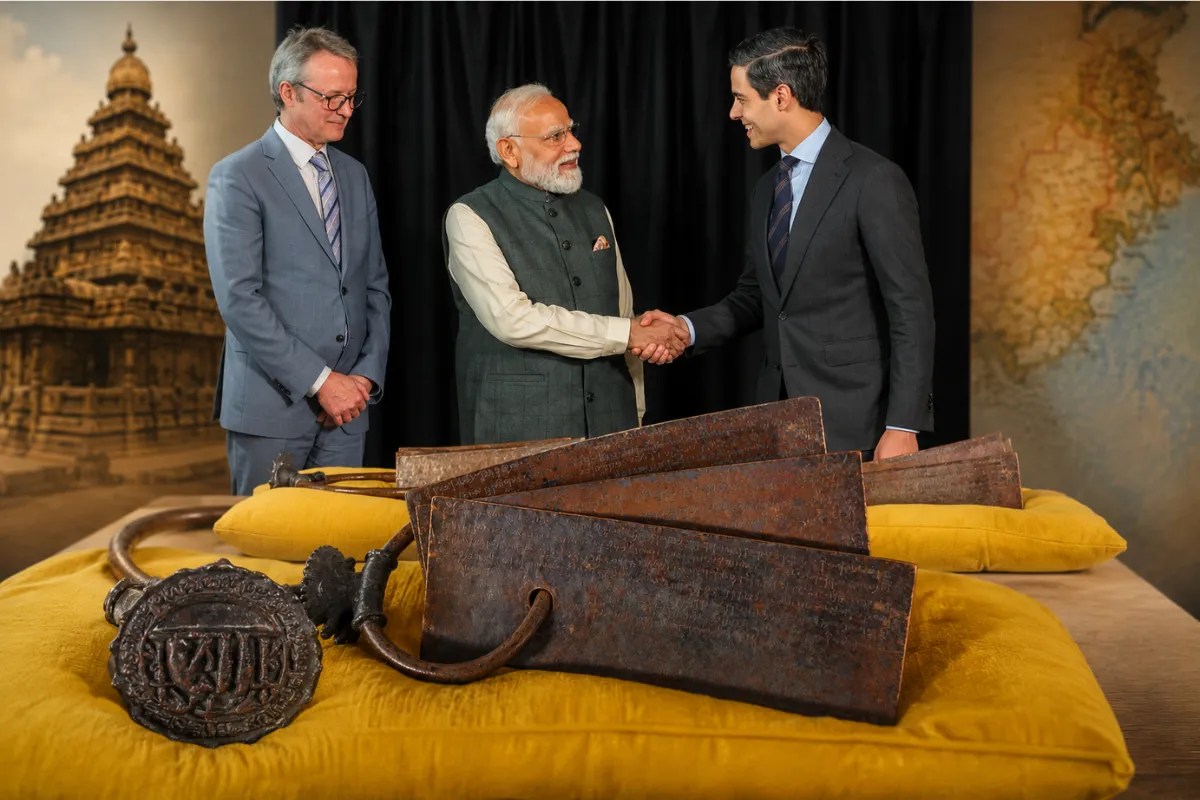
History isn't just sitting in textbook pages. Sometimes, it's etched onto ancient metal sheets that travel across oceans, get lost in bureaucratic archives, and finally make their way back home. That's exactly what happened when the Netherlands officially returned 11th-century Chola copper plates to India.
Prime Minister Narendra Modi called it a proud moment for every Indian. He's right. But to truly understand why this matters, you have to look beyond the political statements. This isn't just about getting an old artifact back. It's a major victory for diplomatic restitution and a huge moment for South Indian history.
The Incredible Journey of the Chola Copper Plates
The Chola dynasty didn't just rule Tamil Nadu; they dominated maritime trade across Southeast Asia. They recorded everything. Royal decrees, land grants, and temple donations were meticulously carved onto copper plates, often held together by a massive royal seal.
These specific 11th-century plates are invaluable. They offer an unfiltered look into the administrative genius of the Cholas. We're talking about detailed records of tax exemptions, village boundaries, and local governance from a thousand years ago.
So, how did they end up in Europe?
Colonial-era trade and illegal smuggling networks systematically drained India of its historical wealth for centuries. Many objects landed in European museums or private collections legally under the laws of that time, while others slipped through the cracks of the black market. The Dutch public and institutional collections ended up holding these specific artifacts.
The recovery happened because of sustained diplomatic pressure and a shifting global attitude toward cultural heritage. The Netherlands government, following modern international ethical standards regarding colonial-era acquisitions, verified the provenance of these plates. Once the historical ownership was established, they did the right thing. They handed them back to Indian authorities.
What Most People Get Wrong About Ancient Indian Inscriptions
When people hear about ancient inscriptions, they usually think of religious chants or royal poetry. That's a mistake. The Chola copper plates are essentially legal contracts and economic ledgers.
If you want to know how a Chola village actually functioned, you don't read the epic poems. You read these plates.
- They prove the existence of highly advanced local self-governance systems.
- They outline complex water management and irrigation rules.
- They detail the exact percentages of agricultural produce allocated for public infrastructure.
Losing these plates meant losing the receipts of Indian civilization. Getting them back means historians can now analyze the physical objects using modern imaging technology. We can learn more about the metallurgy used by 11th-century craftsmen and read specific scripts that might clarify disputed timelines in South Indian history.
The Bigger Picture of Cultural Restitution
This isn't an isolated incident. The return of the Chola plates highlights a massive, ongoing global shift. For decades, Western museums hid behind the excuse that developing nations couldn't protect their own heritage. That argument is dead.
India has drastically upgraded its museum infrastructure and tracking systems. The Archaeological Survey of India has been aggressively pursuing stolen and misplaced artifacts worldwide. Governments in Europe are realizing that holding onto colonial loot is a bad look.
We've seen the US, Australia, and various European nations return hundreds of stolen idols, coins, and manuscripts over the last few years. The return of these copper plates from the Netherlands sets a solid precedent for other European nations currently holding onto significant Tamil and broader Indian artifacts.
What Happens Next with the Artifacts
The plates won't just sit in a dark room. The immediate next step involves rigorous conservation work. Experts will clean the metal without damaging the inscriptions, followed by high-resolution digital scanning.
Once digitized, these records will become accessible to global scholars. They'll likely be housed in a prominent national or state museum where the public can actually see them.
If you want to support this momentum, stop viewing museums as boring weekend spots. Visit them. Demand better curation. The more interest the public shows in recovered heritage, the more resources the government will allocate to bringing the rest of our history back home.