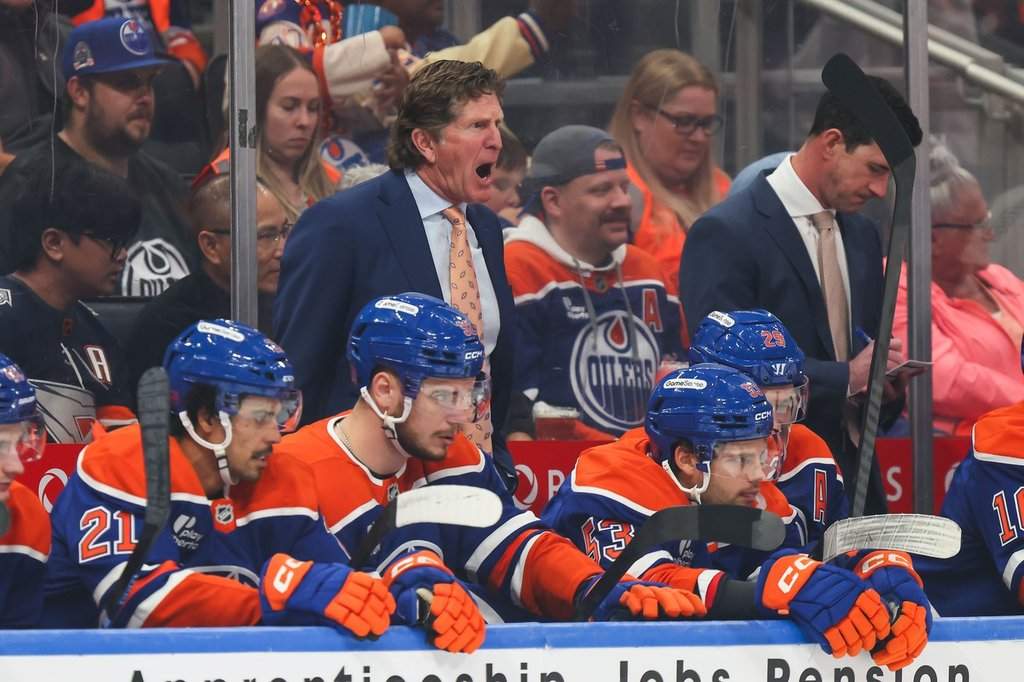
Revenge does not score goals. Special teams do. Line matchups do. Goaltending save percentages do.
Every time a coach with ties to one franchise steps onto the ice against a former employer—especially when the Edmonton Oilers host the Toronto Maple Leafs—the lazy consensus kicks into overdrive. Lazy sports coverage treats a bench boss's past address like a magic potion or a cursed voodoo doll. It sells clicks. It fills pregame television panels. And it gets the hockey wrong almost every single time. You might also find this related story interesting: When Your Childhood Heroes Rewrite the Rules.
I have spent years tracking hockey operations, analyzing roster construction, and watching front offices burn tens of millions of dollars chasing emotional storylines instead of structural fit. I have seen organizations hire big-name benches assuming pedigree and grudges automatically translate into playoff grit. Usually, those narratives collapse by the first commercial break of the second period.
When the Oilers host the Leafs, the real story is never a single coach's personal ledger with Toronto or Edmonton. The real story is salary-cap geometry, transition speed, defensive zone coverage, and who controls the slot when star forwards are on the ice. As discussed in latest articles by Yahoo Sports, the results are worth noting.
What Lazy Coverage Gets Wrong About Former-Team Matchups
Traditional game previews love a neat villain or a plucky underdog. When a coach faces a former team, writers reach for words like "motivation," "score to settle," and "insider knowledge." That framing sounds dramatic. It is also mostly theater.
The Myth of Secret Insider Knowledge
Hockey is not a espionage ring. Systems across the NHL are scouted down to the millimeter. Video coaches break down breakout patterns, forecheck triggers, neutral-zone regroups, and power-play umbrella formations before breakfast.
Even if a coach spent seasons working within or around a rival organization, rosters turn over rapidly. Players get traded. Prospect pools cycle. Assistant coaches move on. A structure that worked with one group of skaters three years ago fails completely when applied to a different roster with different skating speeds and shot profiles.
A coach does not win a game by remembering where the coffee machine was in the old dressing room. A coach wins by managing line changes, protecting high-danger ice, and getting saves.
Why "Extra Motivation" Is a Mirage
Every NHL game is played by elite athletes who already care deeply about winning, contracts, ice time, and standings points. Suggesting that a coach suddenly discovers a hidden gear because of a former employer implies they were coasting before. That insults both the coach and the game.
When a team looks sharper in a high-profile matchup, look at concrete tactical variables first:
- Deployment discipline: Are top lines getting sheltered shifts or tough defensive draws?
- Gap control: Are defenders stepping up at the blue line or backing into their own goalie?
- Shot quality: Are shots coming from the perimeter or off east-west passes through the royal road?
- Special teams execution: Who wins the net-front battle on the power play and clears rebounds on the penalty kill?
The Real Question Behind Oilers vs. Leafs
Search engines fill up with variations of the same tired questions whenever Edmonton and Toronto meet: Does facing a former team give a coach an edge? Who has the advantage when the Oilers host the Leafs? Does emotional history swing a tight NHL game?
Those questions start from a flawed premise. They treat coaching history as an independent variable that overrides roster talent and tactical execution.
A sharper question is this: How do the specific roster strengths and flaws of the Oilers and the Maple Leafs collide over sixty minutes, and how does the coaching staff manage those collisions?
Comparing the True Drivers of the Matchup
Forget the narrative arc for a minute and look at what actually decides games between high-profile contenders and playoff hopefuls:
| Analytical Factor | Narrative Take | Operational Reality | Impact on Game Outcome |
|---|---|---|---|
| Bench History | Personal grudge or inside track | Video scouting already maps systems; rosters change fast | Low |
| Top-Six Firepower | Star power guarantees offense | Transition efficiency and slot access dictate actual goals | High |
| Defensive Structure | Toughness equals good defense | Stick detail, box-outs, and clean exits prevent high-danger chances | High |
| Goaltending | Streakiness or big-game aura | Rebound control and save percentage on unscreened vs. screened shots | Very High |
| Special Teams | Momentum decides power plays | Zone entries, bumper passes, and penalty-kill pressure swing scorelines | High |
A Thought Experiment on Bench Influence
Imagine a scenario where a coach with deep ties to Toronto stands behind the bench as the Oilers host the Maple Leafs. Suppose the home team dominates possession in the first period, outshooting the visitors 16 to 6, yet trails 2 to 0 because of two defensive-zone turnovers and a deflected point shot.
Did the coach's past connection to the Leafs cause the turnovers? No. A puck bounced off a skate, or a winger made a blind cross-ice pass under pressure. Now imagine the reverse: the home team wins 4 to 1 behind two power-play goals and a .940 save percentage. Was that a triumph of personal history? No. Special teams and goaltending carried the night.
What Heavy Hitters in Hockey Analytics Actually Emphasize
Serious hockey analysts—people who built the modern statistical framework of the sport, such as Eric Tulsky, Meghan Chayka, and the pioneers behind expected goals and shot-location tracking—have spent years pushing back against storytelling clichés. Their work centers on repeatable processes rather than post-game rationalizations.
When a team generates high expected goals (xG), controls shot share at five-on-five, and limits opponents to low-danger chances, it puts itself in position to win consistently over an 82-game schedule. One game can still go sideways due to variance or a hot netminder. Over a season, process beats narrative every time.
Look at how modern front offices evaluate coaches today. General managers care about communication with star players, adaptability when injuries hit the lineup, clarity of systems, and willingness to adjust when a game plan stops working. Past ties to an opponent are a footnote, not a blueprint.
Actionable Ways to Watch a High-Drama NHL Game
If you want to understand what happens on the ice when the Oilers host the Leafs—without getting duped by pregame hype—change how you watch the first ten minutes.
- Watch the first three shifts for pace and gap. Notice whether defensemen force dump-ins early or allow clean zone entries with speed.
- Track high-danger chances, not raw shot totals. Thirty-five shots from the blue line often mean less than twelve clean looks from the slot.
- Count zone exits under forecheck pressure. The team that moves the puck out of its own end cleanly without icing or coughing it up controls the flow of the game.
- Watch the bench after a bad goal. A sharp coaching staff keeps lines rolling calmly instead of panicking into chaotic double-shifting.
- Judge the result against the process. Winning ugly happens. Losing after dominating territorial play happens too. Separate the scoreboard from the underlying performance.
The Honest Catch With Being Contrarian
Being contrarian has a real downside, and pretending otherwise would be dishonest. Sometimes the dramatic storyline and the tactical reality line up by coincidence. A coach who knows a rival's tendencies can make a smart mid-game tweak. A player or coach who feels sharp in a spotlight game can bring crisp energy to the room.
When that happens, contrarians who dismiss every storyline reflexively can look too clever by half. The discipline is not rejecting emotion or history automatically. The discipline is demanding proof on the ice before giving credit to the narrative.
What Actually Matters When the Puck Drops
Storylines fade the second the referee drops the puck. The Oilers and the Maple Leafs do not play against a headline. They play against each other's speed, structure, discipline, and execution for sixty minutes.
Ignore the noise about old ties and settled scores. Watch the matchups, watch the puck management, and let the ice tell the truth.



