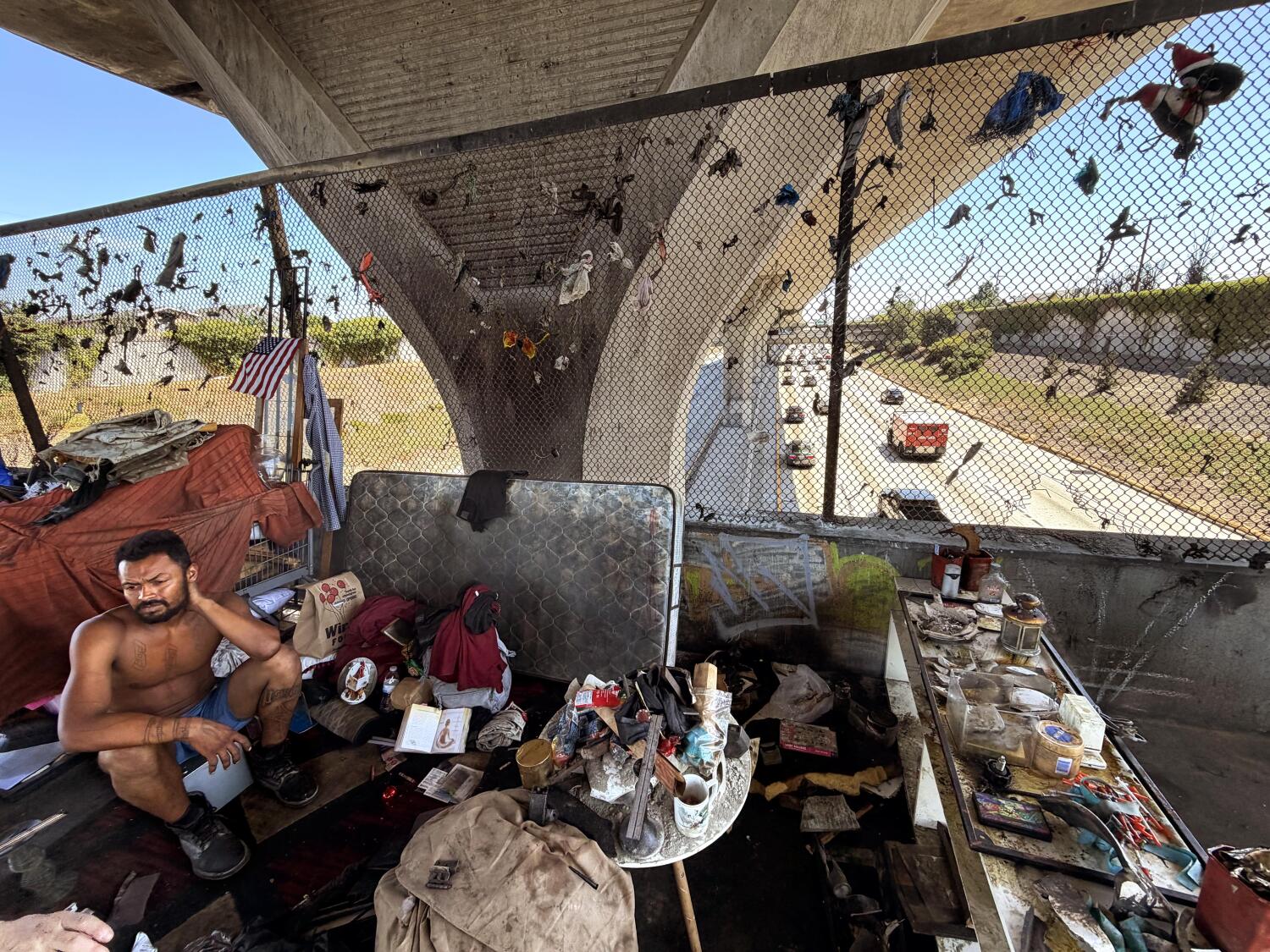
The concrete stays cold long after the sun goes down.
If you have ever stood on a Los Angeles sidewalk at two in the morning, you know the sound of the city shifting in its sleep. Sirens wail in the distance, distant tires hiss against damp asphalt, and somewhere down the block, a shopping cart wheel squeaks in a rhythmic, desperate plea. We drive past these moments every single day. We look at the tents pooled under overpasses like bruised shadows, and we tell ourselves a quiet story. We tell ourselves that someone is coming to fix it. We tell ourselves that an address, once given, stays pinned to a person for good.
Then the data arrives. And the story fractures.
Look closely at the numbers behind programs like Inside Safe, Mayor Karen Bass's ambitious initiative designed to sweep away the encampments and usher unhoused individuals into motels and temporary shelters. The vans pull up. Workers clip zip-ties. Mattresses are hauled away. People pack their lives into black plastic bags. The streets are cleared. It looks like progress.
Except the vans return to the exact same corners. Months later. Sometimes weeks later.
Why?
To understand that, you have to abandon the illusion that homelessness is a logistics problem. It is not a misplaced box that merely needs a new shelf. It is a chronic, bleeding fracture in the social architecture, and temporary housing without structural healing is just a waiting room for the sidewalk.
Consider a hypothetical resident named Marcus. Marcus spent four years under the 101 freeway. When the Inside Safe team arrived at his encampment, he was tired. His joints ached from the damp winter air, and a persistent cough rattled in his chest like loose change in a tin can. They offered him a room. A clean bed. A lock on the door. To Marcus, it felt like winning a lottery he never bought a ticket for.
He packed his two remaining bags, left behind the frame of a rusted bicycle he used to scavenge parts, and climbed into the van.
For three weeks, the room was a sanctuary. He slept fourteen hours a day, the deep, heavy sleep of someone who finally felt safe enough to let his guard down. But sanctuary has an expiration date when the foundation beneath it is hollow.
The motel room was temporary. That was the rule. Ninety days, maybe six months, while caseworkers scrambled to find permanent supportive housing that simply did not exist in sufficient quantities. The city's housing stock is a bottleneck so tight you could measure the clearance in millimeters. When the temporary placement ends, the caseworker looks at Marcus with genuine sympathy, shakes their head, and explains that the voucher didn't convert. The affordable unit fell through. The waitlist is five years deep.
So Marcus has a choice. He can accept another temporary band-aid miles away from any community he knows, or he can pack his two bags back into the plastic sacks and walk back to the concrete he understands.
He walks back.
The street remembers him. The cold concrete welcomes him back with familiar indifference. And two blocks away, the Inside Safe team logs another address on their spreadsheet, preparing to dispatch the vans to the same place they cleared last year.
This is the loop.
Critics look at this cycle and scream about failure. Cheerleaders look at the initial motel placements and scream about triumph. Both miss the quiet, devastating truth living in the middle. The programs are working precisely as designed, and yet the system is failing entirely. You cannot sweep chronic vulnerability into a temporary motel and expect permanent transformation without addressing the terrifyingly steep cliffs of mental healthcare, addiction treatment, and affordable housing construction that follow every single person the moment they step through that motel door.
The city spends millions. The vans roll out before dawn. Clipboard-wielding officials check boxes, track metrics, and compile reports that look pristine in municipal binders. Success is measured by the number of tents removed, the number of bodies sheltered for a night, a week, a month.
Yet the people remain trapped in transit.
Imagine trying to bail out a sinking ship with a slotted spoon. You are moving water. You are working until your muscles burn and your palms blister. You can even prove mathematically that you are shifting gallons of the ocean every hour. But the hull is cracked wide open, and the sea refuses to stop pouring in.
We have built an entire industrial complex around managing the symptoms of poverty while staring away from its root causes. We treat the crisis as an event rather than a condition. An encampment cleanup is treated like a finish line, when it is actually nothing more than the starting gun for a marathon nobody is training for.
When you drive past that corner tomorrow, look past the cleared pavement. Look past the swept-up debris and the fresh asphalt. Ask yourself what happens when the motel room darkens, when the voucher expires, and when the only thing waiting at the end of the program is the same cold sidewalk that was there when this all began.
The cart wheel keeps squeaking. The shadows lengthen. And the vans are already fueling up for tomorrow morning's route.


/getty-brown-bear-56afcf215f9b58b7d01d5195.jpg)