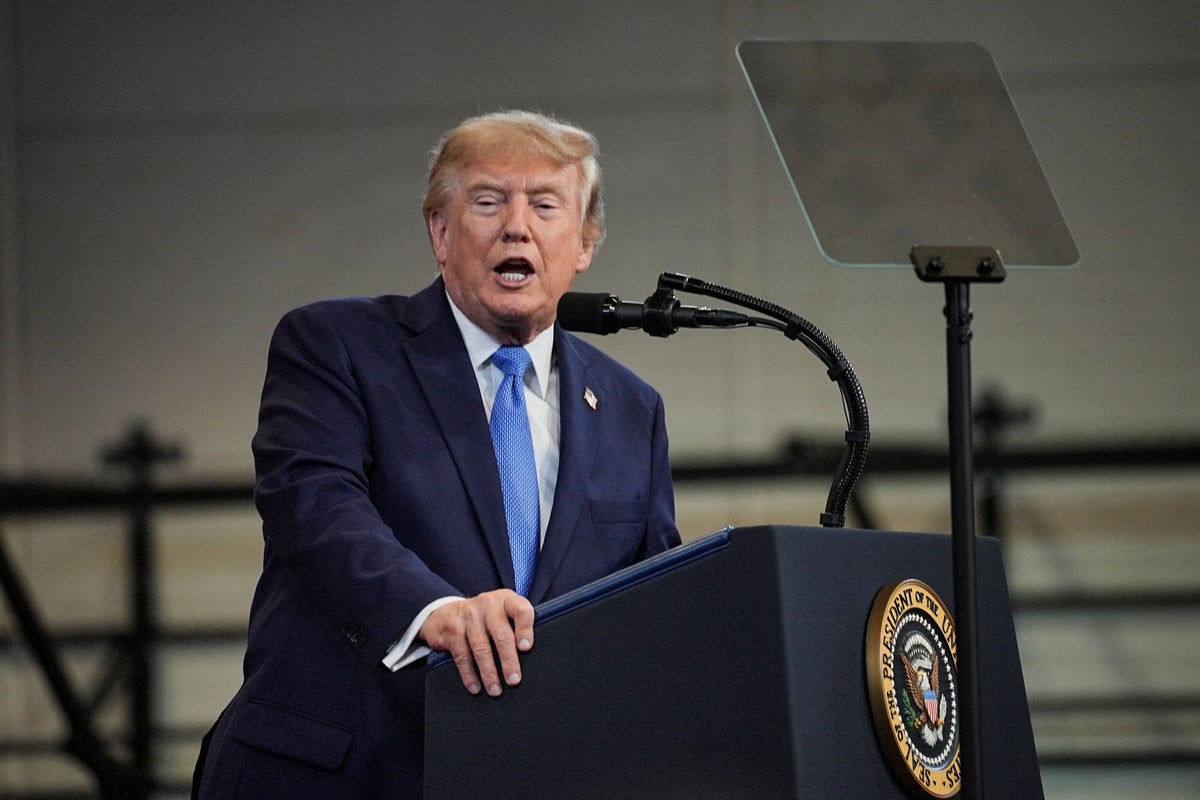
Donald Trump recently claimed during a New York police academy address that "young, beautiful girls" frequently approach him at the White House to thank him for improving urban safety in Washington, D.C. This phrasing immediately drew sharp scrutiny and media attention, fitting a long-running pattern where political discourse from the nation's highest office routinely blends policy announcements with idiosyncratic, highly personalized commentary.
Understanding why these remarks generate such intense reactions requires looking past the individual headlines and examining the mechanics of modern political communication.
The Mechanics of Off-the-Cuff Oratory
Political speeches are rarely monolithic. Candidates often balance prepared teleprompter remarks with unscripted, stream-of-consciousness riffs designed to command a room's attention.
When a speaker relies heavily on adjectives like "young" and "beautiful" to characterize citizens expressing gratitude, the intent is rarely to deliver a precise demographic breakdown. Instead, it serves a rhetorical function. It paints a vivid, albeit unconventional, portrait of urban rescue.
Critics hear these remarks through the lens of inappropriate objectification and a long history of controversial commentary regarding women. Supporters, conversely, interpret the phrasing as colorful hyperbole, dismissing the literal phrasing as standard political theater meant to emphasize a broader point about falling crime statistics and urban revitalization.
This perceptual divide is the core engine of contemporary political media coverage.
The Washington Security Debate
Beneath the linguistic framing lies a substantive policy argument about the federal district's policing strategies, deployment of the National Guard, and municipal management.
Crime rates in major metropolitan areas have served as a central flashpoint for political campaigns for decades. By claiming that constituents walk up to the executive mansion to express personal relief, the narrative shifts from abstract statistical tables to human interaction.
Politicians frequently manufacture or highlight anecdotal encounters because cold numbers rarely move public opinion effectively. A specific story about a resident feeling secure enough to walk downtown at night carries more emotional weight than a spreadsheet showing a percentage decrease in property crimes.
However, when the anecdote relies on subjective physical descriptors of the individuals involved, the underlying policy message often gets entirely overshadowed by the stylistic delivery.
The Media Amplification Loop
Modern media ecosystems thrive on polarizing soundbites. Outlets across the ideological spectrum seize upon unusual phrasings to validate pre-existing narratives.
Anti-Trump outlets use these moments to highlight a consistent disregard for conventional presidential decorum and a pattern of gender-focused commentary. Pro-Trump outlets frame the ensuing outrage as proof of media bias, arguing that critics obsess over minor linguistic eccentricities while ignoring tangible policy outcomes.
This dynamic creates a closed loop where the original policy context—in this case, urban safety initiatives—is entirely swallowed by debates over tone, intent, and cultural norms.
The pattern repeats itself cycle after cycle. A speech is delivered. An unscripted phrase catches fire on digital platforms. Pundits dissect the psychological motivations of the speaker. The public polarizes further along partisan lines.
Ultimately, analyzing these controversies reveals less about the specific words spoken and more about the degraded state of public discourse, where nuance is systematically crowded out by sensationalism on all sides.