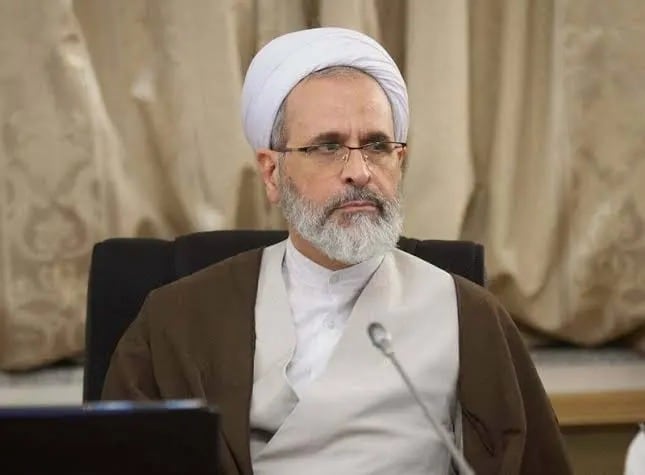
The sudden transition of power within the Islamic Republic has moved from a theoretical exercise to a brutal, lived reality. Following the reported strikes targeting the highest echelons of the Iranian leadership, the swift elevation of Alireza Arafi to the Assembly of Experts' leadership signals more than just a filling of a vacancy. It represents a desperate, calculated pivot by the clerical establishment to ensure the survival of the system itself. While the world watches the smoke clear from the military engagement, the real explosion is happening within the halls of Qom and Tehran.
Alireza Arafi is not a household name in the West. He should be. His appointment is the definitive signal that the "gray men" of the Iranian bureaucracy are taking control. These are the technocrats of the theocracy—men who have spent decades managing the ideological machinery of the state while remaining largely invisible to international intelligence radars. Arafi’s rise is the culmination of a decade-long effort to bridge the gap between the traditional seminary and the modern security state.
The Architect of the New Guard
To understand why Arafi was chosen, you have to look at his resume, not as a list of titles, but as a blueprint for control. As the former head of Al-Mustafa International University, Arafi didn't just teach theology. He managed a global network of ideological outposts. He understands how to project Iranian influence through soft power, a skill set that becomes indispensable when hard power assets are under direct kinetic threat.
The Assembly of Experts, the body responsible for choosing the Supreme Leader, has long been a collection of aging clerics. Arafi represents a younger, more vigorous brand of fundamentalism. He is someone who understands the digital battlefield as well as he understands Islamic jurisprudence. His elevation is a move to preempt a total collapse of the clerical structure. By placing a man of his administrative caliber at the heart of the succession process, the remaining power players in the Revolutionary Guard (IRGC) are signaling their preference for a leader who can manage a crisis, not just preach through one.
The Silence of the IRGC
In any moment of Iranian political upheaval, the most important voices are often the ones you don't hear. The Revolutionary Guard has remained uncharacteristically disciplined in the wake of the strikes. This silence suggests a pre-arranged consensus. The appointment of Arafi likely had the green light from the upper tiers of the IRGC’s Qods Force. They need a clerical face who is compliant, efficient, and capable of maintaining the internal cohesion of the Basij militia.
The relationship between the clerics and the generals has always been a marriage of convenience. With the traditional pillars of leadership removed, the IRGC is effectively the only functional arm of the state left. However, they cannot rule alone without losing the "Islamic" legitimacy that the Republic claims. Arafi provides that legitimacy. He is the bridge. He is a man who can speak the language of the revolution while overseeing the brutal logistical requirements of a state under siege.
Why the Succession Model Just Changed
For years, analysts argued about whether the next leader would be a "moderate" or a "hardliner." That debate is dead. The current situation has stripped away the luxury of political nuance. The choice of Arafi indicates that the regime has moved into a survivalist posture. They are no longer looking for a charismatic figurehead to inspire the masses; they are looking for an operations manager.
The Assembly of Experts is now operating under a cloud of unprecedented pressure. The standard protocols for vetting a new leader—usually a slow, deliberate process involving months of back-channel negotiations—have been compressed into hours. This speed is dangerous. It risks alienating traditionalist clerics in Qom who view the rapid promotion of Arafi as a "coup by appointment." If the religious centers of power feel sidelined by the security apparatus, the internal fractures could be more damaging to the regime than any foreign missile.
The Regional Ripple Effect
The appointment of Arafi isn't just an internal Iranian matter. It sends a specific message to the "Axis of Resistance" in Lebanon, Iraq, and Yemen. These groups rely on a clear line of command from Tehran. Arafi’s background in international religious education means he has personal links to the clerical leadership of Hezbollah and the various Shia militias in Iraq. He is a known quantity to them.
- Hezbollah: Needs assurance that the flow of funding and ideological guidance will not falter.
- The Houthis: Look for a leader who will continue the policy of regional destabilization as a defense mechanism.
- Domestic Opposition: Faces a new, perhaps more efficient, adversary in the form of a streamlined clerical leadership.
The Myth of the Power Vacuum
Western observers often fall into the trap of believing that the removal of top-tier leaders creates a vacuum that will naturally lead to a more democratic or at least a less hostile government. This is a fundamental misunderstanding of how the Iranian state is built. It is designed to be a hydra. When one head is removed, the nervous system—the bureaucracy, the IRGC, and the clerical assemblies—immediately begins the process of regeneration.
Arafi is the physical manifestation of that regeneration. He represents the "deep state" of the Islamic Republic. His appointment is a hard-hitting rebuttal to the idea that the regime is on the verge of a spontaneous democratic awakening. Instead, we are seeing the emergence of a leaner, more paranoid, and significantly more efficient clerical-military junta.
The strikes may have removed the old guard, but they have inadvertently cleared the path for a more disciplined successor. This is the brutal irony of targeted strikes in a system built for redundancy. You aren't just removing a person; you are triggering a survival mechanism that has been refined over forty years of sanctions and internal strife.
The Strategy of the Invisible Hand
Arafi’s first major task will be to consolidate the different factions within the Assembly. There are still those who favor a more traditional, quietist approach to religion, and those who want to see the IRGC take an even more overt role in government. Arafi’s skill lies in his ability to make both sides feel heard while ultimately serving the interests of the institutional state.
He will likely oversee a series of "internal purges" disguised as administrative reforms. This is a standard tactic in the Iranian playbook. By framing the removal of rivals as a move toward efficiency or "revolutionary purity," Arafi can secure his position without the messiness of a public power struggle. He is the ultimate bureaucrat-cleric, a man who knows that the most effective way to wield power is through the pen and the committee meeting, backed by the threat of the gallows.
The international community must stop looking for the "next Khamenei" and start looking at the committee that will rule in his wake. Alireza Arafi is the face of that committee. He is the technician of the theocracy, and his rise marks the beginning of a much colder, more calculated era of Iranian governance.
The assumption that the Islamic Republic cannot survive without its foundational figures is being tested in real-time. If Arafi succeeds in holding the Assembly together, he will have proven that the system is more durable than its creators. This isn't just a change in personnel. It is the birth of a new, more resilient form of authoritarianism that has learned how to survive in a world where its leaders are no longer safe. The focus should not be on who was lost, but on what is being built in the ruins.
Monitor the upcoming sessions of the Assembly of Experts for any dissent from the Qom traditionalists. If the religious heartland remains silent, it means the takeover is complete. If you see signs of public disagreement among the grand ayatollahs, then the real crisis for the Iranian state has only just begun. Watch the clerics, but keep your eyes on the men standing behind them.