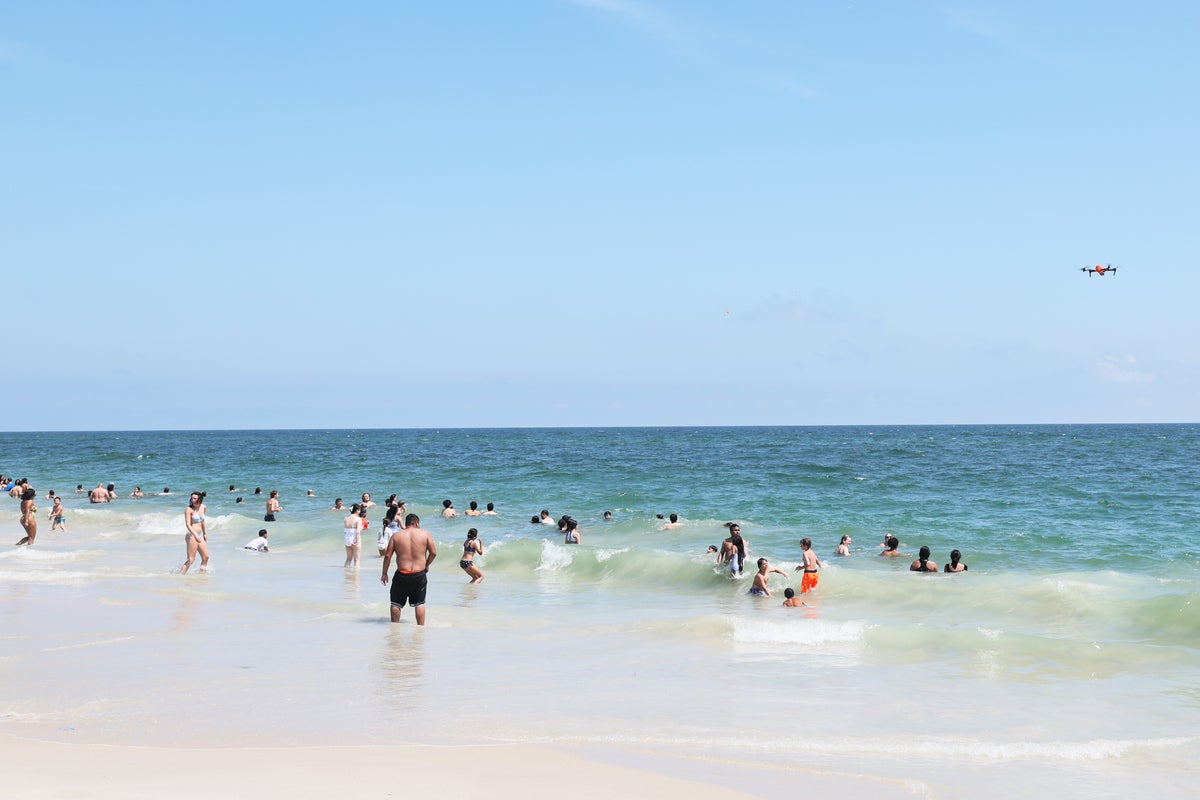
A sudden bite on a New York beach is no longer a freak anomaly. It is a predictable consequence of a changing marine ecosystem. When a swimmer scrambles ashore bleeding from a suspected shark attack, local authorities routinely trigger a familiar protocol of beach closures and aerial drone sweeps. Yet these reactive measures obscure a deeper reality. Atlantic coastal waters are changing, and our decades-old approach to public safety on the shoreline is completely unprepared for the shift.
Understanding this crisis requires looking past the immediate panic of a shuttered stretch of sand. The uptick in close encounters near Long Island and the broader Mid-Atlantic coast is not driven by rogue predators hunting humans. It is the direct result of successful conservation laws colliding with shifting baitfish migrations and a massive boom in coastal recreation.
The Anatomy of a Modern Coastal Encounter
Marine biologists tracking apex predators have noted a distinct pattern in recent seasonal incidents. Most encounters on New York beaches involve juvenile sandbar sharks, dusky sharks, or spinner sharks rather than the massive great whites that dominate public imagination. These smaller predators chase schools of Atlantic menhaden, locally known as bunker fish, right into the surf zone.
When baitfish move into shallow water to escape larger predators or feed on plankton, sharks follow them. In the churning, murky water of the breaking surf, visibility drops to near zero. A human foot or hand splashing in the waves mimics the erratic movement of a panicked bunker fish. The shark strikes, realizes its mistake, and immediately releases the victim.
This explains why the vast majority of recent New York encounters result in puncture wounds and lacerations rather than catastrophic, life-threatening trauma. It is a case of mistaken identity in a crowded kitchen. The problem is that the kitchen is getting more crowded every summer.
The Conservation Paradox
For forty years, environmental legislation worked exactly as intended. The Magnuson-Stevens Fishery Conservation and Management Act, alongside strict state-level protections, rebuilt decimated populations of both sharks and their primary food sources. The rebound of the Atlantic menhaden population is a triumph of ecological restoration. Billions of these oily, nutrient-rich fish now hug the eastern seaboard every summer.
At the same time, coastal water quality has improved dramatically due to stricter enforcement of clean water regulations over the last few decades. Cleaner water attracts more marine life closer to the shore.
Herein lies the paradox. We successfully resurrected a wild ecosystem right on the doorstep of the most densely populated metropolitan region in North America. Then, we expected the wildlife to respect the boundaries of our resort towns and public parks.
The Illusion of Drone Surveillance
In response to rising public anxiety, officials have poured millions of dollars into high-tech monitoring solutions. Drones now buzz over the waves from Rockaway to the Hamptons. Lifeguards peer through binoculars, and state agencies deploy specialized watercraft to spot shadows in the water.
This strategy provides excellent public relations, but it offers a false sense of security. Drones are highly dependent on weather conditions, wind speed, and water clarity. On a bright, calm day, a drone operator can easily spot a eight-foot shark cruising fifty yards off the beach. On an overcast afternoon when the surf is rough and the water is stained with sediment, even a massive predator becomes completely invisible from the air.
Relying purely on aerial surveillance creates a dangerous binary for the public. People assume that if a drone is flying and the beach is open, the water is entirely safe. That is a dangerous assumption to make in a wild environment.
Furthermore, temporary beach closures simply displace the risk. When a popular state park shuts down its swimming area for two hours following a sighting, frustrated beachgoers often drive five miles down the road to an unpatrolled stretch of sand where no one is looking for shadows in the water.
Shifting from Panic to Coexistence
We need a fundamental overhaul in how the public views the ocean. For generations, beach tourism has been marketed as a controlled, theme-park-like experience where the biggest risks are sunburn and strong undertows. That era is over. Entering the Atlantic Ocean today means entering a fully functioning, populated wilderness area.
State and local governments must move away from reactive panic and toward permanent, seasonal risk-mitigation strategies.
- Real-Time Biological Monitoring: Instead of waiting to spot a shark, management should focus on tracking baitfish schools. If massive, dark balls of menhaden are moving within fifty yards of the beach, that section of the water should be closed to swimmers immediately, regardless of whether a shark has been seen.
- Modified Swimming Hours: Marine predators are most active during low-light conditions at dawn and dusk. Standardizing lifeguard hours to strictly enforce a ban on swimming outside of peak daylight hours would drastically cut down on high-risk encounters.
- Public Education Campaigns: Visitors need to learn the visual cues of an active marine feeding ground. Diving gulls, churning water, and schools of small fish breaking the surface are clear indicators that large predators are nearby.
The strategy of closing a beach for an afternoon and hoping the problem swims away is no longer viable. The sharks are not visiting; they have moved back into their historic territory permanently. If we want to share the water with them, we have to change our behavior, because they certainly will not change theirs.