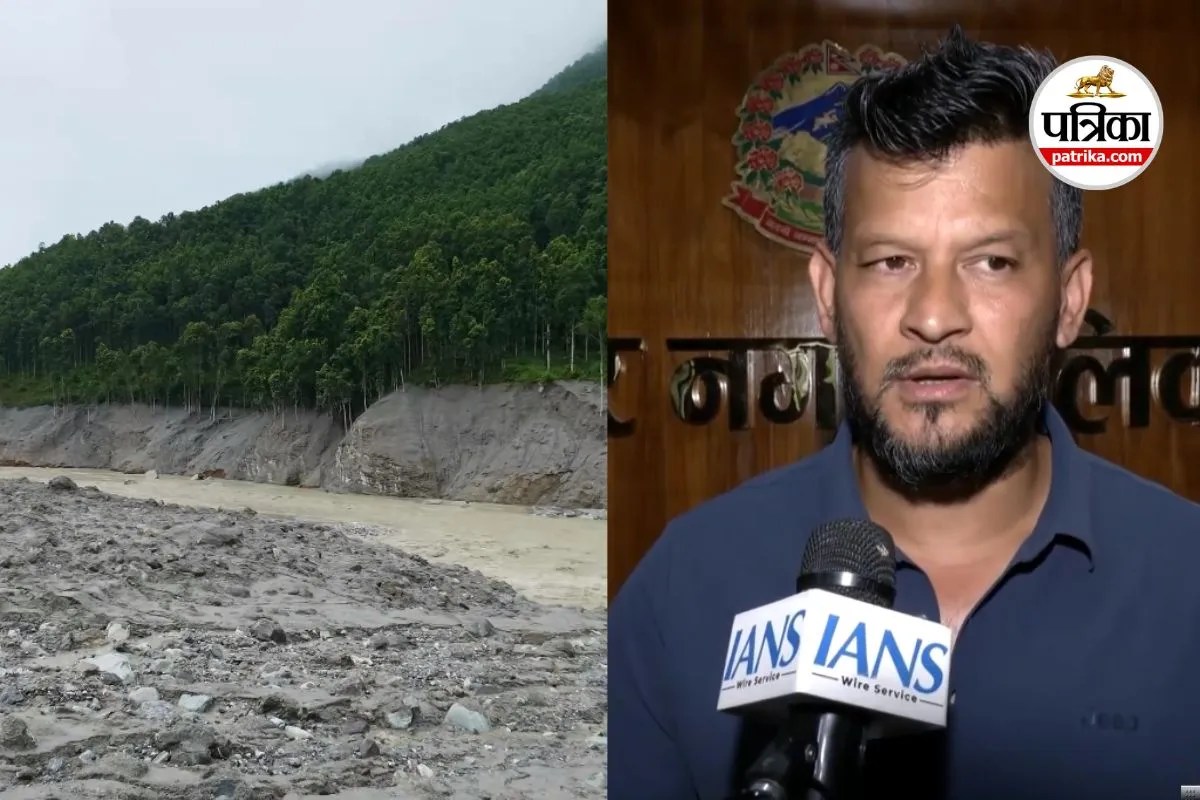
The rain in the Himalayan foothills does not fall as drops; it falls as weight. Ask anyone who has ever stood on a riverbank in Nuwakot when the monsoon turns violent, and they will tell you about the sound first. It is not the roar of a train or the crack of thunder. It is a deep, grinding growl, the sound of mountains unmaking themselves, stone by stone, mud by mud.
By the time the floodwaters swallowed the lower quarters of Bidur, the electricity was already gone. Darkness in a disaster is a cruel multiplier. It strips away the comfort of sight, leaving families to measure danger by the rising chill of water against their shins, then their knees, then the edge of the kitchen table.
Rajendra Bikram Thapa knows that dark. As the mayor of Bidur, a historic municipality in central Nepal, his phone began ringing before dawn. The calls were not statistics. They were human voices compressed into static and panic. Whole neighborhoods submerged. Roads carved into sheer cliffs of red mud. Bridges dangling by single, screaming strands of steel.
When infrastructure fails, geography dictates destiny. Bidur sat trapped in a hydraulic vise, its evacuation routes choked by landslides, its local resources overwhelmed within the first two hours of daylight.
Survival in a crisis often depends on who is standing on the other side of the ridge.
While the floodwaters were still churning through the streets of Bidur, an urgent message crossed international wires, bypassing bureaucratic crawl. Mayor Thapa made a direct, public appeal to Indian Prime Minister Narendra Modi. It was a diplomatic maneuver stripped of diplomatic polish, born of raw necessity. When the river is at your throat, you do not wait for committees to convene. You shout for help to the closest hand that can reach you.
The response was not immediate, because geography takes time to conquer even with modern machinery. But the mobilization was swift. In New Delhi, disaster response cells shifted into high gear, dispatching specialized teams, medical supplies, and relief packages toward the open border.
To understand why this cross-border lifeline matters, one must look beyond the maps that politicians draw. Floods do not recognize international boundaries. The same Himalayan river systems that nourish the Gangetic plains can, in a matter of hours, unleash torrents that paralyze Nepalese hill towns before swelling downstream rivers in India.
For decades, the relationship between India and Nepal has been analyzed through the cold lens of geopolitics, trade treaties, and water-sharing agreements. Analysts in Delhi and Kathmandu love to debate cubic feet per second, dam construction, and strategic influence. But out here, in the knee-deep mud of Bidur, geopolitics tastes like brackish water and smells of wet insulation.
The human element is always simpler and heavier than the political one.
Imagine Ram Bahadur, a hypothetical shopkeeper whose entire inventory of grain and textiles dissolved into pulp by noon. He does not care about bilateral trade deficits. He cares about whether his children will have clean drinking water tomorrow. When rescue helicopters finally cut through the grey monsoon soup, bearing the emblem of coordinated relief, Ram does not see a foreign government's strategic outreach. He sees a rope thrown to a drowning man.
The reality of climate volatility in South Asia is that these disasters are no longer statistical anomalies. They are the new baseline. Every monsoon season brings a fresh roll of the dice for mountain communities whose foundations are literally washing away. The slopes of Nuwakot have been farmed and settled for centuries, but the intensity of modern rainfall patterns has outpaced the ancient resilience of the land.
When local leaders like Mayor Thapa reach out across borders, they are exposing a uncomfortable truth about modern governance: no single municipality, and sometimes no single nation, possesses the localized scalability required to fight a runaway climate event. Resilience is no longer a domestic policy. It is a neighborhood watch program on a continental scale.
The water in Bidur eventually receded, leaving behind the monotonous, heartbreaking labor of the shovel. The mud had to be cleared from doorframes, the ruined mattresses dragged out into the humid air, the lost livestock mourned.
Yet, long after the television cameras packed up and the headlines shifted to the next geopolitical flashpoint, the scars remained etched into the hillsides. The bridge repairs will take months. The psychological weight of hearing heavy rain against a tin roof will take years to fade.
The river will rise again next year. That is not pessimism; that is the geography of the Himalayas. But when it does, the frantic call from a municipal office in Bidur to the halls of power in New Delhi will have redrawn the invisible lines of mutual survival. Neighbors are defined not by who lives next door in peacetime, but by who answers the door when the roof caves in.