The dust on the windowsill does not belong there. It arrived overnight, a fine, ochre powder carried by a wind that smelled of scorched earth and old stone.
In the valley of the Po, water was once the measure of everything. It shaped the risotto rice in the paddies, filled the canals where old men fished for catfish in the evenings, and gave the summer air a heavy, damp grace that clung to the skin like a cool towel. Now, the riverbed looks like a cracked skull.
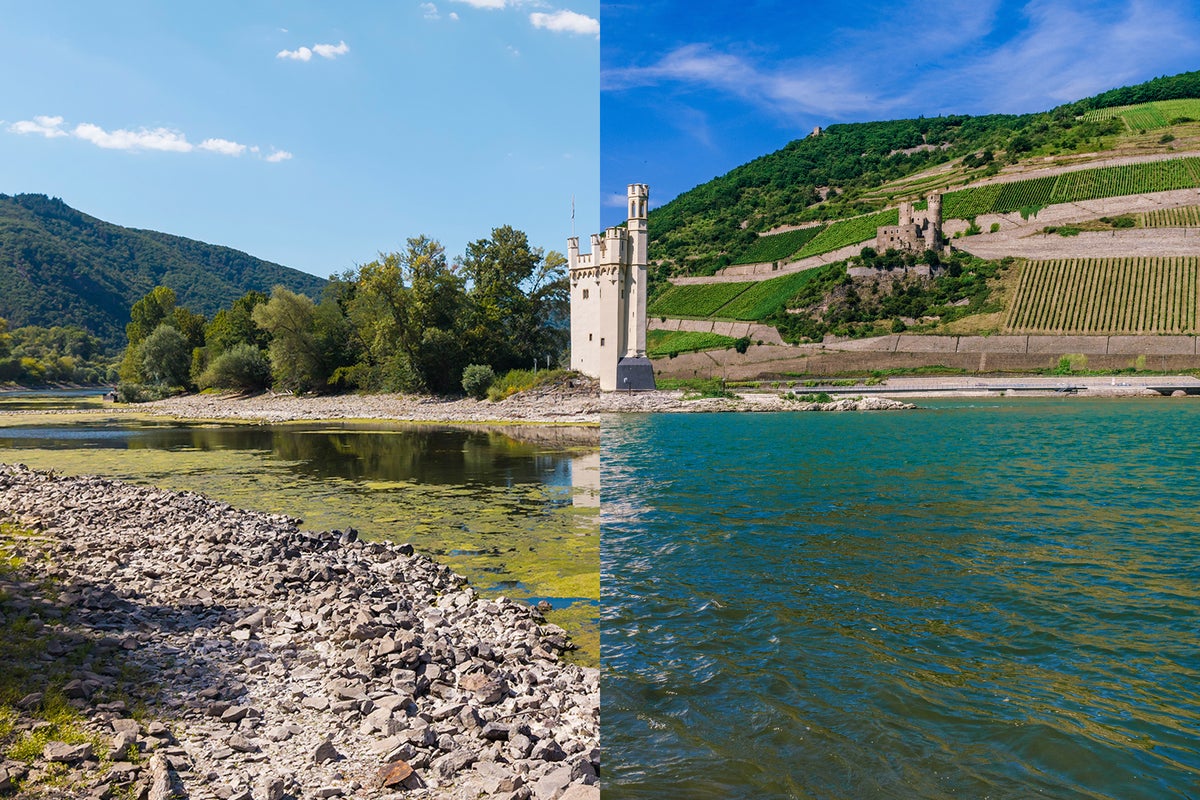
Look closely at the satellite photographs captured over the past three summers across Southern and Western Europe. They tell a story of rapid, violent subtraction. Where sapphire lakes once mirrored the sky, mud-caked basins now stare upward like empty sockets. Where glaciers crowned the Alps in permanent white, grey rock bleeds into the warming air.
We talk about heatwaves as events. We treat them like storms—something to endure for forty-eight hours with drawn blinds and extra bottles of cheap supermarket water, before returning to the patio once the temperature drops. But heat is not a visitor. It is a resident. It has moved in, unpacked its bags, and started changing the furniture.
Consider Mateo, a citrus grower whose family has worked the same terraced groves above the Sicilian coast for four generations. Mateo knows the weight of an orange by the sound it makes when tapped with a thumbnail. He knows the exact night in October when the first rain must break the drought, or the trees will panic, dropping their green fruit to save their own wooden bones.
Last year, the rain did not come in October. Nor in November.
By January, the soil felt like concrete. Mateo showed me his well, a deep stone shaft that his grandfather dug with a shovel and a mule. The bucket dropped thirty feet before hitting anything, and when it came back up, the water was thick with sulfur and red clay.
"The earth is drinking its own blood," he told me, wiping grease from his calloused knuckles. He wasn't being dramatic. He was looking at balance sheets written in dead leaves.
The Geography of Thirst
Across the continent, the map is rewriting itself in real time.
In Spain, reservoirs that once supplied hydroelectric power and drinking water to millions hover near single-digit capacity. Tourists walking through the dry bed of the Sau Reservoir can look up at the submerged church steeple of Sant Romà—a structure usually hidden beneath twenty meters of water, now standing exposed in a dusty plain like a warning bell from another century.
Scientists call this hydrological drought. It sounds clinical. It sounds like something you can fix with a valve or a government grant.
It is not.
Hydrological drought is the slow unravelling of a social contract. It is the moment when a municipality has to truck in water in rusted tankers because the local aquifer has turned brackish. It is the sound of hydroelectric turbines grinding to a halt because there is nothing left to spin the blades. It is the French nuclear power plants forced to throttle their output in the peak of summer because the rivers cooling their reactors are already too warm to swallow the heat.
We built our entire civilization around the assumption of abundance. Every road, every pipe, every city wall, every legal code regarding land ownership assumes that water falls from the sky with a certain predictable laziness.
That laziness is gone. The sky now works in extremes. Months of nothing, followed by hours of everything—flash floods that bounce off baked earth instead of sinking in, tearing away topsoil and washing ancient bridges into the sea.
The Weight of the Invisible
Water scarcity does not announce itself with a siren. It creeps in through the small, domestic humiliations of daily life.
It is the municipal notice taped to the bakery door: No watering of gardens between 6 AM and 10 PM. It is the public fountains in Rome and Madrid falling silent, their mossy basins turning to dry stone. It is the price of olive oil doubling, then tripling, as groves in Andalusia wither before the olives can swell.
We are watching the slow dehydration of a continent that thought it was immune to the geography of hardship.
For decades, Europe viewed extreme climate stress as something happening elsewhere—in the Sahel, in the Horn of Africa, in the American Southwest. It was a tragedy on the evening news, accompanied by somber music and drone footage of cracked earth.
Now, the drone footage is being filmed over the vineyards of Bordeaux and the olive groves of Tuscany.
The before-and-after photographs distributed by space agencies are startling, yes. They show blue polygons shrinking into brown ribbons, shrinking further into white salt flats. But photographs miss the smell of dead fish rotting in the shallows of the Loire. They miss the dust storms that turn the skies over Madrid the color of a bruised peach. They miss the quiet, gnawing panic of a farmer who realizes that his children will not inherit a farm, but an inheritance of dry dirt and debt.
What Remains
There is a temptation to look for a hero in these stories. A technological fix. A massive desalination plant. A continental pipeline network moving water from the Baltic to the Mediterranean.
Maybe those things will come. Maybe human ingenuity, driven into a corner, will find a way to engineer the climate back into submission.
But engineering cannot replace memory.
Mateo walked me to the edge of his lowest terrace, where three ancient lemon trees stood like old soldiers with their leaves curled inward to shield themselves from the glare. He didn't curse the sky. He didn't talk about carbon taxes or global summits. He just touched the dry bark of the nearest trunk with the flat of his hand, a gesture as tender as checking a child's forehead for fever.
The sun dropped behind the ridge, bleeding a hard, copper light across the valley. Down below, the road was silent. No trucks carrying water had arrived that afternoon. There was only the sound of the wind moving through the dry grass, hissing like steam against hot iron, telling us everything we need to know about the world we are building.