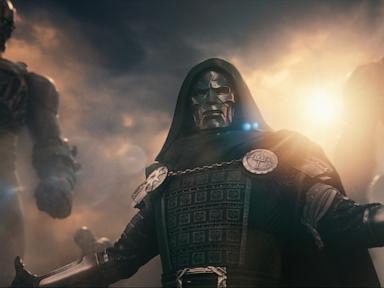
The internet lost its collective mind at D23 when Kevin Feige pulled back the curtain to reveal Robert Downey Jr. swapping the arc reactor for a green metal hood to play Victor von Doom in Avengers: Doomsday. Fanboys screamed. Stock prices ticked upward for five minutes. Variety and Deadline rushed out identical breathless copy about a triumphant homecoming.
Everyone is cheering. Everyone is wrong.
This isn't a masterstroke of multi-verse storytelling. It is an act of creative bankruptcy disguised as a stunt. When a studio with a trillion-dollar balance sheet has to drag back the exact actor who launched its golden age seventeen years ago—only this time playing the primary antagonist instead of the protagonist—you are not witnessing the evolution of a cinematic universe. You are watching a panic attack in real-time.
I have spent the better part of two decades watching Hollywood executives mistake brand recognition for narrative substance, and I have seen studios burn billions trying to recapture lightning in a bottle through sheer stubbornness. Marvel is no longer building a universe; they are running a nostalgia retirement home.
The Lazy Consensus of Multiverse Nostalgia
The prevailing narrative across entertainment media right now is simple: Marvel is course-correcting. After a string of underperforming projects, fatigue-laden box office returns, and the Jonathan Majors PR disaster, bringing back the architect of the Infinity Saga feels like a safe bet. The logic goes that audiences love Robert Downey Jr., audiences love the Russo brothers, and combining them with Marvel's most iconic villain guarantees a billion-dollar return.
This argument relies on a fatal misunderstanding of why Iron Man worked in the first place.
Tony Stark worked because of specificity. He was a flawed, arrogant, charming arms dealer forced to confront his own legacy in a grounded, tightly focused origin story back in 2008. The charm was the man himself. By casting that exact same man as Doctor Doom—one of the most complex, tragic, and visually distinct villains in comic book history—Marvel is signaling that they trust neither their audience's intelligence nor their own ability to build a compelling character from scratch.
When you cast Robert Downey Jr. as Victor von Doom, nobody in the theater is going to see Doctor Doom. They are going to see Tony Stark with a facial scar. The immersion shatters before the first reel even spins. It is the cinematic equivalent of casting Harrison Ford as Darth Vader. It distracts from the fiction and turns the movie into a glorified high-school reunion.
Deconstructing the Doom Misconception
Let us address the most common defense thrown around by internet apologists: "Doom wears a mask all the time anyway, so it doesn't matter who is under it, and RDJ has the acting chops to pull off the arrogance."
That statement exposes a fundamental ignorance of what makes Victor von Doom tick.
Doom is not just an arrogant billionaire with a snappy quip. He is a Romani sorcerer-scientist from the fictional Eastern European nation of Latveria, driven by an obsessive quest to save his mother's soul from hell, a deep-seated hatred of Reed Richards born from academic jealousy, and an unshakeable belief that he is the only entity fit to rule humanity. His face is scarred, yes, but the horror of that scar—and his obsessive, fragile vanity regarding it—is central to his psyche.
Can Robert Downey Jr. act? Absolutely. But his entire modern screen persona is built on fast-talking, self-aware irony. Victor von Doom is entirely devoid of irony. He is operatic, humorless, theatrical, and terrifyingly earnest. Trying to mold RDJ into that archetype is like trying to turn a sports car into a bulldozer. You can force it, but you are going to destroy the engine in the process.
Furthermore, let us look at the financial and logistical reality. Marvel is backing up a dump truck full of cash to pay an actor who already cost a king's ransom during his tenure as Iron Man. By funneling that much capital into a single marquee name, they are starving the rest of the production of the oxygen it needs to develop fresh talent, original writing, and genuine risk-taking.
The Creative Rot at the Heart of Phase Six
I have consulted on enough IP transitions to recognize the stench of a creative dead-end. When a franchise stops creating new icons and starts recycling old ones, it enters a doom loop.
Look at the trajectory. Phase One through Three earned audience trust by taking calculated risks with B-list characters like Iron Man, Thor, and Captain America, anchored by casting choices that felt inspired rather than safe. Robert Downey Jr. was a risk in 2008. Chris Hemsworth was an unknown. Tom Holland was a fresh face.
Today, Marvel operates out of pure self-preservation. Instead of mining the thousands of pages of comic lore for new actors who can embody these roles for the next decade, they are looking backward because they are terrified of the present. They brought back Hugh Jackman as Wolverine. They brought back Tobey Maguire and Andrew Garfield. Now they are bringing back Downey as Doom.
At what point does a shared cinematic universe stop being a universe and start being a cover band playing its greatest hits at a county fair?
The problem with relying on the past is that the audience ages out, and the emotional stakes evaporate. Death in the Marvel Cinematic Universe lost its teeth years ago, but casting a dead hero as the new villain treats continuity like a dry-erase board. If Tony Stark's face can just be slapped onto the franchise's premier tyrant because ticket sales dipped, then nothing matters. Stakes require permanence. When everything is malleable, nothing is valuable.
The Uncomfortable Truth About the Box Office Bounce
Will Avengers: Doomsday make money? Of course it will. Opening weekend will be a bloodbath of box office records, driven by pure curiosity and internet hype.
Short-term financial spikes do not equal long-term brand health. You can fool an audience once with a stunt casting coup, but you poison the well for the future. When the credits roll and viewers realize they just watched a very expensive exercise in cognitive dissonance, the fatigue will return tenfold. You cannot nostalgia-bait your way out of structural rot.
Marvel had a chance to redefine the superhero genre for a new era. They had an open field to introduce a chilling, unknown, definitive version of Victor von Doom who could anchor the cinematic landscape for the 2030s. Instead, they took the coward's way out. They reached into the past, put a mask on their favorite cash cow, and hoped you wouldn't notice that the creative well has officially run dry.
Stop pretending this is genius. It is panic. And history will prove it.