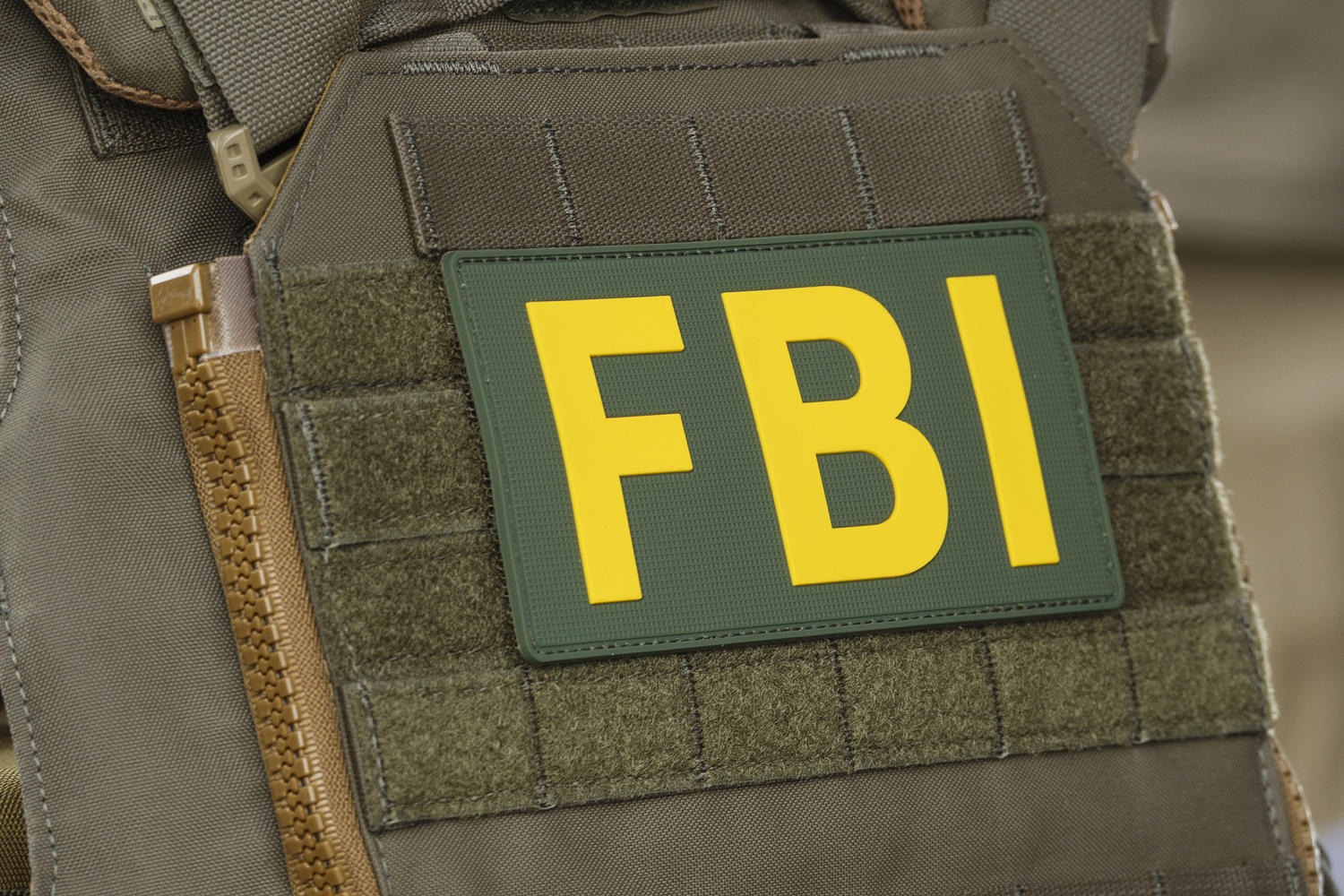
Federal law enforcement operates on a strict code of internal security, yet recent indictments reveal a glaring vulnerability sitting right inside the bureaucratic machine. Robert Chapman, an FBI special agent stationed in Florida, stands accused of executing an elaborate scheme to siphon nearly $1 million in cryptocurrency intended for federal forfeiture from a Russian target. This case exposes severe institutional failures within federal cyber asset management. When the very individuals tasked with securing seized digital tokens decide to skim from the digital evidence locker, the entire operational integrity of asset forfeiture faces a crisis of confidence.
For decades, the standard playbook for federal law enforcement involved seizing physical assets like paper currency, real estate, and luxury vehicles. Those assets sat in physical warehouses or bank accounts backed by federal ledgers. Digital currency changed the equation entirely. Crypto is frictionless, pseudonymous, and international by design. When investigators seize digital assets during a raid or a coordinated cyber takedown, those funds must be transferred to government-controlled wallets managed by specialized custodians or federal agencies.
The mechanics of handling seized cryptocurrency are supposed to be bulletproof. Multiple private keys, multi-signature wallets, and rigorous chain-of-custody documentation are standard requirements. Yet, human intervention remains the weakest link in the security architecture. Chapman allegedly exploited his access and internal positioning to divert funds during an ongoing operation targeting Russian illicit finance networks. The operation itself was touted as a major victory against foreign threat actors. Instead, it became a masterclass in insider threat exploitation.
The Anatomy of a Federal Insider Threat
Law enforcement agencies love to talk about external threat actors. Nation-state hackers, transnational cybercrime cartels, and decentralized darknet syndicates dominate congressional hearings and agency press releases. The narrative always points outward. Agencies project an image of a hardened perimeter defending the financial system from foreign adversaries.
Inside the perimeter, the reality looks vastly different. Bureaucratic silos, rapid technological adoption without adequate workforce training, and outdated oversight models create massive blind spots. An agent with technical aptitude and administrative clearance can often bypass institutional guardrails if supervisors lack the digital literacy to audit wallet transactions in real time.
Chapman did not need a sophisticated foreign exploit kit or a zero-day vulnerability to move the funds. He leveraged the authority of his badge and the trust inherent in his assignment. In federal investigations, special agents often operate with a high degree of autonomy. Trust is the currency of the bureau. When that trust is weaponized for personal enrichment, detection often relies on whistleblowers, internal auditing errors, or clumsy execution by the perpetrator rather than automated security triggers.
The stolen funds did not vanish into an impenetrable financial void immediately. Moving nearly $1 million in cryptocurrency requires navigating a gauntlet of blockchain analytics firms, centralized exchanges, and automated compliance monitors. Federal agencies employ sophisticated tracking tools like Chainalysis and TRM Labs to trace every satoshi. The irony of an FBI cyber agent attempting to launder stolen crypto through standard mixers and decentralized protocols is striking. It demonstrates a fundamental miscalculation regarding the visibility of public ledgers. Every transaction leaves a permanent breadcrumb trail.
The Flawed Mechanics of Crypto Custody
The Department of Justice and various federal agencies have struggled to standardize how they handle seized virtual assets. Unlike traditional cash, which goes directly to the United States Marshals Service for liquidation or holding, cryptocurrency requires active management. Private keys must be generated, stored, and protected.
In many historical instances, agencies outsourced this responsibility to private contractors with mixed results. Other times, field offices attempted to manage wallets internally without uniform cybersecurity standards. This decentralization of custody creates fertile ground for corruption. If a single agent has direct visibility into the seed phrases or private keys of a high-value wallet, the temptation compounds under the weight of financial stress or personal grievance.
Frustration appears to be a central theme in the case against Chapman. Media reports and initial court filings highlight a narrative of workplace discontent. Law enforcement officers deal with high-stress environments, bureaucratic stagnation, and institutional disillusionment daily. However, crossing the line from disgruntled employee to criminal enterprise represents a systemic failure of personnel vetting and continuous evaluation programs.
Security clearance renewals and periodic polygraphs are supposed to catch behavioral changes or financial distress. Financial distress is often the primary vector for insider betrayal. When an agent accumulates crushing personal debt or sees vast sums of digital wealth passing through their hands daily, the psychological barrier to theft begins to erode.
The Geopolitical Dimension and Russian Cryptography
The geopolitical backdrop of the case adds another layer of complexity. The target of the original federal investigation was tied to Russian illicit financial networks. Russia has long served as a safe harbor for ransomware gangs, state-sponsored hackers, and sanctions evaders utilizing cryptocurrency to bypass Western financial blockades.
When federal agencies seize funds from Russian operations, those assets represent both criminal proceeds and valuable intelligence. Investigators pore over transaction histories to map out threat actor infrastructure, funding sources, and exchange nodes. When an agent steals from these specific seized pools, the damage extends beyond simple theft. It compromises ongoing intelligence operations and signals to foreign adversaries that American law enforcement infrastructure is vulnerable from within.
Foreign intelligence services monitor these developments closely. A compromised federal agent handling high-profile international cryptocurrency seizures is a gift to hostile states looking to discredit Western anti-money laundering efforts. It provides propaganda ammunition and exposes operational tactics that the United States would prefer to keep confidential.
Reforming the Digital Evidence Locker
The fallout from the Chapman indictment forces a hard look at how federal agencies manage digital evidence. Relying on individual agent integrity is no longer sufficient in an era where single wallets can hold millions of dollars in liquid assets.
Institutional reform must begin with the complete elimination of single-point custody models. No single agent, regardless of rank or specialization, should ever have unilateral access to transfer seized cryptocurrency from a primary government wallet. Multi-signature governance must become an absolute baseline requirement for all federal digital asset holdings. If moving funds requires cryptographic approval from three separate, independent supervisory entities spread across different departments, the risk of rogue insider theft drops exponentially.
Furthermore, real-time blockchain monitoring should be applied internally to all agency-controlled wallets. If a government wallet associated with an active investigation shows unauthorized outgoing transactions or suspicious interactions with known mixing services, automated alerts should trigger immediate internal affairs reviews. External oversight by independent inspectors general must also be strengthened to audit digital asset inventories regularly.
The public expects law enforcement to uphold the highest standards of accountability, especially when dealing with complex financial crimes. When the guardians of the financial system turn out to be the ones picking the locks, the institutional damage takes years to repair. Fixing these vulnerabilities requires acknowledging that the threat is not always outside the wire. Sometimes the threat is sitting at the next desk, wearing the same badge, typing commands into an unsecured terminal.
The investigation into Chapman will wind its way through the federal court system, resulting in legal briefs, plea negotiations, or a high-stakes trial. Headlines will fade as new scandals take center stage. Yet the structural rot within federal digital asset management will persist unless leadership enacts radical cryptographic safeguards that remove human frailty from the equation entirely.