Dawn in the northern reaches of the Persian Gulf does not break gently. It arrives as a sudden, blinding weight of heat, turning the water the color of hammered tin and baking the salt onto the steel hulls of passing leviathans. For twenty years, I watched these waters from the bridge of various vessels, tracking the silent ballet of global energy. You learn to read the horizon not by sight, but by the low, subterranean thrum of heavy diesel engines and the distinct signatures of crude carriers cutting through the brine.
On this particular morning, the silence broke with a violence that rewrote the geography of the shipping lanes.
Five oil tankers. Five floating monoliths of steel, each carrying millions of barrels of refined wealth and volatile potential, transformed into towering torches of orange and black. The United States military did not issue a warning shot across the bow. There was no polite hailing on Channel Sixteen. There was only the sudden, terminal thunder of kinetic strikes, a calculated escalation that sent plumes of oily smoke climbing thousands of feet into the stratosphere, visible fifty miles away from the deck of any terrified merchant ship caught in the crossfire.
To understand why those five ships burned, you have to look past the military briefings and the sanitized Pentagon acronyms. You have to look at the water.
Imagine a single drop of crude oil moving from an extraction well deep beneath the Iranian desert, piped to a terminal on Kharg Island, loaded onto a VLCC—a Very Large Crude Carrier—and steered through the narrow bottleneck of the Strait of Hormuz. That drop of oil is a pulse in the circulatory system of the modern world. Every plastic dashboard, every agricultural fertilizer, every cross-continental cargo flight depends on the uninterrupted heartbeat of that narrow channel.
When you strike five tankers in a single engagement, you are not merely destroying property or even targeting a hostile state's economic arteries. You are seizing the throat of the global economy and tightening your grip until the knuckles turn white.
The official narrative came fast, polished and rehearsed. The strikes were framed as a necessary containment, a proportional response to mounting maritime harassment, asymmetric drone attacks, and the persistent creeping threat against international shipping freedom. The strategists in Washington and the commanders stationed at regional headquarters spoke of deterrence. They spoke of red lines drawn in salt and foam.
Yet, standing on the bridge wing of a ship with the wind carrying the distant, chemical stench of burning hydrocarbons, deterrence feels like a fragile illusion.
Consider the perspective of a hypothetical third-class engine cadet from Mumbai, standing watch in the belly of a Greek-owned tanker idling twenty miles away from the carnage. He does not care about geopolitical leverage, nuclear enrichment talks, or the intricate chess match between Washington and Tehran. He cares about the bulkhead vibrating against his spine. He cares about whether the next missile has his vessel's coordinates programmed into its guidance system. When the horizon turns black with the smoke of five burning neighbors, abstract political philosophy evaporates. There is only survival, claustrophobia, and the cold realization that the global supply chain is tethered to a very short fuse.
War in the twenty-first century has a strange, clinical aesthetic until it touches you. We talk about escalation dominance and localized kinetic impacts as if we are moving pieces on a polished wooden board. But escalation is not a ladder you climb in measured steps; it is a stack of dry timber waiting for a stray spark.
Every tanker sunk is a localized catastrophe that ripples outward with terrifying speed. Insurance rates for passage through the Gulf spike by triple digits within hours. Lloyd's of London reclassifies the entire region as a war zone. Futures contracts for Brent crude leap by ten dollars a barrel before the smoke even clears from the water. Down at your local gas station three thousand miles away, the price at the pump ticks upward by twenty cents within forty-eight hours, driven entirely by the ghost of five burning ships and the sudden, acute panic of futures traders staring at burning steel on Bloomberg terminals.
We have normalized this choreography. We expect the perpetual friction between superpowers and regional heavyweights to occasionally burst into flames, treating the casualties—whether they are human sailors lost in the dark water or billions of dollars in scorched infrastructure—as the cost of doing business in a disordered world.
That is the real danger. Not the explosion itself, but our growing numbness to the sound of the fuse burning down.
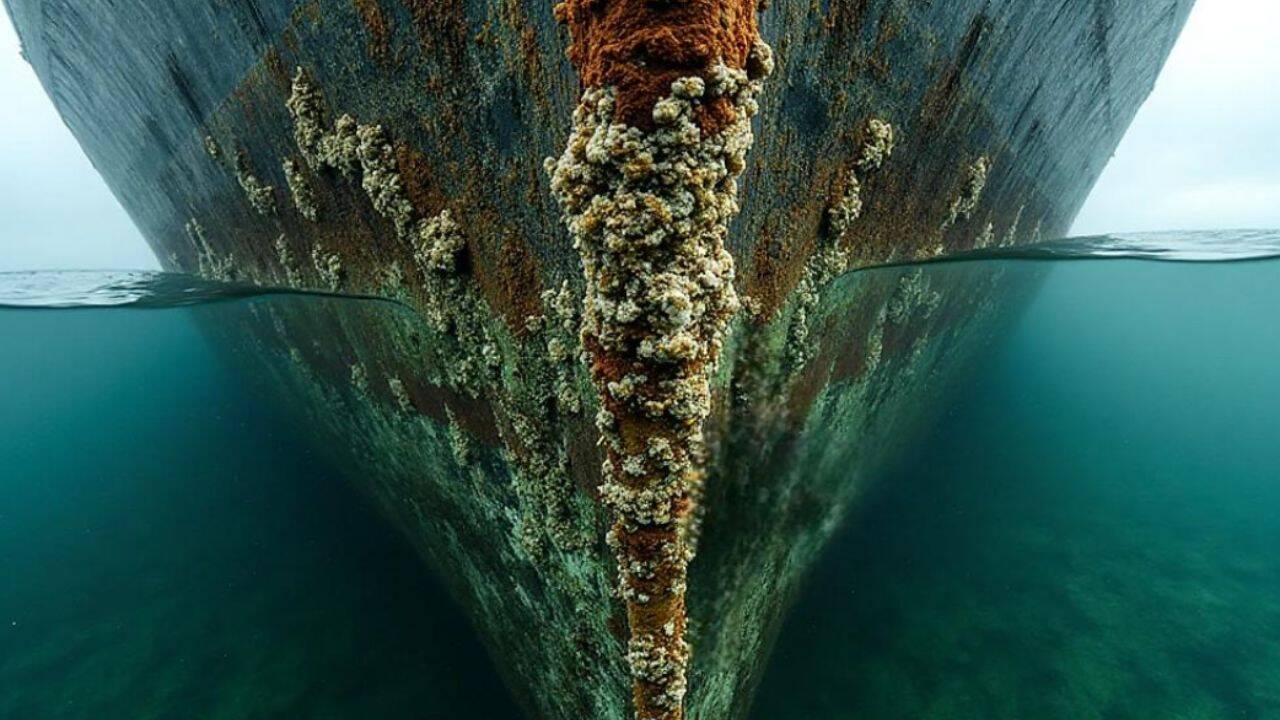
The ships are gone now, their scorched skeletons either dragged into deep water or anchored out as rusting hulks, leaking toxic residues into the indifferent currents. The smoke has dispersed into the upper atmosphere, carried away by the relentless Gulf winds. But the water remembers. The supply lines remain bruised, twitching with every whisper of radar contact and every troop movement along the jagged coastline.
Out on the Gulf, the sun sets in a bruised smear of purple and copper, and the tankers keep moving, one by one, slipping through the dark like ghosts running a gauntlet.