The air in Gwadar doesn't just sit; it clings. It carries the heavy, metallic scent of the Arabian Sea mixed with the dry, stinging dust of the Makran coastline. For decades, this stretch of blue was a silent witness to the geopolitical chess matches played by men in distant offices in Islamabad and Beijing. The water was a backdrop, a resource, a transit route. But the silence has been broken. The sea is no longer just a scenery. It has become a front.
On a Tuesday that felt like any other humid afternoon, the status quo fractured. The Baloch Liberation Army (BLA), a group long associated with mountain ambushes and roadside IEDs, did something that shifted the very physics of the conflict. They moved from the dust to the depths. By announcing the formation of their first dedicated naval unit—the Majeed Brigade’s sea wing—they didn't just issue a press release. They drew a line through the surf. You might also find this related coverage interesting: Shadows in the Choke Point.
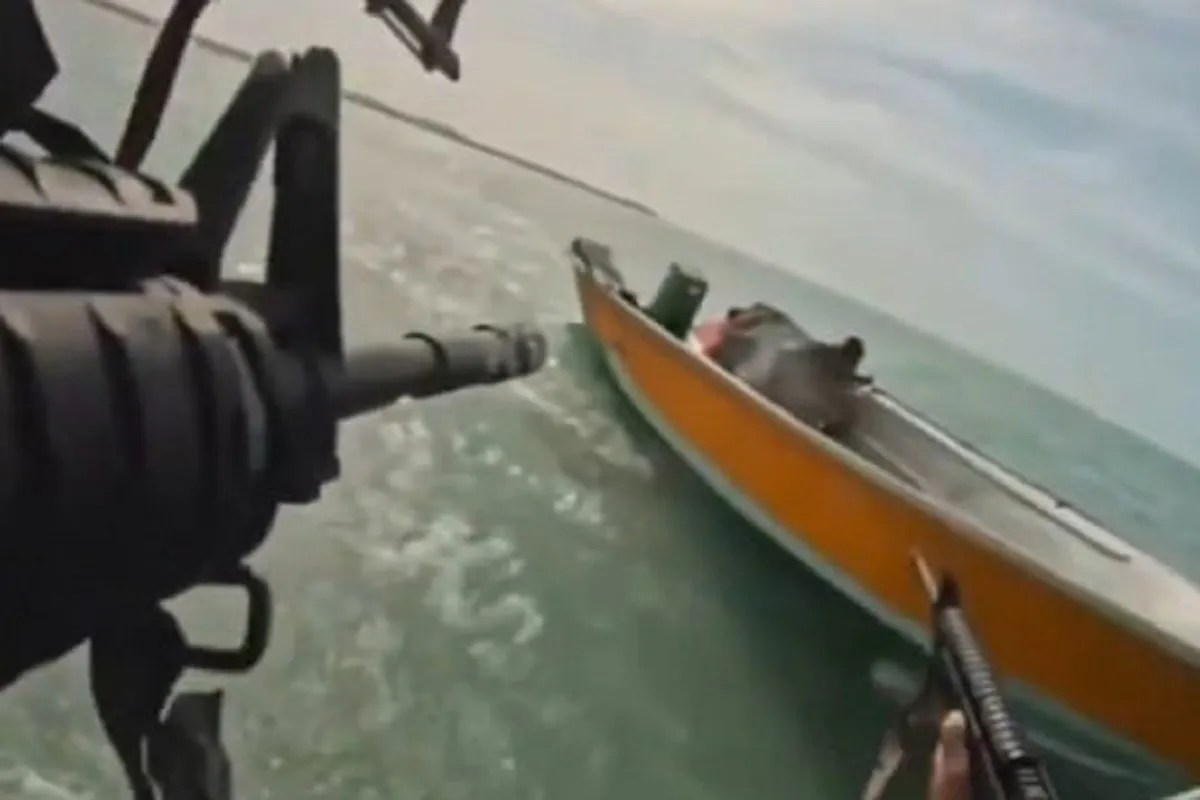
Within hours of the announcement, the theory became a violent reality. Small, fast-moving vessels intercepted a Pakistani naval patrol. Three soldiers died. The math of the insurgency had changed.
The Evolution of the Shadow
To understand why this matters, you have to look past the body counts and the headlines. For years, the Pakistani military viewed the Baloch insurgency as a land-locked problem. It was a war of ridges, valleys, and sun-scorched plains. If you controlled the roads, you controlled the narrative. Or so the thinking went. As reported in detailed articles by Reuters, the effects are worth noting.
But the BLA’s pivot to the water is a masterclass in asymmetric evolution. They aren't trying to build a traditional navy with frigates and destroyers. They are building a "mosquito fleet."
Imagine a swarm. A single mosquito is an annoyance. A thousand mosquitoes, appearing from the fog, moving at high speeds, and disappearing back into the coastal mangroves, are a nightmare for a traditional military force. This is the democratization of naval warfare. With a fiberglass hull, a high-horsepower outboard motor, and a shoulder-fired missile, a group of insurgents can suddenly threaten multi-billion-dollar port infrastructure.
The BLA isn't just fighting for land anymore. They are fighting for the horizon.
The Invisible Stakes of the Deep Sea
The timing is not accidental. Gwadar is the crown jewel of the China-Pakistan Economic Corridor (CPEC). It is the gateway through which China hopes to bypass the Malacca Strait, connecting the Arabian Sea directly to the heart of Eurasia.
For the average person living in the shanties of Gwadar, these grand economic visions feel like ghost stories. They hear about the billions of dollars, but they see the displacement of their fishing communities. They see the heavy security cordons that turn their hometown into a series of checkpoints.
Consider the hypothetical perspective of a local fisherman, let's call him Hamid. For generations, Hamid’s family followed the tides. Now, he finds his traditional fishing grounds restricted because they sit too close to the new deep-sea berths. He watches giant trawlers, often rumored to be foreign-owned, sweep the seabed clean while he struggles to fuel his small boat. When a group like the BLA launches a "navy," they aren't just looking for military targets. They are tapping into Hamid’s resentment. They are framing the sea as a stolen territory that must be reclaimed.
This isn't just about three soldiers lost in a skirmish. It’s about the vulnerability of an entire global trade philosophy. If the BLA can prove that the waters of Gwadar are unsafe, the insurance premiums for cargo ships skyrocket. If the insurance premiums skyrocket, the economic viability of the port withers.
The insurgents aren't trying to sink the Pakistani Navy. They are trying to sink the investment.
The Technology of the Underdog
There is a terrifying simplicity to this new phase of conflict. In the past, naval power required a massive industrial base. Today, the barrier to entry has collapsed.
The "Majeed Brigade" is using the same logic we see in the Black Sea or the Red Sea. They are leveraging commercial off-the-shelf technology. GPS systems that you can buy at a sporting goods store, encrypted messaging apps, and improvised maritime drones.
When the BLA claims they have trained "sea divers and marine commandos," they are signaling a move toward sabotage. A diver with a magnetic mine is a much harder threat to detect than a truck carrying explosives. The coastline of Balochistan is rugged, jagged, and impossible to police in its entirety. It is a thousand miles of hiding places.
The Pakistani state finds itself in a classic security dilemma. To protect the coast, they must increase their presence. But an increased military presence often fuels the very local anger that the insurgents use for recruitment. It is a feedback loop of tension where every new patrol boat launched by the state is met by a more desperate, more creative tactic from the shadow.
The Weight of the Coastline
The reality of this conflict is often obscured by the dry language of "counter-insurgency" and "strategic assets." But there is nothing dry about the sound of an explosion over the water at midnight. There is nothing abstract about the families of the three soldiers who won't be coming home.
We often talk about these regions as if they are pieces on a board. We forget the psychological toll of living in a perpetual state of "almost-war." The soldiers stationed on these remote coastal outposts are often hundreds of miles from their families, staring out at a sea that looks peaceful until it suddenly bites back.
The BLA’s new naval unit is a symptom of a much deeper, more tectonic shift. It represents the realization that in the modern world, power isn't just about who has the biggest guns. It's about who can create the most uncertainty.
The shadow in the water doesn't need to win a battle. It only needs to exist. It only needs to remind the world that the "gateway" to the future is built on a foundation of unresolved history and local pain.
As the sun sets over the Arabian Sea, the orange light catches the ripples of the tide. Somewhere out there, among the waves, the math is being recalculated. The sea has stopped being a buffer. It has become the bridge for a new kind of chaos.
The water remains dark. The horizon remains thin. And for those tasked with guarding these shores, the night has just become much, much longer.