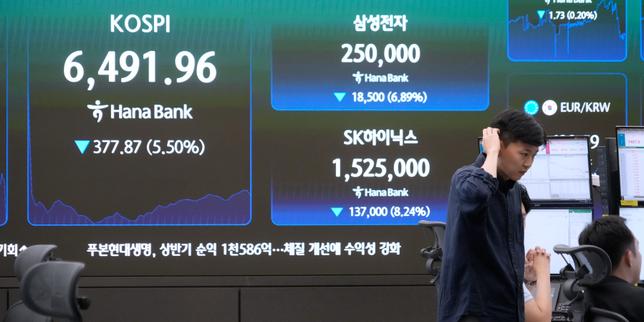
Samsung Electronics just announced the largest shareholder return program in South Korean corporate history. We are talking about a massive war chest ranging from 90 trillion to 110 trillion won, which translates to roughly $65 billion to $80 billion. If you have been watching the semiconductor sector bounce around wildly over the past year, you know this move isn't happening in a vacuum. It is a direct response to immense market pressure, historic artificial intelligence profits, and jittery investors demanding immediate payouts.
Let's break down why the world's premier memory chip maker is suddenly showering investors with cash and what this means for the broader tech economy.
The Real Driver Behind the Record Payout
Memory chip giants have been swimming in cash thanks to the relentless build-up of artificial intelligence data centers. Samsung and its domestic rival SK Hynix posted staggering profits over the past several quarters as demand for high-bandwidth memory skyrocketed. Operating profits jumped twelvefold year-on-year during the first half alone.
Yet, stock prices didn't always reflect that fundamental strength. Investors grew anxious about cyclical downturns, peak spending fears, and whether chip demand could sustain its blistering pace. Shares of major manufacturers hit turbulence after peaking earlier in the summer.
Samsung's board decided to act. By committing to return between 50% and massive chunks of its free cash flow through a blend of huge cash dividends and share buybacks, the company wants to prove its unprecedented earnings translate into real wealth for shareholders.
How the Money Moves
The sheer scale of this program staggers the imagination. Samsung plans to kick things off immediately by buying back roughly 15 trillion won of its own shares and deploying a massive cash dividend totaling about 30 trillion won in the third quarter. The remaining distributions will roll out through additional buybacks, share cancellations, or fourth-quarter dividends depending on business performance and cash flow.
Let's look at how this fits into their ongoing playbook:
- Committing to a strict three-year shareholder return policy targeting half of free cash flow.
- Balancing massive capital expenditures for next-generation hardware with direct investor payouts.
- Allocating separate tranches specifically for employee compensation and stock-based executive incentives to align internal motivation with market performance.
Competitors are moving down the same path. SK Hynix recently unveiled its own massive multibillion-dollar repurchase program. The entire South Korean tech sector is rewriting how it treats external capital, shifting away from aggressive cash hoarding toward aggressive distribution.
What Investors and Observers Miss
Most casual market watchers think this strategy is purely a defensive reaction to falling share prices. That misses the bigger picture. Samsung commands enough financial firepower to fund next-generation manufacturing lines for advanced nodes while simultaneously returning tens of billions of dollars to the market.
The primary risk isn't a lack of capital. The real test is whether global artificial intelligence infrastructure spending holds steady through the end of the decade. If enterprise demand softens, even an $80 billion safety net won't completely insulate semiconductor equities from a cyclical correction.
Keep a close eye on how the company handles its upcoming board meetings in October and January. Those sessions will finalize the exact split between cash dividends and share cancellations. Watch the quarterly free cash flow numbers like a hawk because that metric dictates whether these historic payouts remain sustainable or turn into a one-time splash.