Every summer, the headlines copy and paste themselves. Heal the Bay releases its annual Beach Report Card, and local news outlets rush to point a shaming finger at the Santa Monica Pier. Ten years in a row. An F grade. The "dirtiest beach in California."
It makes for great clickbait. It makes for terrifying local news segments. It is also a complete misunderstanding of environmental data, urban hydrology, and how ocean safety actually works. For a more detailed analysis into similar topics, we recommend: this related article.
If you avoid the Santa Monica Pier because you think you are swimming in a toxic soup of industrial sludge, you have fallen for a lazy narrative. The annual panic over the pier's water quality does not reveal an environmental disaster. It reveals a broken reporting system that punishes cities for building effective infrastructure while rewarding empty stretches of sand for simply being empty.
We need to stop looking at beach grades like a high school report card and start looking at what the data actually measures. For additional information on this development, extensive reporting can also be found at AFAR.
The Geography of a Manufactured Fail Grade
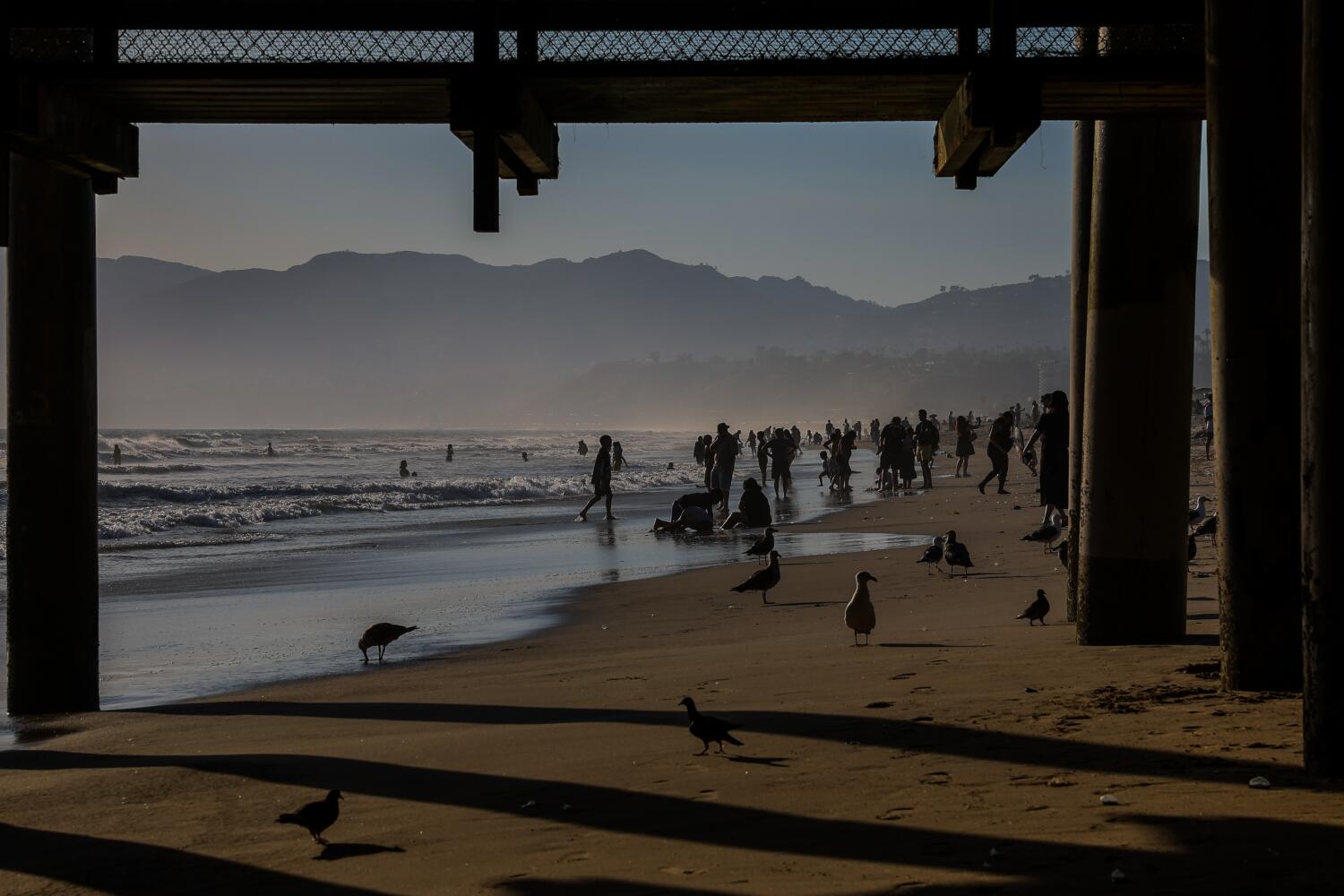
To understand why the Santa Monica Pier constantly gets an F, you have to look under the boardwalk. Literally.
The Beach Report Card relies on localized water sampling. The testing site for Santa Monica is positioned directly adjacent to a massive storm drain that funnels urban runoff from the heart of a dense, concrete-heavy city right into the ocean.
When you test water right at the mouth of an active urban drain, you are not testing the ocean. You are testing the city's plumbing.
The Dilution Delusion
Ocean water moves. Currents shift. The water fifty yards north or south of the pier frequently tests at an A or B grade on the exact same day the pier itself receives an F. Yet, the entire geographical area gets branded with a scarlet letter.
Consider how monitoring agencies structure their data collection:
- The Drain Factor: Samples taken directly in front of the Santa Monica Pier storm drain capture concentrated urban runoff before it interacts with the open ocean.
- The Bird Problem: The pier structure acts as a massive artificial roosting ground for thousands of pigeons and seagulls. Fecal coliform counts spike because of birds sitting on the pilings directly above the sampling zone, not because of a secret toxic waste pipeline.
- The Circulation Trap: The physical geometry of the pier slows down wave action and traps water underneath the structure, preventing the natural, rapid flushing that happens on open shorelines.
I have spent years analyzing how public health data gets weaponized in urban planning. If you place a thermometer directly above an asphalt parking lot in July, you will get a reading of 130°F. That does not mean the climate of the entire city is unlivable; it means you put the sensor in a heat trap. The Santa Monica Pier is a bacterial heat trap.
Why Pristine Beaches Are Flunking the Wrong Test
The underlying premise of popular beach grading systems is fundamentally flawed. They measure the presence of indicator bacteria, not the source or the actual risk profile of the water.
+--------------------------+----------------------------+----------------------------+
| Metric                   | Public Perception          | Scientific Reality         |
+--------------------------+----------------------------+----------------------------+
| High Enterococcus Count  | Industrial/Sewage Pollution| Avian waste & urban runoff |
| Open Ocean Flushing     | Naturally clean water      | Untested rapid dilution    |
| Storm Drain Proximity    | Continuous toxic flow      | Intermittent pulse events  |
+--------------------------+----------------------------+----------------------------+
By focusing strictly on raw bacterial counts right at the point of discharge, we create an incentive structure that rewards inaction. Malibu beaches score high because Malibu has fewer people and less concrete funneling into specific points. It is not because Malibu possesses a magical environmental ethos; it is a function of density.
If Santa Monica wanted to artificially raise its beach grade tomorrow, it could do what many coastal enclaves do: diffuse the runoff. By spreading the drain outputs across miles of shoreline through smaller pipes, the concentrated bacterial counts at the pier would vanish. The total amount of urban debris entering the ocean would remain identical, but the headline-grabbing F grade would turn into a reassuring B.
Is a beach actually safer if the pollution is just better hidden?
The Infrastructure Irony
Here is the twist that the alarmist articles ignore: Santa Monica has some of the most aggressive, expensive, and technologically advanced stormwater management systems in the United States.
The city built the Santa Monica Urban Runoff Recycling Facility (SMURRF). This state-of-the-art plant treats up to 500,000 gallons of urban runoff per day, stripping out trash, oil, sediment, and pathogens before the water ever reaches the ocean. Additionally, the city installed a 1.6-million-gallon underground stormwater harvesting tank right next to the pier to catch the first, dirtiest flush of rainwater during storms.
"The irony of modern environmental tracking is that cities investing the most in localized containment often show the worst numbers because they centralize their waste streams for monitoring."
Because Santa Monica catches, contains, and directs its urban runoff to a centralized location for treatment and overflow management, it creates a single, highly visible point of vulnerability for water testers to target. Cities that let their runoff spill wildly across miles of unmonitored cliffs look clean on paper merely because nobody is tracking the dispersed impact.
Dismantling the Common Panic Queries
People looking at beach reports regularly ask the wrong questions because they are operating on incomplete information. Let's fix the premise of those concerns.
Is it safe to swim anywhere in Santa Monica?
Yes, provided you use basic logic. The "dirtiest beach" designation applies to a specific pocket of water directly beneath and immediately adjacent to a massive wooden structure loaded with wildlife. Walk 200 yards north toward the Annenberg Community Beach House. The water quality scores skyrocket. The ocean is a dynamic system, not a static swimming pool.
Why hasn't the city fixed the pier pollution after ten years?
Because you cannot re-engineer the biology of birds or the physics of coastal structures. Short of shooting every seagull in Los Angeles County or tearing down a historic landmark that generates millions in tourism revenue, the pier will always harbor bacteria. The city has fixed the human element through advanced filtration infrastructure. The remaining bacteria is largely ecological noise amplified by the sampling location.
Does a poor grade mean there is raw sewage in the water?
Almost never. This is the biggest misconception driving the panic. Beach Report Cards look for indicator bacteria like Enterococcus and E. coli. These bacteria exist in human waste, yes, but they also exist in the gut of every dog, cat, pigeon, and squirrel in the Los Angeles basin. A spike in bacteria at the pier after a dry spell is usually the result of urban dust, pet waste, and bird droppings being cleared out of streets, not a broken sewer main.
The Downside of the Truth
To be completely fair, embracing this contrarian view requires accepting a messy reality. Urban runoff is dirty. Even with world-class filtration systems like SMURRF, heavy rains overwhelm infrastructure.
If you swim directly next to the pier within 72 hours of a major rainstorm, you are exposing yourself to elevated health risks. You could get an ear infection. You could end up with a stomach bug. That risk is real, and the public health warnings during storm events are justified.
But maintaining a permanent, year-round panic machine over a highly localized data point does more harm than good. When people see "F Grade" headlines during a dry, sunny August—when the water is perfectly fine 100 meters away—they experience warning fatigue. They stop trusting the data altogether.
Change Your Metrics, Change Your Destination
Stop letting aggregated, context-free letter grades dictate your relationship with the coast. If you want to enjoy the beach without the paranoia, change how you read the environment.
Look at the sky, not the news. Did it rain in the last three days? If no, the open ocean water is highly likely to be clean.
Look at the geography. Are you standing right next to a concrete channel dumping street water into the surf? Move up upwind of the current.
The Santa Monica Pier is a victim of its own honesty. It concentrates its urban impact into a single point, puts a target on its back, and allows testers to sample the worst possible drop of water it produces. Avoid the runoff path, ignore the sensational headlines, and realize that a bad grade is often just a sign that someone chose the perfect place to find a problem.