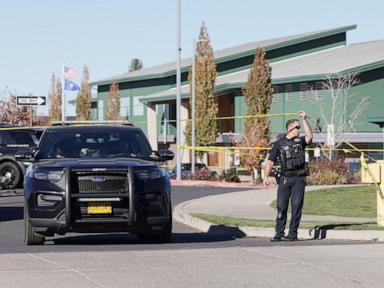
Initial breaking-news headlines about an elementary school shooting in Bend, Oregon—summarized by the shorthand "At least 3 dead in Oregon elementary school shooting, sources say; suspect also dead"—compress a complex security breakdown into a tally of fatalities. That framing obscures how perimeter defenses, interior classroom protocols, civilian intervention, and law enforcement response interacted over a span of minutes. Understanding why an attack at Silver Rail Elementary School resulted in three children and a teacher killed before the suspect was shot dead requires separating confirmed operational facts from broader systemic hypotheses.
A rigorous post-incident review treats a school building not as a static container, but as a multi-layered access and delay system evaluated against an active adversary. When an attacker breaches a facility, casualty counts are governed by time-to-contact, barrier hardness, interior compartmentation, and time-to-neutralization. Breaking-news dispatches capture the outcome at the end of that chain while leaving the mechanics of each link unexamined.
Deconstructing the Competitor Headline Logic
Short wire-style summaries prioritize speed and casualty counts over causal structure. A headline stating that at least three people died and the suspect is also dead establishes three basic assertions: a minimum death toll, an elementary school setting, and a fatal conclusion involving the suspected shooter. In the October 15, 2026 attack at Silver Rail Elementary School in Bend, Oregon, authorities later reported that a 16-year-old shooter killed three children—ages 5, 8, and 11—and a teacher, while injuring others before being fatally shot by an armed civilian who followed him inside.
The analytical weakness of a raw tally lies in what it flattens. Counting victims alongside the deceased assailant merges two fundamentally different categories of event: unconsented lethal victimization and the termination of an active threat. It also omits the sequence of decisions and friction points that determined how far the assailant moved through the building.
- Outcome compression: Listing total deaths without separating victims from the suspect blurs the causal sequence of the incident.
- Missing timeline mechanics: A static count hides how quickly entry occurred, how long the attacker operated inside, and when intervention took place.
- Unclear attribution: Phrases like "sources say" signal early reporting uncertainty before official police briefings and investigative releases clarify roles and actions.
- Absent system context: Treating the event as an isolated headline ignores pre-existing district security investments, building layout, and external radicalization or access pathways.
The Four Pillars of Active Threat Response
Evaluating any school security incident requires examining four interdependent operational pillars: Perimeter Hardness, Interior Compartmentation, Intervention Latency, and Post-Incident Stabilization. Each pillar operates as a filter that either slows an attacker or allows momentum to build.
Perimeter Hardness and Forced Entry
Physical security standards in modern school design rely on controlled entry vestibules, electronic visitor screening, exterior cameras, and locked doors to channel normal foot traffic and deter casual intrusion. Silver Rail Elementary, completed in 2015 within the Bend-La Pine School District, incorporated features such as secure vestibules, security cameras, and classroom door-locking hardware upgraded after the 2022 Uvalde shooting.
Yet physical hardware tests resistance against specific modes of attack, not all possible breach methods. Reports from the Bend incident indicate the shooter forced entry by shooting through locked doors or glass panels rather than attempting to bypass a reception desk. In security engineering, this illustrates a core limitation of access control: doors and glass designed for routine control and visibility can fail rapidly when confronted with kinetic ballistic force.
A secure vestibule manages authorized entry; it does not automatically stop an armed assailant willing to destroy glazing or locking mechanisms to force a path inside.
Interior Compartmentation and Classroom Friction
Once an assailant crosses the threshold, interior layout and human actions determine whether movement is slowed or unimpeded. Classroom doors that lock quickly from inside the room create compartmentalization, reducing the number of accessible spaces during the critical window before police arrive.
In the Bend attack, events unfolded rapidly inside a classroom where educators and students were present. Accounts from those inside highlight how sudden proximity limits defensive options: one teacher described being shot at close range while trying to close a door, and another attempted to disrupt the attacker physically. Friction inside a room—whether from a locked door, physical resistance, or an assailant's weapon-handling issues—can interrupt an attacker's rhythm, though it carries severe personal risk when an assailant already holds firearms inside an enclosed space.
Intervention Latency and Armed Confrontation
Intervention latency is the elapsed time between initial threat detection and effective interruption of the attacker's ability to harm others. Emergency dispatch records from Bend show the first call reporting gunfire near the school came in at 12:59 p.m. PT, with police arriving at 1:02 p.m. PT. A three-minute arrival window reflects rapid municipal dispatch and proximity, yet in active-shooter dynamics, lethal harm can occur within seconds.
In this case, the shooter was fatally shot inside the school by Kaylub Giamanco, a parent whose children attended the school and who entered the building armed after seeing the attack begin. From an operational standpoint, armed civilian intervention presents a sharp trade-off:
- Potential upside: Immediate proximity can end an active attack faster than external police response when a clear line of action exists.
- Identification hazard: Responding officers and nearby staff or civilians face acute confusion distinguishing an armed defender from an active shooter, a risk Giamanco himself noted when a teacher ran from him after the shooting stopped.
- Unstandardized execution: Unlike trained tactical teams operating under shared communications and rules of engagement, spontaneous armed entry relies on individual judgment under extreme stress.
Post-Incident Stabilization and Continuity
Neutralizing the immediate threat does not end the operational demands of the incident. Once the suspect is down, priorities shift to medical triage for the wounded, positive identification and separation of witnesses and armed bystanders, scene preservation, and communication with anxious families.
District-wide closures—such as canceling classes, sports, and extracurriculars across all 32 Bend-La Pine schools the following day—serve both practical security and psychological recovery functions. They give investigators space to process the scene while allowing school leaders and families to confront fear and trauma before resuming routines.
Known Facts Versus Analytical Hypotheses
Separating established facts from working hypotheses prevents premature conclusions while an investigation is underway. Police briefings, court or investigative disclosures, and community interviews provide concrete anchor points, whereas broader causal explanations remain subject to verification.
Known facts established in public reporting include the location and date (Silver Rail Elementary School in Bend, Oregon, on October 15, 2026), the victim count reported by authorities (three children and a teacher killed, with additional injuries), the age of the shooter (16), police arrival within minutes of the initial 911 report, and the fatal shooting of the suspect inside the school by an armed civilian.
Analytical hypotheses involve upstream and systemic questions that require deeper investigation rather than assumption:
- Weapon acquisition pathways: How a 16-year-old obtained the firearms and ammunition used in the attack remains a central investigative question rather than a settled fact.
- Online radicalization and behavioral warning signs: Investigators examining the suspect's background—including dropping out of school in late 2025 and potential exposure to extremist material or online groups—must test whether identifiable warning indicators existed prior to the attack and whether any institution had actionable grounds to intervene.
- Hardware versus human factors: Determining whether additional physical barriers, glazing upgrades, or procedural adjustments would have meaningfully altered the timeline requires forensic reconstruction of movement and timing inside the building.
Why Standard School Safety Metrics Fail
Many public debates over school security rely on surface metrics that sound reassuring on paper but measure the wrong variables. Counting security cameras, listing visitor sign-in kiosks, or tracking how many hours of active-shooter drills staff complete measures input compliance, not adversarial resilience.
A school can have modern cameras, electronic visitor background checks, and upgraded door locks and still suffer severe casualties if an attacker bypasses routine entry entirely and strikes before doors are secured. Conversely, focusing solely on post-incident metrics like police response time in minutes misses what happens during the critical seconds before officers cross the threshold.
Effective risk evaluation shifts from input checklists to failure-mode testing. Security planners ask how a determined adversary could defeat each layer, how quickly staff can trigger lockdowns under surprise conditions, and how clear the handoff is between initial alarms, first responders, and civilian witnesses on site.
Operational Limitations and Strategic Play
No single physical barrier, policy change, or response model eliminates the risk of targeted school violence. Hardening every glass panel to ballistic standards across thousands of classrooms carries steep capital costs and can conflict with fire egress, natural daylight, and child-friendly learning environments. Relying on spontaneous armed intervention introduces severe risks of crossfire, misidentification, and untrained decision-making in chaotic spaces. Even strong threat-assessment programs face legal, privacy, and predictive limits when trying to forecast violent acts before a clear threshold is crossed.
The highest-leverage strategic play for school districts and municipal leaders is to audit and tighten the earliest friction points along the attack timeline while aligning upstream prevention with rapid tactical coordination. Specifically, districts should conduct unannounced stress-tests of lockdown initiation speed from the moment exterior gunfire or forced entry is detected, pair ballistic-resistant glazing at vulnerable entry points with clear staff shelter-in-place protocols, and establish joint command playbooks with local police that account for unexpected civilian presence on scene. Parallel to physical readiness, school systems and families must strengthen early behavioral reporting channels between schools, mental health professionals, and law enforcement so warning signs—such as sudden disengagement from school or fixation on violent extremism—are evaluated systematically rather than missed in isolation.


