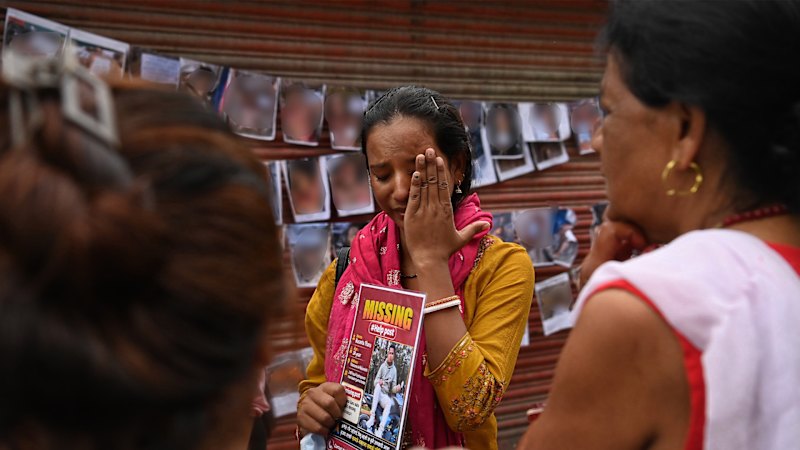
The air inside Kathmandu's Tribhuvan University Teaching Hospital doesn't smell like antiseptic. It smells like panic, wet earth, and unimaginable grief. Families arrive clutching folded flyers, smartphone screenshots of smiling relatives, and medical records, walking past makeshift notice boards covered in names. Following the catastrophic flash floods and landslides that tore through the mountain valleys along the Nepal-Tibet border, thousands remain unaccounted for. For the relatives combing through the wreckage, the worst part isn't just the absence. It's the daily, stomach-churning hunt through morgue logs and survivor registries, dreading what they might find on the next page.
If you've been following the crisis or trying to track down a family member caught in the disaster zone, you already know how chaotic the official response feels. Information moves slowly. Communication lines stay jammed or severed. Thousands of international travelers and locals were on spiritual pilgrimages near Mount Kailash and surrounding river valleys when glacier-triggered walls of water wiped out entire paths in minutes. Now, relatives aren't just waiting by their phones—they're flying into Kathmandu to pound the pavement themselves because trusting automated updates isn't an option anymore.
The Reality on the Ground in Kathmandu
Finding accurate data during a mass-casualty event in a developing mountainous region is brutally difficult. Local emergency services are overwhelmed. Search and rescue teams face massive layers of silt, mud, and debris that buried entire roadways up to fifty feet deep in places.
When families reach Kathmandu, they face a grim administrative routine:
- The Registry Check: Visiting local police posts where lists of rescued, hospitalized, and deceased individuals are updated intermittently.
- DNA Submissions: Providing biological samples to forensic teams who are struggling to process bodies recovered from downstream rivers and remote gorges.
- The Morgue Log: Sifting through digital databases of recovered remains or walking into temporary holding areas where unidentified victims are logged.
Many international families, including relatives flying in from the United States, Australia, and India, quickly realize that consular offices only have limited visibility. Bureaucracy moves at a glacial pace while rescue windows shrink by the hour.
Why Official Numbers Leave Families in the Dark
Governments and tour operators often report broad aggregate statistics—hundreds confirmed dead, thousands missing. But aggregate numbers don't help a mother looking for her son or a husband searching for his wife.
The information gap usually stems from three major bottlenecks:
- Remote Topography: Many areas hit by the August floods are accessible only by foot or specialized air rescue, which are frequently grounded due to unpredictable weather.
- Private Tour Fragmentation: A significant portion of the missing are independent travelers or members of private spiritual groups, such as those traveling through the Isha Foundation or Himalayan Glacier Adventures, meaning tracking manifests requires coordinating with private entities rather than centralized state rosters.
- Communication Blackouts: Power grids destroyed in the initial hours mean digital check-ins are non-existent in the hardest-hit river valleys.
Practical Steps for Families Searching for Missing Relatives
If you are currently trying to locate someone missing in the region, traditional panic won't help, but structured action might. You have to bypass slow bureaucratic channels where possible and utilize peer networks.
Contact your country's Department of Foreign Affairs or State Department immediately to open a formal missing person case, but don't rely solely on their updates. Connect directly with on-the-ground family support groups forming on social platforms and WhatsApp. Local volunteers in Kathmandu are often more responsive than official helplines, frequently organizing boots-on-the-ground checks at hospitals and temporary shelters.
Keep digital copies of dental records, recent clear photos showing distinctive tattoos or scars, and exact travel itineraries handy. If you have a trusted friend or relative willing to fly to Kathmandu, their physical presence at local command centers and hospitals forces authorities to pay attention in a way that overseas phone calls never will.
The wait is agonizing. The uncertainty is worse. But staying proactive is the only way to cut through the fog when the system is strained to its absolute breaking point.


