The air inside a maximum-security execution chamber does not smell like ozone or electricity. It smells like old floor wax, chilled iron, and the distinct, coppery breath of twenty people trying not to swallow too loudly.
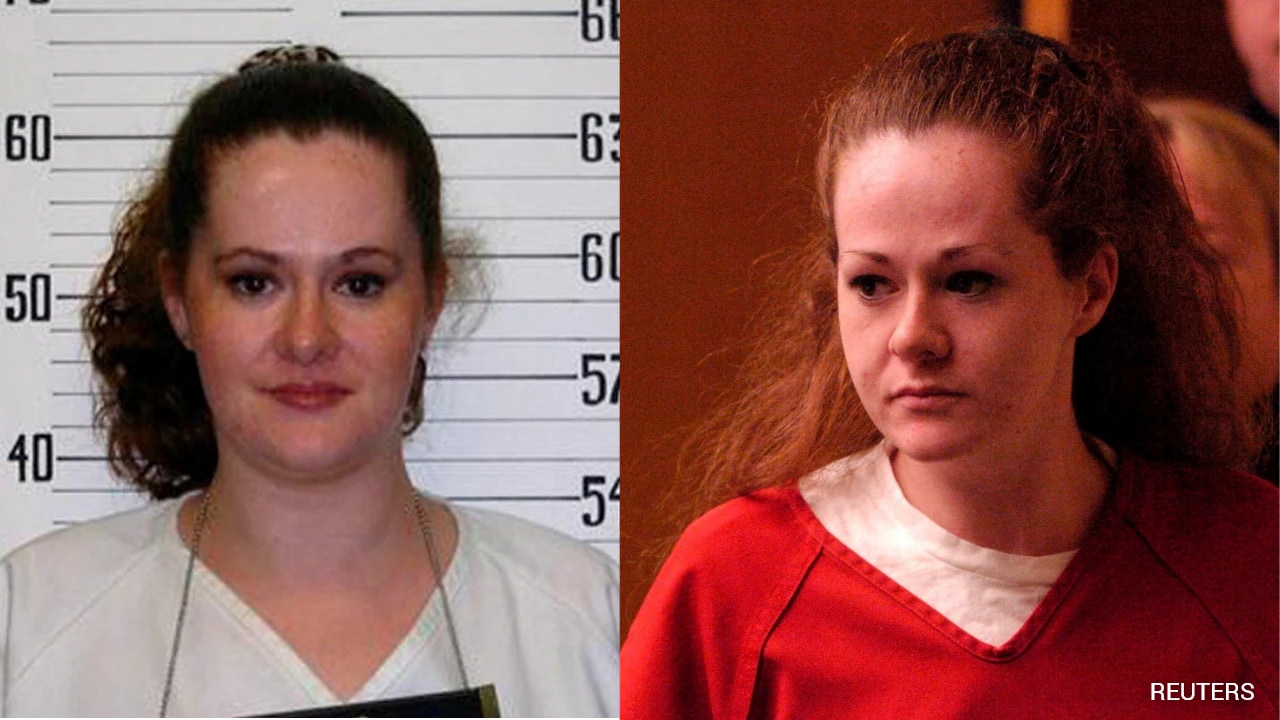
For Christa Pike, the metal straps were familiar. In the winter of 1996, a Tennessee jury decided that a nineteen-year-old Job Corps student had committed a crime so gruesome—a murder fueled by teenage jealousy, occult fixation, and a brutal midnight trip to an abandoned steam plant—that her only currency left was her pulse. They spent twenty-eight years making sure she knew it. Twenty-eight years of concrete yards, steel doors, and the slow, rhythmic ticking of a clock counting down to an appointment with a chemical cocktail.
Then came the morning when the gears slipped.
When a state-sanctioned execution stalls, the world outside imagines a dramatic movie scene: a frantic phone call from a governor, a judge signing a stay in a pool of midnight lamplight, or a last-minute pardon delivered by a courier on a sweating horse. Reality is far quieter and infinitely more sterile. It is a hesitation in the heartbeat of the apparatus. It is the sudden, terrifying pause of a lethal injection protocol that fails to cross the finish line, leaving a condemned woman suspended in the strange, agonizing space between the living world she had already renounced and the execution table she was strapped to.
Consider what happens to the human mind when the switch is thrown, the machinery grinds, and nothing happens.
For decades, the legal machinery surrounding capital punishment has operated under the comforting fiction of clinical precision. We are told that lethal injection is a peaceful descent into sleep, a medical procedure performed in reverse. But history is littered with the mechanical failures of human vengeance. Veins collapse. Drugs fail to mix. Protocols change because pharmaceutical companies refuse to sell their products to state executioners, forcing departments of correction to become amateur pharmacologists, experimenting with compounded substances in the dark.
When an execution fails or is abruptly halted after the process has begun, the psychological fallout defies easy categorization. You are asking a human being to prepare for the absolute termination of their consciousness. You are asking them to make peace with God, to write final letters, to say goodbye to whatever frayed remnants of humanity remain inside a cage. And then, when the expected darkness fails to arrive, you pull them back into the light.
What do you do with a soul you have already half-killed?
Christa Pike’s story is not a redemption arc. The murder of Colleen Slemmer in January 1995 remains a chilling monument to adolescent cruelty—a crime involving torture, a souvenir skull fragment, and a total absence of mercy. The State of Tennessee pursued her execution with the heavy, unyielding momentum of a boulder rolling down a mountain. Every appeal was gutted by courts that looked at the brutality of the original act and found no room for clemency. The legal architecture was built to withstand doubt, to reject second chances, and to deliver an absolute end.
Yet, absolute ends are surprisingly fragile things.
When execution protocols hit roadblocks—whether through administrative stays, judicial intervention, or technical glitches in the delivery system—the public response is usually divided into two predictable camps. One side sees a miscarriage of justice, a cruel and unusual prolongation of inevitable punishment for a heinous crime. The other sees a rare, accidental reprieve, a glitch in the matrix that forces us to look directly at the machinery we have built in our name.
We prefer our justice clean. We want our criminals tucked away behind impenetrable walls, processed through automated appeals, and extinguished with the quiet efficiency of a light switch. When a high-profile execution stalls or breaks down, it punctures that illusion. It reminds us that state-sponsored killing is performed by fallible people operating complicated, aging equipment under immense political and emotional pressure.
The inmate wakes up. Not from a dream, but from the rehearsal of their own demise.
In the quiet hours following a botched or delayed execution attempt, the silence in the unit is deafening. The guards who cinched the leather straps must return to their posts and look the prisoner in the eye. The lawyers who filed the emergency motions must confront the reality that their victories are often temporary reprieves, buying months or years inside a cage where the air is thin and hope is a dangerous luxury. And the public goes back to scrolling, vaguely unsettled by the reminder that death row is not a television show, but a slow, grinding reality operating just out of sight.
We have constructed a system designed to be invisible. We outsource our deepest moral questions to concrete bunkers and chemical formulas, hoping that distance will make the process righteous. But every time the machinery stutters, the curtain pulls back. We are forced to see the raw, messy intersection of state power, human error, and mortality.
Christa Pike remains a prisoner of a system that cannot quite figure out how to finish what it started, and cannot bring itself to forgive what it cannot forget. The straps are unbuckled for now. The lights in the viewing gallery are turned off. But the machinery is still there, humming softly in the basement, waiting for the next time the state decides it is ready to try again.