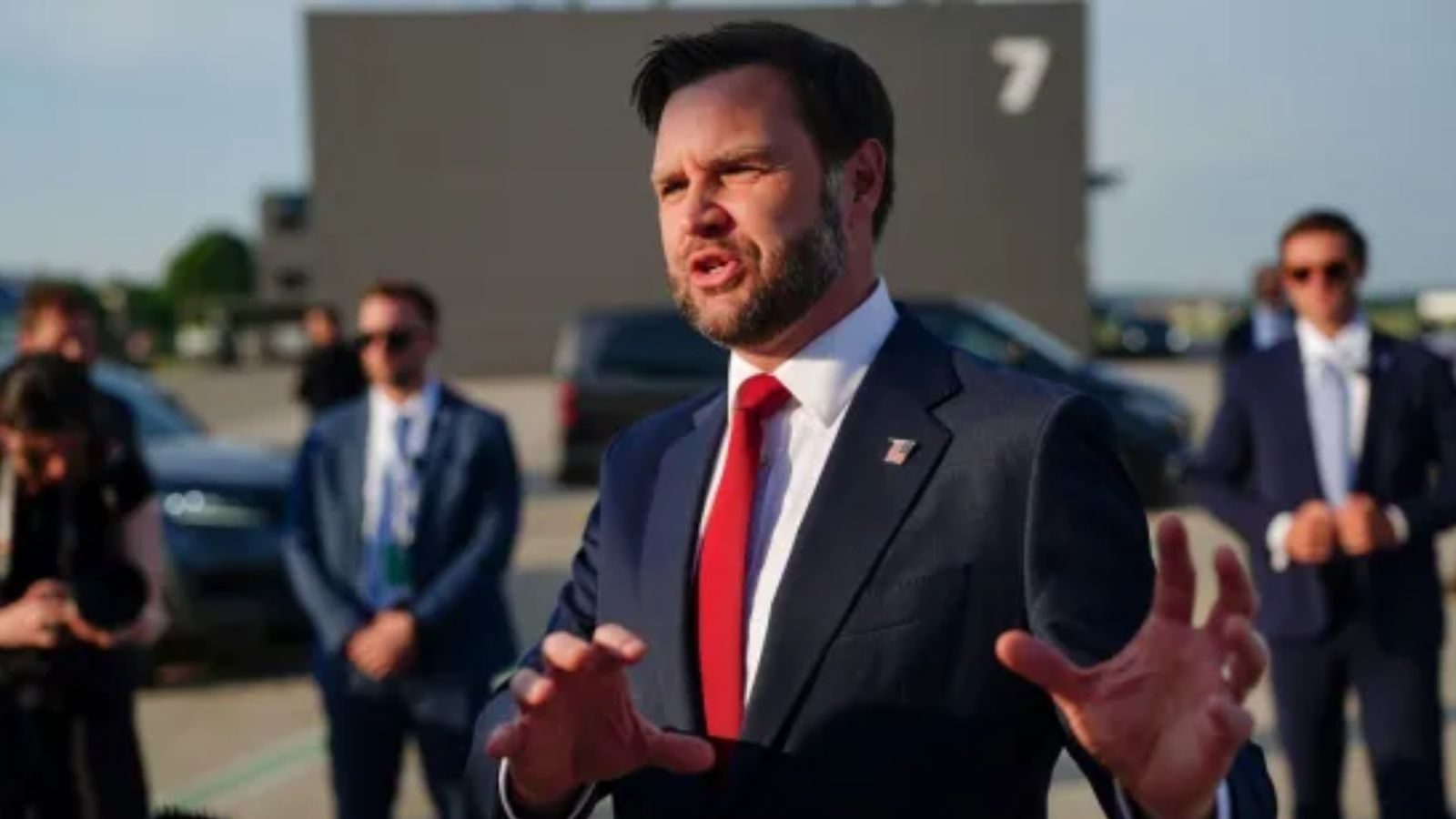
Vice President JD Vance stepped to the podium at the White House and offered a linguistic pivot that fundamentally defines modern American statecraft. "I wouldn't call it a war," he told reporters, pointing to the absence of continuous active shooting on the ground. This semantic retreat arrives as the United States approaches its seventh month of active military exchanges with Iran, complete with multi-billion-dollar price tags, naval clashes in the Strait of Hormuz, and dozens of American casualties.
The refusal to categorize ongoing hostilities as a formal war is not a slip of the tongue. It is a calculated legal and political necessity.
The Politics of Nomenclature
For decades, the executive branch has mastered the art of managing armed conflict without the inconvenience of a congressional declaration. The Constitution grants Congress the explicit power to declare war, a requirement that has become an administrative ghost of the eighteenth century. Modern executives prefer targeted campaigns, kinetic operations, and open-ended strategic interventions.
When major combat operations have names like Operation Epic Fury, yet the administration insists the country is not at war, a profound accountability gap opens.
The White House faces an unforgiving electoral calendar. With November midterm elections looming and domestic anxiety over gasoline prices and inflation biting into Republican support, defining the engagement becomes an exercise in damage control. If there is no war, there is no quagmire. If there is no war, there is no legal requirement to extract a formal Authorization for Use of Military Force from a deeply fractured legislature.
Vance argued during the briefing that intensive operations concluded weeks after initial exchanges destroyed key adversary targets. Yet shipping lanes remain contested, regional proxies continue to trade blows, and American bombers continue to cycle through Middle Eastern airspace.
The Cost of Endless Limbo
The human and financial tolls tell a story that semantic gymnastics cannot erase. Defense department figures point to a mounting tally of American service members killed and wounded in a theater that officially defies classification as a combat zone. Billions of dollars vanish into the logistics of intercepting drones and securing maritime bottlenecks.
Meanwhile, regional stability deteriorates in slow motion. When strikes hit civilian areas, such as recent reports from southern Iran, the diplomatic fallout is immediate. Yet because the conflict occupies an ambiguous legal purgatory, international oversight mechanisms struggle to gain traction.
The administration maintains that normalization depends entirely on Tehran halting attacks on commercial shipping. Tehran views American and allied military posture as an ongoing act of aggression. Both sides are locked in an attritional cycle where escalation is managed through low-grade friction rather than total mobilization.
By stripping the word war from the conflict, the executive branch insulates itself from the political penalties historically associated with military failure. Labels matter because they dictate how citizens perceive risk and how history records blood spilled in foreign sands.
As long as Washington can redefine active combat as a mere flare-up, the machinery of intervention can grind forward indefinitely without ever pausing to ask where the finish line lies.