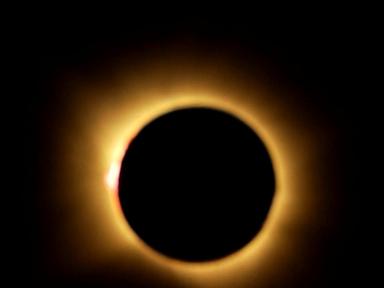
For a few fleeting minutes, the middle of the day plunges into a surreal, bruised twilight. Streetlights flicker on automatically. Birds fall silent, confused by the sudden, premature dusk. Temperatures drop sharply enough to raise goosebumps on bare arms. When the Moon completely blocks the face of the Sun, lining up with absolute precision against the backdrop of Earth, millions of people look up and experience a profound jolt of planetary scale.
A total solar eclipse is not merely a pretty celestial postcard. It is a rare, complex alignment of orbital mechanics that exposes the fragile vulnerability of modern infrastructure, strains regional economies, and triggers intense scientific investigations into the solar atmosphere. Most casual observers watch the livestream, marvel at the corona blooming like a ghostly silver dahlia in the dark sky, and go back to their daily routines. They miss the structural reality beneath the spectacle.
Understanding what happens inside the path of totality requires looking past the breathless television broadcasts and examining the massive logistics, the frantic scientific scramble, and the hidden physics that govern our solar system.
The Geometry of Alignment
Why does totality happen at all? It is a coincidence of cosmic proportions, born of scale and distance. The Sun is roughly four hundred times larger than the Moon, but it is also approximately four hundred times farther away from Earth. Because these ratios match so neatly, both bodies appear almost identical in size when viewed from our planet's surface.
When the Moon passes directly between the Earth and the Sun, its shadow sweeps across the globe at supersonic speeds. This shadow consists of two distinct zones:
- The Penumbra: The lighter, outer part of the shadow where observers see only a partial eclipse.
- The Umbra: The dark, central core of the shadow where the Sun is entirely obscured, creating the narrow corridor known as the path of totality.
The width of this path rarely exceeds one hundred miles. Standing just inside the boundary yields a breathtaking view of the solar corona, while stepping a single mile outside that line reduces the event to a dimming of the sky, missing the core phenomenon entirely. This razor-thin margin turns geography into a high-stakes lottery for millions of stargazers.
The Grid Strain Nobody Mentions
While astronomers focus on coronal mass ejections and atmospheric ionization, municipal planners face a very terrestrial crisis. The path of totality often cuts directly across rural counties and mid-sized towns entirely unequipped for sudden population explosions.
When millions of tourists descend on a sleepy rural highway to witness the alignment, basic systems buckle immediately. Cell towers overload instantly because thousands of visitors try to stream video or upload photos simultaneously. Emergency services crawl to a standstill as gridlocked two-lane roads turn into parking lots. Gas stations run dry. Grocery store shelves empty out faster than a hurricane warning.
Power grids experience a different kind of shock. Modern energy portfolios rely heavily on utility-scale solar farms. When the Moon cuts off incoming sunlight over a massive geographic footprint, solar generation drops off a cliff within minutes. Grid operators must compensate for this sudden deficit by ramping up natural gas peaker plants or importing power from unaffected regions. Managing this rapid swing requires split-second precision from engineers who cannot afford a single miscalculation.
Inside the Scientific Scramble
For professional researchers, a total solar eclipse is the Super Bowl of astrophysics. The solar corona—the ultra-hot outer atmosphere of the Sun—remains notoriously difficult to study under normal conditions. The blinding light of the solar disk drowns out the faint glow of the corona, forcing scientists to use artificial instruments called coronagraphs to block the sun's center.
Even the best space telescopes struggle to match what human instruments can capture during the precious minutes of totality. The Moon acts as a precise edge blocker, clipping out glare with a sharpness that artificial disks cannot replicate.
Researchers deploy high-altitude research aircraft, sounding rockets, and mobile ground stations directly into the path of totality. They measure the temperature fluctuations in the ionosphere, study how animal behavior shifts in response to sudden darkness, and analyze the magnetic structures looping through the corona. These observations help solve lingering mysteries about why the corona is millions of degrees hotter than the surface of the Sun directly beneath it.
The Economic Mirage
Local chambers of commerce often promote eclipses as guaranteed windfalls for local businesses. Hotels charge exorbitant rates for modest rooms. Restaurants stock up on extra supplies. Souvenir vendors flood downtown squares.
The financial reality is frequently more complicated. While hotels and gas stations see a massive, brief spike in revenue, many everyday businesses actually suffer during an eclipse. Regular local customers stay home to avoid the predicted traffic nightmares, leading to a net-zero or even negative sales day for retail shops, dry cleaners, and medical offices. Furthermore, municipal governments shoulder heavy unbudgeted costs for overtime police staffing, extra sanitation services, and traffic control. The economic boost often concentrates in the hands of corporate lodging chains, leaving local municipalities to clean up the trash and absorb the logistical headache.
Looking Up Without Looking Away
The cultural obsession with solar eclipses has a dark side written in ophthalmology textbooks. Staring directly at the partial phases of an eclipse causes irreversible retinal damage known as solar retinopathy. The tragedy of this injury is its painless nature. Photoreceptor cells in the eye have no pain receptors, meaning a person can sear their retina without realizing it until the blurry blind spots appear hours later.
Public safety campaigns work overtime to distribute certified eclipse glasses complying with international safety standards. Yet, counterfeit products flood online marketplaces every time an eclipse approaches. Unscrupulous manufacturers slap fake certification labels onto cheap cardboard frames that fail to filter out dangerous ultraviolet and infrared radiation. The result is a predictable spike in preventable eye injuries following every major celestial alignment.
Total solar eclipses will not happen forever. Because the Moon is slowly receding from Earth at a rate of about one and a half inches per year, it will eventually appear too small to cover the Sun completely. Millions of years from now, total solar eclipses will cease to exist, replaced entirely by annular eclipses where a ring of fire surrounds the dark lunar disk.
Until that distant era arrives, humanity will continue to chase the shadow. We pack our cars, check the weather forecasts obsessively, and stand shoulder-to-shoulder in dusty fields, waiting for the sky to fall dark. It is a humbling reminder of our place in the cosmos, sandwiched between the vast mechanics of orbital physics and the fragile limits of our earthly infrastructure.


