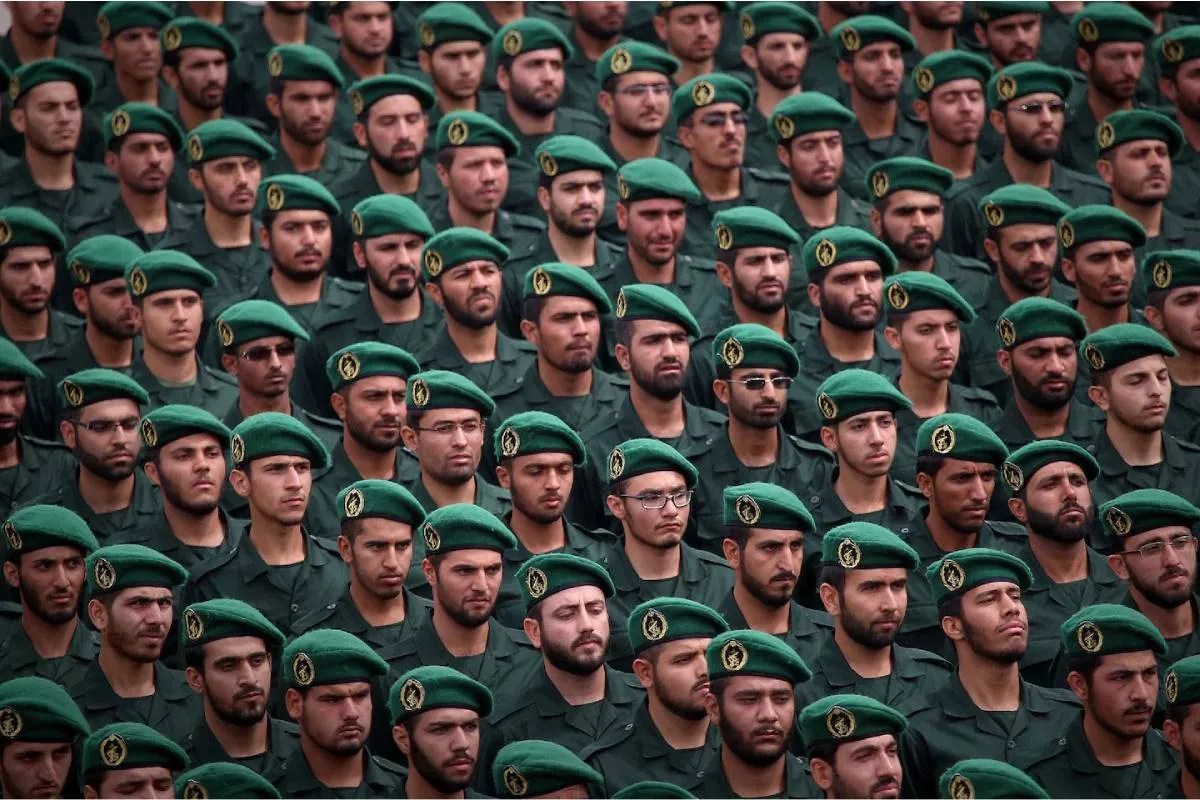
A cold wind rattles the shutters of a nondescript office in Tehran, where the smell of strong black tea and old paper hangs heavy. This isn't the Tehran of bustling markets or student protests. This is the interior world of the Islamic Revolutionary Guard Corps (IRGC), a labyrinth where power is not just held; it is hoarded, hidden, and occasionally, it vanishes.
For months, the world’s intelligence agencies have been squinting at satellite feeds and intercepted whispers, asking one question: Where is Mojtaba Khamenei? The son of the Supreme Leader, once the presumed heir to the throne and a shadow puppet master of the IRGC, has slipped into a tactical silence. His absence should have created a vacuum. In the brutal physics of Middle Eastern geopolitics, a vacuum is usually filled by chaos. Yet, the IRGC’s "Plan B" is already in motion. It is a machine that does not need a single face to function. It is a ghost in the gears.
The Architecture of a Faceless War
To understand how Iran plans to strike back at the United States and Israel without its most recognizable figures at the helm, you have to stop looking for a "General" or a "Prince." Instead, look at the structure. The IRGC has evolved from a traditional military hierarchy into something more akin to a decentralized neural network.
Think of it like a hive. If you remove the queen, the workers don't stop building; they follow an ancient, encoded set of instructions that prioritize the survival of the collective over the individual. This is "Plan B." It is the institutionalization of shadow warfare. While the West waits for a formal declaration or a recognizable leader to step into the light, the IRGC is busy distributing its command across a dozen "Little Mojtabas"—technocrats and mid-level commanders who operate with a terrifying degree of autonomy.
This decentralization is a defensive masterpiece. You cannot assassinate a philosophy. You cannot topple a regime by taking out a single pillar if the roof is supported by a thousand invisible needles.
The Invisible Stakes of the Digital Front
While the world watches for missiles in the sky, the real "Plan B" is unfolding on glowing screens in basement rooms. The IRGC has realized that kinetic warfare—dropping bombs, firing guns—is expensive and loud. It invites a level of retaliation that even they fear. But cyber warfare? That is the quiet poison.
Consider a hypothetical engineer in Haifa or an air traffic controller in Dulles. They aren't looking for a paratrooper. They are looking at a flickering cursor. The IRGC’s new command structure has pivoted heavily toward "non-linear escalation." This means using AI-driven misinformation to tilt an election or deploying ransomware to freeze a city’s water supply. These aren't just technical glitches. They are the frontline of a war that has no borders and no rules of engagement.
The human cost here is hidden until it isn't. When a hospital's power grid fails because of a breach, the tragedy isn't a "fact" in a news report. It is a patient in an ICU whose ventilator stops. It is the panic in the eyes of a nurse who doesn't know why the monitors went dark. This is the reality of the IRGC’s shift. They are moving away from the "Great Man" theory of history and toward the "Great Disruption."
The Ghost of the Quds Force
The IRGC doesn't just operate within Iran’s borders. Its reach is a series of overlapping circles, extending through Lebanon, Yemen, and Iraq. In the absence of a singular, charismatic leader like Qasem Soleimani—or the strategic weight of Mojtaba—the "Plan B" relies on "Strategic Patience."
This isn't the patience of a saint. It is the patience of a predator.
The IRGC has spent decades building proxies that are now self-sustaining. These groups are no longer just "proxies"; they are franchises. They have their own revenue streams, their own local recruitment, and their own tactical goals. When Tehran sends the signal, these groups don't need a detailed map. They already know where the pressure points are.
This creates a peculiar kind of horror for the American and Israeli intelligence communities. How do you negotiate with a cloud? If there is no single person to hold accountable, the traditional levers of diplomacy and even military deterrence begin to rust. You can't threaten a man’s family if you don't know which man is making the decision.
The Quiet Room and the Loud World
Imagine a room where the air is thick with the hum of servers. There are no medals here. No olive-drab uniforms. Just young men in sweaters, sipping tea, watching data streams. This is the new IRGC command center. They are the ones executing the "Plan B."
They are watching the shipping lanes in the Red Sea. They are monitoring social media trends in Tel Aviv to see where the social fabric is fraying. They are looking for the cracks in the Western alliance, the moments of hesitation in Washington, and the political divisions in Jerusalem.
The strategy is simple: bleed the enemy through a thousand tiny cuts. A drone strike here. A bank hack there. A maritime "accident" in the Strait of Hormuz. Individually, none of these actions are enough to trigger a full-scale world war. Collectively, they create a state of permanent, low-boil exhaustion.
The Weight of the Crown
There is a psychological toll to this kind of warfare, not just for the victims, but for the practitioners. The "Plan B" requires a total erasure of the self. In the old days, a commander wanted his name feared. Today, the most successful IRGC operative is the one whose name is never spoken.
This brings us back to the missing Mojtaba. Perhaps his absence isn't a sign of weakness or a purge. Perhaps it is the ultimate tactical move. By stepping out of the frame, he makes the entire picture harder to focus on. He becomes part of the architecture.
The IRGC is betting that the West is too distracted by its own internal dramas to notice that the rules of the game have changed. They are betting that we are still looking for a king to checkmate, while they have already replaced the king with a swarm of pawns that all move like queens.
History is full of empires that fell because they couldn't find a successor to a great leader. The IRGC is trying to prove that you don't need a successor if you have a system. They are building a machine designed to outlast the men who built it, a clockwork of conflict that keeps ticking even when the lights go out in the palace.
The sun sets over the Alborz mountains, casting long, jagged shadows across the city of Tehran. In those shadows, the "Plan B" is not just a document or a dream. It is a living, breathing reality. It is the sound of a keyboard clicking in the dark, the silent movement of a freighter in the night, and the terrifying realization that the most dangerous enemy is the one you can no longer see.


