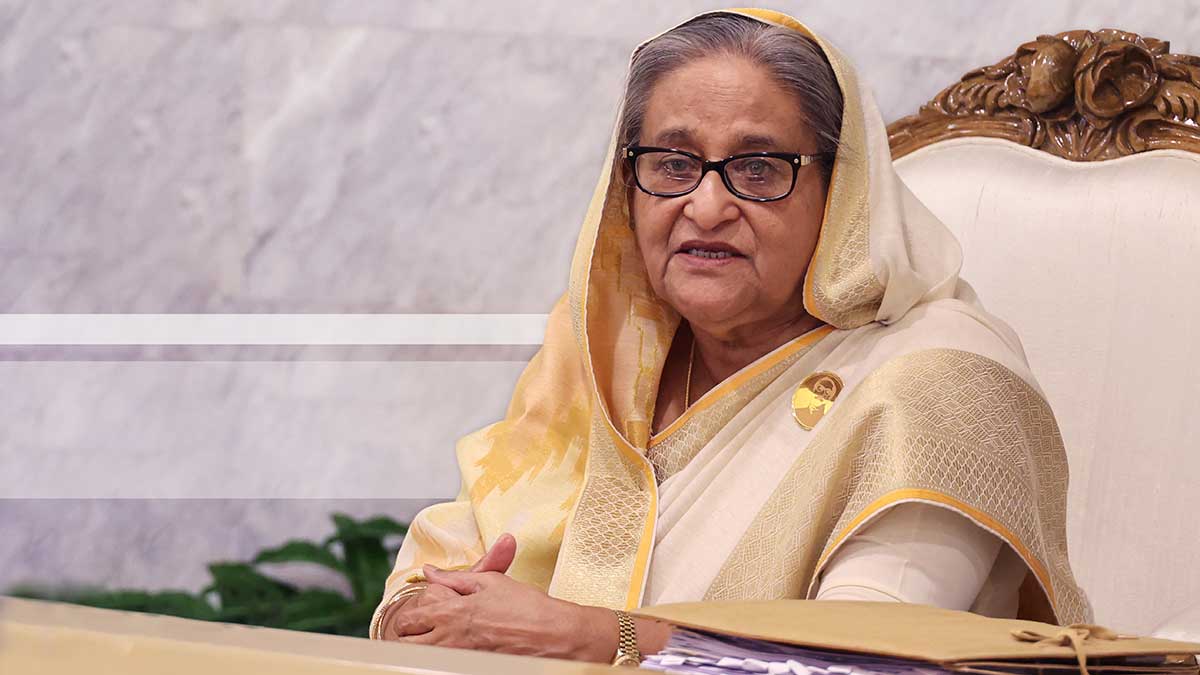
For two years, the former prime minister has watched from exile in New Delhi while her political world collapsed. Now, Sheikh Hasina is drawing a hard line in the sand. She wants to return to Dhaka by December, despite a death sentence hanging over her head and an active warrant for her arrest.
If you think this is just empty political posturing, you aren't paying attention to the volatility in South Asia. Hasina's announcement isn't merely about personal survival or stubborn pride. It is a calculated gamble that could either spark a massive political resurrection for her banned Awami League party or plunge the country into a deeper constitutional crisis.
What Led to This Breaking Point
Let's look at the timeline. In August 2024, a fierce student-led uprising shattered Hasina's fifteen-year iron-fisted rule, forcing her to flee across the border into India via military helicopter. What followed was a complete dismantling of her political infrastructure. An interim administration led by Muhammad Yunus took the reins, followed later by a general election victory for Tarique Rahman’s Bangladesh Nationalist Party.
Courts in Dhaka didn't just sideline Hasina; they moved aggressively. A special tribunal sentenced the seventy-eight-year-old leader to death in absentia, convicting her of inciting a deadly crackdown during the 2024 protests. Her party was outlawed, its offices shuttered, and its leaders driven underground or into foreign sanctuary.
Yet, during a virtual press briefing organized by the Foreign Correspondents' Club of South Asia, Hasina made her stance crystal clear. Her voice broke as she recounted the state of the nation. She argued that the country she spent decades building has fractured.
"They may arrest me on my return, they may even kill me," Hasina told reporters, staring down the reality of her legal jeopardy. "Still, I have to go."
The Real Strategy Behind the Comeback
Why risk execution? The answer lies in the grassroots survival of the Awami League. Autocrats in exile usually fade into irrelevance. Hasina knows that if she stays away, her party dies a slow death under government bans and continuous legal prosecution.
By setting a concrete deadline of December, she is forcing her loyalists out of the shadows. She isn't just planning a solo trip. She has urged other exiled heavyweights—including former ministers facing identical death sentences—to book their tickets and surrender en masse to the courts.
It is a high-stakes theatrical defense. Imagine dozens of high-profile political figures walking back across the border to challenge a hostile judiciary. It turns a criminal prosecution into a massive public spectacle. It transforms courtrooms into political stages.
The current administration in Dhaka isn't panicking, but they are digging in their heels. Law enforcement agencies have already stated that the moment she sets foot on Bangladeshi soil, the cuffs go on. Officials have dismissed her claims of political persecution as empty rhetoric designed to destabilize a fragile democracy.
The Regional Diplomatic Headache
This isn't just an internal domestic dispute. It is a major diplomatic migraine for New Delhi. India granted Hasina safe refuge in 2024 on humanitarian grounds, but hosting an ousted leader who actively conducts virtual political rallies creates severe friction with Dhaka.
Bangladesh's foreign ministry has already expressed outrage that Indian soil is being used for political messaging against the current government. When regional heavyweights clash over asylum rights and extradition demands, bilateral trade, security agreements, and border management all take a hit.
If Hasina actually boards a flight toward Dhaka this winter, Indian authorities will find themselves in an impossible diplomatic corner. Do they stop her departure, or do they let her walk toward a potential execution?
What Happens Next
The political landscape of Bangladesh is walking a tightrope. Public frustration with economic strain and safety concerns has given Hasina an opening to frame herself as a populist martyr. She is banking on the idea that public fatigue with the current administration will outweigh the animosity left over from her ouster.
Whether she actually steps off a plane in December or gets blocked by international legal and physical barriers, the psychological barrier has already been broken. The narrative has shifted from an exiled leader in hiding to an active countdown for a showdown in Dhaka. Watch the borders this winter. Everything is about to change.