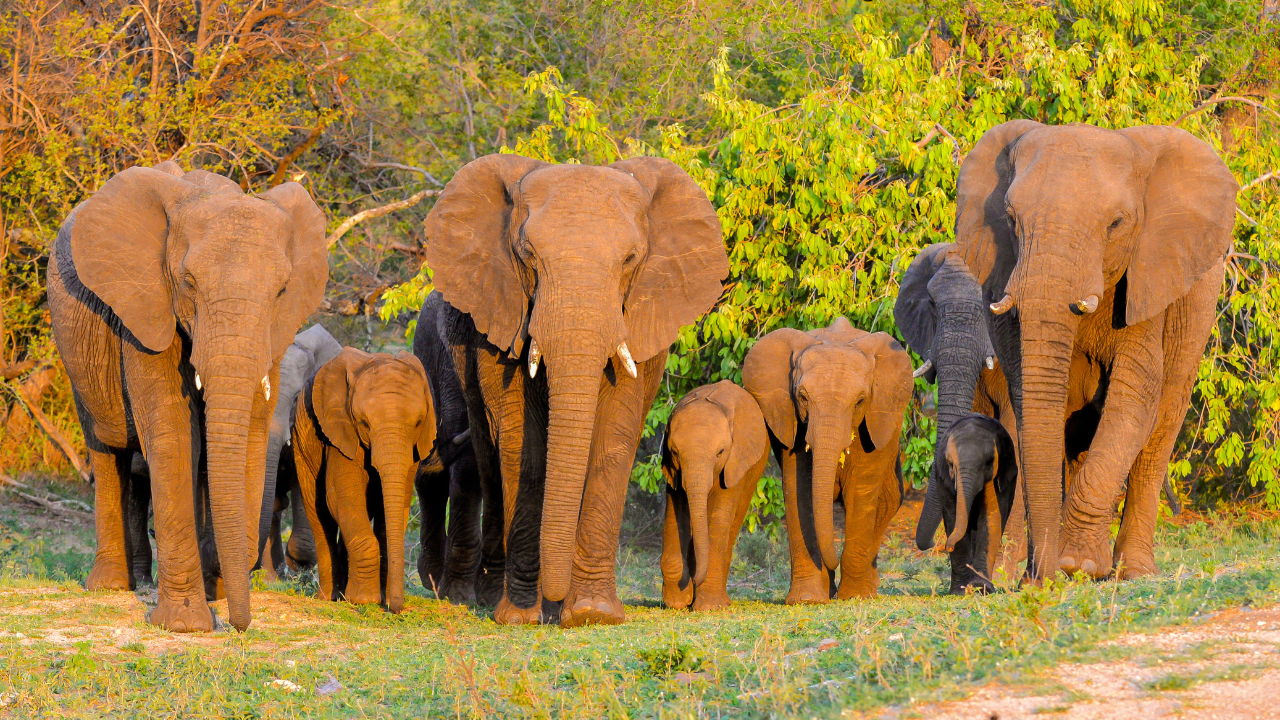
Mainstream conservation journalism loves a clean, tragic cause-and-effect story.
Elephant numbers drop. Social networks fracture. The herd forgets how to survive. End of story. Cue the donation link.
That narrative is comforting because it is simple. It is also dangerously incomplete.
A widely circulated 12-year ecological analysis recently triggered a wave of headlines claiming that declining elephant populations directly cause social network fragmentation. On the surface, the logic feels intuitive. Fewer animals mean fewer connections. Remove nodes from a graph, and the web falls apart.
Except that is not how African savanna elephants (Loxodonta africana) or Asian elephants (Elephas maximus) actually operate in the wild. When you strip away the sensational headlines and look at the underlying behavioral ecology, a completely different picture emerges. Declining numbers do not automatically shatter elephant society. In many documented cases, severe population drops actually trigger aggressive hyper-consolidation. Unrelated survivors fuse together. Fractured remnants form tight, defensive super-herds.
The real crisis is not that the network breaks into isolated pieces. The real crisis is that the surviving network becomes dangerously homogenized, stripped of its institutional memory, and locked into rigid survival loops that fail when the climate shifts.
If conservationists keep designing wildlife corridors and anti-poaching strategies around the myth of simple fragmentation, they will keep wasting millions of dollars solving the wrong problem.
The Lazy Consensus of Network Collapse
Walk into any wildlife policy summit and you will hear the exact same talking points recycled from podium to podium. Speakers pull up a network diagram, point to a few missing dots, and declare that poaching or habitat loss has caused "social collapse."
I have watched conservation boards burn seven-figure grants trying to artificially reconnect fragmented elephant subpopulations through poorly planned land purchases, only to watch the animals completely ignore the new corridors. Why? Because the consultants assumed the animals were isolated against their will. In reality, those elephants had actively restructured their social hierarchy around resource scarcity and perceived predation risk.
To understand why the standard media takeaway fails, you have to understand fission-fusion dynamics.
Elephant societies are not static clubs with fixed memberships. They are fluid, multi-tiered systems. A core family unit—typically a matriarch, her adult daughters, and their calves—constantly splits apart (fission) when food is scarce and merges back together (fusion) into bond groups and clans when water and forage are abundant.
When journalists read a 12-year dataset showing fewer links between family groups during a period of population decline, they immediately scream "fragmentation." They mistake a natural, adaptive fission response to environmental stress for permanent structural decay.
The Difference Between Structural Collapse and Adaptive Contraction
Let us look at the actual mechanics of network topology in large mammals. A graph can lose 40% of its nodes and still maintain high network density among the survivors.
Decades of foundational field research—most notably by Cynthia Moss and Joyce Poole in Amboseli, Kenya, and Shermin de Silva’s long-term work on Asian elephants in Uda Walawe, Sri Lanka—demonstrate that elephant sociality is astonishingly resilient to raw headcount reductions, provided the demographic age structure remains intact.
Here is what actually happens when total numbers drop due to drought or mild attrition versus targeted poaching:
- Broad-spectrum mortality (Drought/Disease): Calves and the very old die first. Prime-age adult females survive. The remaining families temporarily split into smaller foraging parties to reduce competition over sparse vegetation. To a sloppy observer tracking associations over a decade, the network looks fragmented. The moment the rains return, those exact same families fuse back together with zero loss of social cohesion.
- Targeted mortality (Ivory Poaching): Poachers do not shoot at random. They target the largest animals with the biggest tusks—the oldest matriarchs and prime bulls.
This distinction exposes the massive blind spot in the "declining numbers cause fragmentation" headline. It is not the number of elephants missing from the ledger that dictates social health. It is which elephants were removed.
The Matriarch Bottleneck: Loss of Information, Not Just Links
Karen McComb’s landmark acoustic playback studies at the University of Sussex proved something that should be tattooed on the forehead of every wildlife manager. Herds led by matriarchs aged 55 and older were vastly superior at distinguishing between the roars of strange male lions and familiar prides compared to herds led by 35-year-old matriarchs. Older matriarchs also had significantly higher calf survival rates during severe droughts because they remembered where hidden water sources existed decades earlier.
Now consider what happens when a population declines by 30% because poachers wiped out the oldest tier of females.
The remaining 20- and 30-year-old females do not scatter into lonely, fragmented isolation. Quite the opposite. Research by George Wittemyer and Iain Douglas-Hamilton in Samburu National Reserve showed that when core families are devastated by poaching, surviving orphans and young females frequently form non-kin bond groups. They band together out of sheer terror and defensive necessity.
On a basic social network chart, these survivors might look connected. In some metrics, their clustering coefficient actually spikes.
Yet the network is functionally broken.
You have a dense cluster of traumatized, inexperienced adolescents and young mothers sharing space, moving together, and making terrible collective decisions. They lack an ecological library. They panic at harmless sounds, fail to recognize distant rainstorms, and raid human crops because they do not know the ancient migratory routes to safe dry-season refuges.
Calling this "network fragmentation" misses the lethality of the situation. It is generational amnesia masquerading as social cohesion.
Dismantling the Common Myths About Elephant Sociality
When sensational studies hit the news cycle, the public immediately searches for simple explanations. Every single one of the most popular questions surrounding this topic rests on a flawed premise.
Do elephants get depressed and isolate themselves when herd members die?
No. Anthropomorphizing grief into human-style clinical withdrawal misreads mammalian survival instincts. Elephants exhibit intense, well-documented behavioral responses to death—touching bones, lingering near carcasses, covering bodies with branches. Once they leave the site, however, survivors do not wander off into solitary exile. Isolation on the African savanna or in the dense forests of South Asia is a death sentence for calves. Survivors actively seek out social buffers, often attaching themselves to distantly related or completely unrelated herds.
Does building more wildlife corridors automatically fix fragmented elephant networks?
Absolutely not. A corridor is just a strip of dirt if the animals do not have the cultural knowledge to use it or the social trust to share it. In Southern Africa, fence-removal projects designed to link fragmented populations frequently stall for years. Elephants are deeply conservative creatures governed by spatial memory. If the matriarchs who knew how to navigate a landscape before a highway or fence went up are dead, tearing down the barrier will not magically restore the social network. You have to re-establish safety and allow decades for new spatial traditions to form.
Are smaller elephant populations always less socially complex?
Wrong again. Social complexity is driven by ecological pressure, not just population size. In hyper-arid environments like Namibia’s Kunene region, desert-adapted elephants exist in tiny, widely dispersed populations. Yet their social networks span hundreds of square kilometers, maintained through low-frequency infrasonic vocalizations and precise temporal coordination at scarce waterholes. Meanwhile, overpopulated, fenced reserves in South Africa often show artificial, compressed social structures where unrelated herds are forced into constant, stressful proximity, leading to elevated cortisol levels and hyper-aggression.
The Hidden Downside of Hyper-Connected Networks
Let us be completely honest about the contrarian view: social connectivity is not an unalloyed good. Mainstream conservation treats high network connectivity as the ultimate metric of success, yet dense, tightly fused networks carry severe biological liabilities that rarely make it into press releases.
First, pathogen transmission accelerates exponentially. In a genuinely fragmented network, an outbreak of Elephant Endotheliotropic Herpesvirus (EEHV) or anthrax burns out within a localized subpopulation. In a hyper-consolidated network where stressed survivors have fused into massive, overlapping super-herds, a single virulent pathogen can sweep across an entire ecosystem in weeks.
Second, behavioral contagion spreads bad habits. Crop-raiding is not an innate instinct; it is a socially learned behavior transmitted primarily through male bull networks and desperate, young female cohorts. When declining habitat forces disparate groups to fuse together, one habitual fence-breaker can teach twenty previously peaceful elephants how to breach electric perimeters in a single season. Human-elephant conflict skyrockets, triggering retaliatory killings that wipe out the exact population the conservationists were trying to save.
My own skepticism toward standard network-centric conservation models has a glaring blind spot, and it is worth stating plainly: long-term genetic drift. Even if a small, surviving elephant population maintains tight social cohesion and retains a few wise matriarchs, a shrinking pool of breeding bulls eventually leads to inbreeding depression. Social resilience can mask genetic decay for three or four decades before fertility rates suddenly crash. You cannot out-socialize a bottlenecked genome.
How to Actually Measure and Manage Social Collapse
If we stop obsessing over raw headcounts and generic network fragmentation, what should wildlife managers, policymakers, and funders actually do? It requires shifting from passive counting to demographic and behavioral triage.
1. Audit Demographic Age Structure, Not Just Total Population
Stop celebrating a stable or slightly growing headcount if the age pyramid is inverted. A reserve with 500 elephants where the oldest female is 28 is in far worse shape than a reserve with 250 elephants led by six matriarchs in their fifties. Conservation reporting must weight breeding females by age and reproductive history. Protecting a single 50-year-old matriarch provides more ecological value than protecting five yearlings.
2. Map Information Hubs, Not Just Geographic Corridors
Before buying land for a wildlife corridor, map the social network using eigenvector centrality rather than simple degree centrality. Degree centrality just counts how many friends an elephant has. Eigenvector centrality identifies which elephants are connected to other well-connected, high-influence leaders. If you protect the core ranges of the high-eigenvector matriarchs, the rest of the network will naturally follow them into new territories.
3. Protect Bull Areas to Preserve Cultural Transmission
Most social network studies focus exclusively on female family units because bulls leave the natal herd at puberty. This is a massive analytical failure. Bull elephants form complex, age-graded hierarchies of their own. Older bulls suppress the premature musth cycles of aggressive young males—a phenomenon famously proven in Pilanesberg National Park, where introducing older bulls immediately stopped delinquent young males from goring white rhinos to death. A 12-year study that ignores bull network dynamics is missing half the operating system.
4. Stabilize Core Refuges Before Forcing Connectivity
When a population has suffered heavy poaching, the worst thing you can do is immediately open up massive, unpatrolled dispersal zones. Stressed, leaderless herds will scatter into high-risk agricultural zones, accelerating mortality. Lock down the core safe zone first. Let the surviving females establish a stable, low-cortisol hierarchy over five to ten years. Only expand the perimeter once clear leadership has re-emerged.
Stop Counting Dots and Start Protecting Memory
The next time a glossy headline tells you that declining elephant numbers are fracturing their social networks, look past the chart.
Elephants are not fragile glass ornaments waiting to shatter the moment their numbers dip. They are fiercely adaptive, politically complex survivors that will bend, fuse, and reorganize their societies in ways that baffle standard ecological models.
When an elephant population truly collapses, it does not happen because the social web broke apart. It happens because we allowed the oldest, wisest minds in the forest to be gunned down, leaving a crowd of terrified orphans holding hands in the dark.