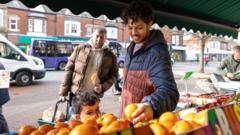
The light in the grocery store aisle is clinical, a humming fluorescent white that makes the price tags look sharper than they are. Sarah stands before a wall of olive oil, her hand hovering over a bottle she used to buy without a second thought. Two years ago, it was $7. Today, it is $14. She checks the label, then the price, then her mental tally. She puts it back.
This is where inflation lives. It is not a graph in a central bank briefing or a decimal point on a news ticker. It is a series of quiet, invisible surrenders made in the middle of a Tuesday afternoon.
When the latest Consumer Price Index figures drop, they arrive as a percentage—3.2%, 3.5%, 4%. To an economist, these are indicators of "cooling" or "heating." To the rest of us, they are the sounds of a household budget being stretched until the fibers begin to pop. We are told the rate of increase is slowing, but for the person at the checkout counter, "slowing" just means the prices are staying at their new, dizzying heights while climbing slightly more cautiously. The damage is already baked into the bread.
The Ghost at the Dinner Table
Food inflation is perhaps the most intimate betrayal. You can skip a vacation. You can delay buying a new pair of shoes. You cannot stop eating.
Consider the "hidden" inflation that statistics often struggle to capture. We see it in the cereal box that feels lighter despite being the same size, a phenomenon dubbed shrinkflation. We see it in the restaurant menu where the steak frites has been replaced by a "market price" burger. The core facts tell us that grocery prices have risen significantly over the past thirty-six months, driven by a chaotic cocktail of avian flu affecting egg prices, droughts in the Midwest hitting grain yields, and the soaring cost of the diesel required to move a tomato from a farm in Mexico to a shelf in Maine.
But the real story is found in the kitchen of someone like Mark. Mark is a father of two who prides himself on his Sunday roast. Last year, the beef cost him $22. This week, it was $34. To compensate, he buys a smaller cut. He pads the meal with more potatoes and more carrots. The "human element" of a 3.5% inflation rate is a father realizing his children are getting less protein and more starch because a war halfway across the globe disrupted the fertilizer supply chain.
The volatility of food prices creates a specific kind of low-grade anxiety. It turns the supermarket into a tactical environment. Shoppers are now expert navigators of loss leaders and generic brands. The luxury of "choice" is being replaced by the necessity of "substitution." When the price of butter spikes, we turn to margarine. When coffee prices climb due to poor harvests in Brazil, we buy the smaller jar of the instant stuff. We are adapting, yes, but every adaptation is a small subtraction from the quality of life we once considered standard.
The Gatekeepers of the Sky
If food is the daily grind, travel is the broken promise. For many, the annual holiday is the light at the end of the tunnel, the one thing that makes forty-eight weeks of labor feel worthwhile. But the "Flights" portion of the inflation report has become a wall.
Airfares have seen some of the most dramatic swings in the post-pandemic era. It isn’t just that jet fuel is more expensive—though it is. It’s a confluence of factors: a shortage of pilots, a backlog of new aircraft deliveries from manufacturers like Boeing and Airbus, and a "revenge travel" demand that hasn’t quite burned out yet. Airlines are businesses, and they are clawing back every cent of lost revenue from the lockdown years.
Imagine a daughter trying to book a flight home for her mother’s 70th birthday. She logs on to a travel site and sees a round-trip ticket that used to cost $400 is now $850. The data says "transportation costs are up," but the reality is a missed birthday. It is a family gathering that happens over a grainy Zoom call instead of a dinner table.
The complexity of airline pricing—algorithms that change the cost based on your browsing history or the time of day—makes the inflation feel personal. It feels like the world is actively trying to keep you stationary. When we talk about "sticky" inflation, this is what we mean. Once a service provider realizes the public is willing (or forced) to pay a higher price, that price rarely retreats to its original starting point. It settles. It becomes the new floor.
The Liquid Gold in the Tank
Then there is the fuel. Gas prices are the most visible barometer of the economy because they are broadcast on ten-foot-tall glowing signs on every street corner. You can’t hide from them.
Energy inflation is the "master" inflation because it touches everything else. If the price of a gallon of gas goes up, the price of the lettuce delivered by the truck goes up. The price of the plastic packaging made from petroleum goes up. The price of the electricity used to keep the grocery store lights on goes up. It is a domino effect where the first tile is always a pump at a gas station.
For the commuter, the fluctuation is a weekly gamble. A ten-cent jump in prices can be the difference between a Friday night movie and staying home. We are living through a period where the geopolitical tensions in the Middle East and the shifting policies of OPEC+ aren't just headlines; they are direct deductions from our bank accounts.
People are driving slower to conserve fuel. They are consolidating trips. They are looking at electric vehicles not just as an environmental choice, but as an escape hatch from a volatile fossil fuel market. But even then, the cost of the electricity to charge those cars is rising as utility companies pass on their own increased operational costs to the consumer. There is no easy exit.
The Invisible Stakes of "Core" Inflation
Economists love to talk about "Core CPI," which strips out food and energy because they are too volatile. They want to see the underlying trend. But for the average person, stripping out food and energy is like trying to describe a human being by stripping out the heart and lungs. Food and energy are the economy for most households.
The invisible stake here is trust. When people see the "official" inflation rate is 3% but their own personal expenses have risen by 15%, they stop believing the experts. They stop believing the system is working for them. This gap between the data and the "lived experience" creates a vacuum filled by frustration and resentment.
We are told the labor market is "tight" and wages are rising. That sounds like a win. But if your salary goes up by 4% while your rent, groceries, and gas go up by 8%, you haven't received a raise. You’ve received a 4% pay cut wrapped in a celebration. This is the treadmill effect: running faster and faster just to stay in the same place.
The Architecture of the New Normal
How did we get here? It is easy to blame a single politician or a single event, but the truth is a messy tapestry of global interconnectedness. We spent decades building a "just-in-time" global economy designed for maximum efficiency and minimum cost. It worked brilliantly—until it didn't.
A single ship stuck in the Suez Canal, a single virus, or a single border closure can now send ripples through the price of a toaster in Ohio. We are learning, painfully, that efficiency is the enemy of resilience. We traded the security of local production for the cheapness of global shipping, and now that shipping is no longer cheap, we are left holding the bill.
The cost of housing is the final, heavy anchor in this story. In many cities, rent has outpaced general inflation by a wide margin. It is the largest single expense for most families, and unlike a bag of chips, you cannot "substitute" your home for a cheaper generic version without uprooting your entire life. When rent takes up 40% or 50% of an income, the "discretionary" spending that fuels the rest of the economy—the local bookstores, the coffee shops, the theaters—begins to dry up.
The Small Victories
Despite the weight of these figures, humans are remarkably resourceful. We are seeing a resurgence in community gardens, a rise in "buy-nothing" groups, and a renewed focus on repair rather than replacement. There is a quiet rebellion happening in the way we consume.
But we shouldn't have to be this resilient just to survive. The danger of "normalizing" high inflation is that we begin to accept a diminished life as the standard. We forget that it wasn't always this hard to fly home for the holidays or to buy a carton of eggs.
Inflation is often called a "hidden tax," but that is too sterile. It is an erosion. It is the slow wearing away of the margins of our lives—the extra bit of savings for a rainy day, the spontaneity of a meal out, the security of knowing what things will cost next month.
The next time you see a headline about the latest inflation figures, look past the percentage. Think about Sarah in the grocery aisle. Think about Mark and his Sunday roast. Think about the daughter at her computer, staring at a flight price she can't afford.
The economy isn't a machine made of gears and oil; it is a collective of billions of people trying to build a life. When the "cost of living" rises, what we are really talking about is the cost of being human. And right now, that price is being hiked every single day, one invisible cent at a time.
A woman walks out of the store with two bags that used to be four. She starts her car, watches the fuel needle dip slightly, and drives toward a home that costs more than it did yesterday. She is the economy. And she is tired.


