There is a specific kind of silence that settles over a room when the lights are cut. It is not peaceful. It is heavy, expectant, and charged with the friction of unanswered questions.
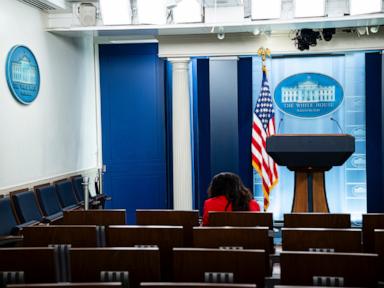
For decades, the James S. Brady Press Briefing Room at the White House has been the crucible where American power meets its most immediate reckoning. It smells of stale coffee, worn carpet, and the anxious sweat of reporters who know that the next thirty minutes might alter the trajectory of a presidency, or a nation. Journalists sit shoulder-to-shoulder on tiered risers, clutching legal pads, checking recorders, and bracing for the daily sparring match between the executive branch and the public it serves.
Until that room goes dark.
Not physically—though sometimes the cameras are turned off, the feeds severed, the credentials revoked with the stroke of a pen. When access is treated not as a constitutional necessity, but as a discretionary privilege handed out to favorites and withheld from critics, the architecture of democracy begins to tilt.
This is the friction point of a quiet, momentous legal collision. CNN, MSNBC, and Politico—fierce commercial competitors in the cutthroat arena of modern news—have locked arms to sue the Trump administration over White House access. On paper, it is a lawsuit about press passes, administrative procedures, and First Amendment protections. In reality, it is a fierce struggle over who gets to narrate the story of America, and whether the government can pick and choose its interlocutors.
Consider what happens when a reporter is barred from the room.
To the casual observer watching from a suburban living room, a revoked hard pass might look like a petty bureaucratic squabble. A media company loses a seat; a particular journalist has to watch the news on television like everyone else. But that view misunderstands the fundamental mechanics of accountability. A reporter inside the White House is not there for their own benefit. They are your proxy. They are your eyes, your ears, and your skeptical voice standing inches from the most powerful desk on earth.
When that proxy is locked outside the security gate, the distance between the governed and the governor widens. Information becomes curated propaganda. Nuance is flattened into talking points. The sharp edges of policy are sanded down until only the official narrative remains, polished and unassailable.
The legal action taken by these networks is a refusal to accept that curation.
History shows us that this battle is neither new nor unprecedented, though its current iteration wears the jagged edges of our polarized era. Administrations of both parties have long harbored an adversarial relationship with the press. Thomas Jefferson famously lamented the viciousness of the newspapers of his day, writing that the man who never looks into a newspaper is better informed than he who reads them, inasmuch as man who knows nothing is nearer to truth than he whose mind is filled with falsehoods and errors. Yet even Jefferson recognized that a free press was the indispensable oxygen of a self-governing republic.
The tension escalated dramatically during Donald Trump’s first term, marked by verbal assaults on journalists as enemies of the people, midnight tweets revoking credentials, and high-profile legal showdowns initiated by reporters like Jim Acosta. Those earlier skirmishes established vital legal precedents, affirming that the White House press corps cannot be arbitrarily banished simply because the administration dislikes the tone or substance of their questioning.
Now, the legal frontier has shifted. The latest confrontation underscores a sobering reality: access to the corridors of power is increasingly wielded as a political lever. When news organizations find themselves shut out, delayed, or singled out for exclusion based on editorial viewpoints, the injury is not just financial or professional. It strikes at the heart of the public's right to know.
To understand why this matters, you have to look past the glitz of cable news studios and the speed of digital alerts. You have to look at the machinery of governance itself.
Government operates behind heavy oak doors and soundproofed walls. Most decisions that affect taxes, healthcare, foreign entanglements, and civil liberties are forged in secret. The press briefing room is one of the few porous spots in that fortress. It is the place where officials are forced to look someone in the eye and explain why a policy changed, why a promise was broken, or why a scandal is not a scandal at all.
When the administration attempts to dictate who gets to ask those questions, it is effectively choosing its own examiners. That is not a press conference; that is a coronation.
The lawsuit filed by CNN, MSNBC, and Politico argues that the executive branch cannot constitutionally condition access to the White House on whether an outlet's coverage pleases the commander-in-chief. It invokes the First Amendment, which protects freedom of speech and of the press, and the Fifth Amendment, which guarantees due process before the government can deprive a citizen or an organization of a liberty interest.
Legal scholars have watched these developments with a mixture of professional fascination and deep unease. The courts have repeatedly affirmed that while the White House has wide latitude to manage physical space and security, it cannot use its gatekeeping power to viewpoint-discriminate. Once the government opens a public forum for the press, it cannot arbitrarily lock the door against those who write stories it dislikes.
Yet winning a legal brief in a federal courtroom is different from shifting the cultural gravitational pull of politics.
We live in an era where trust in institutions has plummeted to historic lows. Newspapers, television networks, and digital publishers are routinely viewed through a partisan lens. When a major network sues the government, critics are quick to frame it as a corporate turf war, an elite media establishment fighting for its perks.
That framing is a dangerous misdirection.
The real beneficiary of a robust, aggressive, and unrestricted press corps is not the CEO of a media conglomerate. It is the citizen sitting at a kitchen table trying to understand why grocery prices are climbing, why their healthcare premiums just spiked, or what their government is doing overseas in their name. If the press is neutered, intimidated, or locked out, the citizen is left in the dark, navigating a landscape of shadows where power operates without witness.
Think about the journalists who wake up every morning knowing they are walking into a hostile environment. They pack their bags, pass through the security checkpoints, and step onto the White House grounds carrying the immense weight of public curiosity. They know that a single sharp question could earn them a public reprimand, a revocation of their pass, or a barrage of online abuse from millions of partisans.
Still, they walk through the door.
That resilience is the invisible scaffolding of a free society. It is easy to take for granted. We flip on the evening news or open a news app on our phones, consuming information as effortlessly as turning on a tap, rarely pausing to consider the legal battles, the financial investments, and the sheer personal courage required to keep that water running.
When major news organizations pool their resources to challenge the White House in court, they are performing a vital civic duty. They are drawing a bright, unyielding line in the sand. They are reminding the executive branch—whichever party holds it—that the White House belongs to the American people, not to the temporary occupant of the Oval Office.
The outcome of this legal battle will reverberate far beyond the Beltway. It will set a precedent for future administrations, signaling whether the boundaries of executive power can stretch to muzzle independent inquiry, or whether the rule of law still holds sway over the impulses of political retaliation.
Outside the courtroom, the daily work of journalism continues in fits and starts. Reporters crowd into hallways, chase tipsters down encrypted messaging apps, and scrutinize federal budgets line by line. They do so because they know that democracy dies not just in darkness, but in the sterile quiet of unchallenged power.
The press pass is not a badge of honor, nor is it a VIP ticket. It is a key. And as long as those doors remain contested, the fight to keep them unlocked is the fight for the soul of the republic itself.
The briefing room lights remain on for now. The questions are still being asked, sharp and unsparing, echoing off the walls of a room that has heard every American secret of the modern age. But the echo is sharper now, freighted with the knowledge that freedom of the press is not an eternal guarantee written in stone. It is an argument—sometimes messy, sometimes litigious, always vital—that must be won anew by every generation.
In the end, the most dangerous sound in a democracy is not the sharp retort of a press secretary or the heated cross-examination of a reporter.
It is the click of a lock turning from the inside.