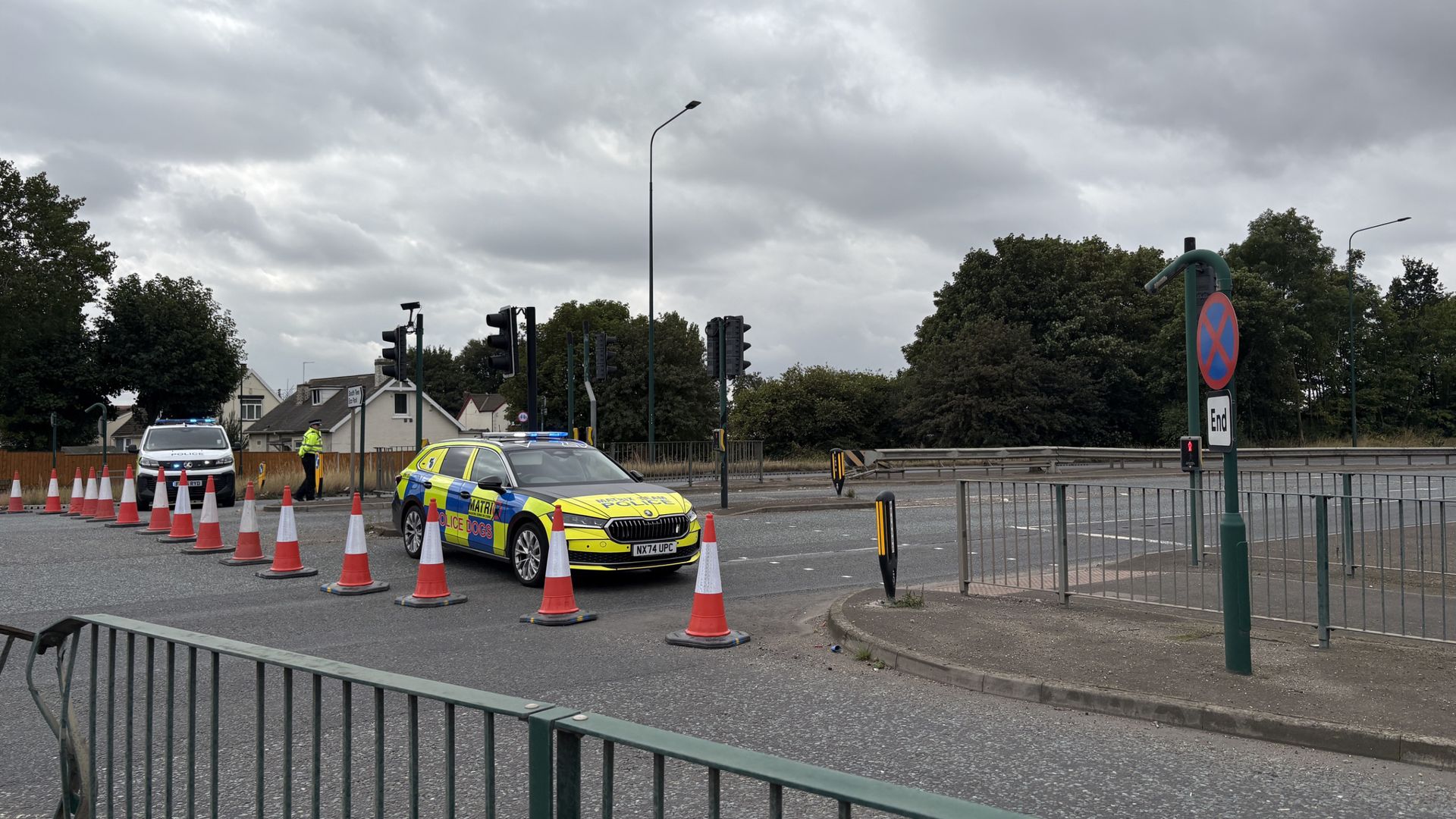
Darkness on an industrial arterial road behaves differently than darkness in the countryside. Along the A66 near South Bank, past the sprawling shadows of Teesside, the night is usually filled with the low, mechanical hum of shift work and heavy haulage. At three in the morning, the world belongs to long-haul truckers and flashing amber warning lights.
Until it doesn't.
At precisely 3:39 AM, the ordinary rules of transit shattered. A pursuit involving a Cleveland Police vehicle and a Volkswagen Passat reached a sudden, catastrophic terminus.
Quiet. Then chaos.
Fourteen separate emergency units tore through the pre-dawn stillness. Ambulances, specialized paramedics, a hazardous area response team, and a critical care doctor from the Great North Air Ambulance converged on a stretch of asphalt bound by cold industrial units. They came with sirens wailing, cutting through the damp northern air, desperate to outrun the inevitable.
They were too late.
When the metal stopped screaming, multiple lives had been extinguished on the tarmac. A white forensic tent rose against the dark backdrop of the Teesworks site, a stark white marker of sudden absence.
Consider what happens next in the wake of such a morning.
The Independent Office for Police Conduct launched an immediate mandatory investigation, stepping in to dissect the split-second decisions that turned a routine check of a suspicious vehicle into a tragedy. Investigators combed through tire marks, digital logs, and dashcam feeds. They are searching for answers in a matrix of speed, velocity, and human error.
Yet, numbers and oversight bodies fail to capture the true weight of the event.
Police officers go to work expecting danger, but rarely do they anticipate a night that ends with a white tent stretched across a dual carriageway. Families tucked into warm beds miles away woke up hours later to a knock on the door that splits their timeline cleanly into a "before" and an "after." That is the hidden cost of a high-speed pursuit gone wrong. It is not just the bent frame of a Volkswagen Passat or the crushed bonnet of a patrol car. It is the abrupt erasure of futures, leaving behind a vacuum where a voice used to be.
Traffic diverted between Normanby Road and Church Lane. Commuters face delayed journeys and blocked lanes. They see orange cones and yellow police tape, inconveniences of a closed road that will eventually reopen.
Asphalt is cleared. Debris is swept away. The flow of commerce resumes.
But for the families waiting for a notification that takes hours or days to process, the road never opens again. The sirens fade into memory, leaving behind only the cold weight of a morning that broke too soon.