The sky above Balochistan does not ask for permission to be harsh. It rolls across arid mountain ranges and barren valleys with an unforgiving stillness, a vast canvas where the air shifts without warning and the thermals can turn predatory in a heartbeat. For most who look up from the ground, it is simply weather. For those who strap themselves into the cockpit of a training aircraft, it is an adversary that demands absolute, unyielding respect every single second of the day.
On a routine training flight near Quetta, that respect was demanded—and the margin for error vanished.
Two Pakistan Army aviation pilots stepped onto the tarmac hours earlier, checking their instruments with the quiet, practiced rhythm born of countless hours in uniform. There were flight plans to review. There was weather to assess. There were checklists, methodical and exhaustive, designed to catch every hidden flaw before rubber left the runway. To the outside observer, it was just another Tuesday. Another rotation in the relentless cycle of preparation that keeps a military aviation wing sharp.
Then came the silence.
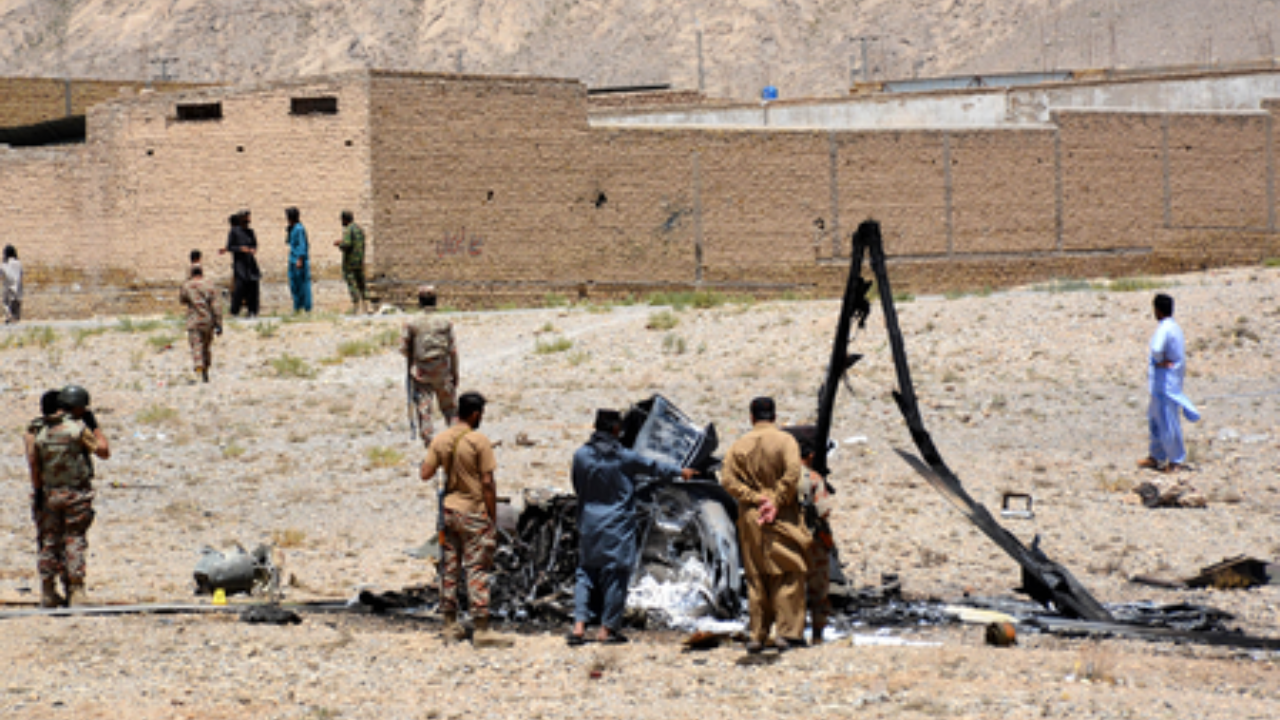
Somewhere over the rugged terrain outside Quetta, the aircraft went down.
When a training flight ends in tragedy, the immediate aftermath is a blur of sirens, distant smoke, and official communiqués. Casualty numbers are tallied. Condolences are issued from high offices in Islamabad and Rawalpindi. But statistics possess a cold geometry that fails to capture the gravity of what actually breaks when a machine falls from the sky.
Consider the weight of an aviation helmet left sitting on an empty locker. Consider the coffee cup still half-full on a mess hall table. These are the invisible artifacts of service, the mundane details that underscore the profound human cost paid by those who wear the uniform. Military pilots do not simply operate equipment; they inhabit a hyper-specialized world where split-second decisions are made against the backdrop of physics and mortality.
Training accidents occupy a uniquely agonizing space in military history. They are not born of malice or the chaotic fury of active combat, yet they carry the exact same finality. They happen during the quiet hours of practice, in the spaces where professionals hone their craft so that they might master the skies when it counts the most. Every maneuver rehearsed over the valleys of Balochistan is an insurance policy bought with sweat and concentration, meant to ensure that when danger arises, the pilot’s hands move by instinct alone.
When that preparation is cut short by a sudden mechanical failure or an unpredictable meteorological trap, the loss ripples outward with devastating force.
Aviation in regions like Balochistan presents a punishing set of variables. The topography alone is enough to test the limits of both man and machine. High altitude fields, dramatic temperature fluctuations, and sudden downdrafts create an invisible obstacle course that requires exceptional skill to navigate. Instructors and trainees alike fly into these skies knowing the risks, accepting them not out of recklessness, but out of a deep-seated commitment to their duty.
As investigators comb through the wreckage scattered across the desolate earth near Quetta, piecing together flight data recorders and analyzing radio chatter, the wider world moves on with its noisy distractions. Headlines flash across screens for an hour and then dissolve into the digital ether.
Yet, in the quiet hangers where the squadron gathers tonight, the empty chairs speak a language that no press release can translate. They tell a story of dedication, of unheralded risk, and of the heavy price paid in the silent spaces between the ground and the clouds.
The wind continues to sweep across the mountains of Balochistan, indifferent to grief, whispering through the ravines as if nothing happened. But down below, a nation counts its fallen, and the sky feels just a little bit emptier than it did yesterday.