The desert does not care about machinery. It stretches out in pale, cracked earth and relentless heat, a vast expanse where human ambition looks remarkably small. Yet, humans keep bringing their most complex, expensive, and dangerous toys out here to test the limits of physics.
A sudden flash. A deafening roar that tears the morning apart. Then, the heavy, greasy smoke rolling across the brush.
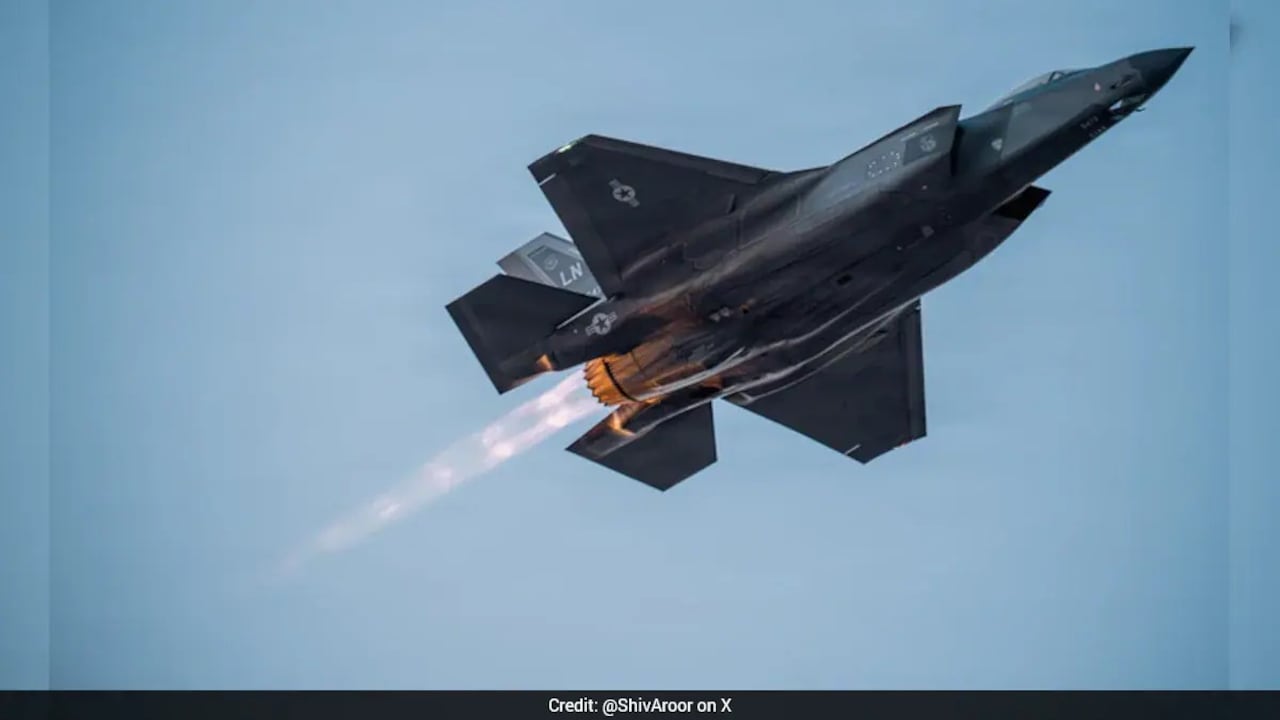
Out near the military base in California, a fighter jet has gone down.
For the public, it becomes a brief headline on a morning feed, a collection of cold statistics and hurried updates from public affairs officers. But behind that sterile summary lies a complex machinery of human panic, split-second decisions, and the quiet grief of communities that live beneath the flight paths.
Consider what happens in the cockpit during those final, chaotic seconds.
Picture a pilot—call him Captain Vance, though names shift and blur in official logs. He is twenty-eight years old, sitting inside a multi-million-dollar carbon-composite tube filled with digital displays and twitchy hydraulic actuators. To an outsider, he is a hero in a flight suit. To himself, right now, he is just a human being wrestling with a machine that has suddenly decided to stop obeying.
The warning lights flash red. The control stick goes heavy, resisting his pull like a stubborn muscle.
Silence.
Then the violent shudder of an engine failing at supersonic speeds.
We forget the physical toll of modern flight. The G-forces that press a pilot's chest into concrete, the sheer mental bandwidth required to troubleshoot twenty catastrophic system failures while hurtling toward the ground at five hundred miles per hour. When a military aircraft crashes, the public often rushes to assign blame—pilot error, mechanical failure, budget cuts, deferred maintenance.
The truth is rarely simple. It is tangled in a web of aging defense infrastructure, relentless deployment schedules, and the sheer, unforgiving difficulty of pushing mechanical engineering to the absolute edge.
Look at the statistics. Military aviation is inherently perilous. Training missions mimic combat conditions because combat conditions do not allow for a learning curve. Pilots fly low, fly fast, and fly often in machines designed for destruction rather than comfort. Every time a jet lifts off a runway in the Mojave, a calculation is made. Risk versus necessity.
When that calculation fails, the fallout ripples outward.
First responders rush toward the burning wreckage not knowing if live ordnance is aboard. They wear heavy gear in ninety-degree heat, choking on toxic smoke from burning composites and jet fuel. These are the people whose stories never make the national broadcast. The local firefighters who drop their breakfast plates when the siren sounds. The desert ranchers who look up from their fences, shading their eyes against the glare, waiting to see if a parachute bloomed against the blue.
No parachute this time.
Or perhaps there was. The official reports take hours, sometimes days, to filter through the bureaucracy. They use words like "mishap" and "ejection" and "investigation pending."
Bureaucracy loves clean terms. It sanitizes tragedy.
We try to comfort ourselves with the idea that technology is getting safer. We read about fly-by-wire systems, artificial intelligence copilots, and predictive maintenance algorithms. We tell ourselves that smart engineering will eventually eliminate the risk entirely.
That is an illusion.
As long as human beings strap themselves into jet engines and defy gravity, danger remains the co-pilot. The desert wind sweeps over the crash site, scattering bits of ash and twisted aluminum across the scrub brush. A crew of investigators in white suits sifts through the dirt, picking up fragments of titanium like archaeologists excavating a forgotten civilization.
They are looking for a cause. A cracked turbine blade. A corrupted software loop. A momentary lapse in oxygen flow.
They will find an answer eventually. A report will be filed, stamped, and archived in a dusty cabinet in Washington. Procedures will be updated. Briefings will be held in damp squadron rooms across the country.
Yet, tomorrow morning, another jet will taxi down the runway. The afterburners will ignite, shaking the ground with a deep, vibrating chest-thump that every local resident knows by heart. The pilot will push the throttle forward, trusting the metal, trusting the math, trusting the invisible thread that keeps heavy things in the sky.
The smoke clears from the desert floor, leaving only the endless horizon and the quiet, heavy weight of what it costs to watch the sky.