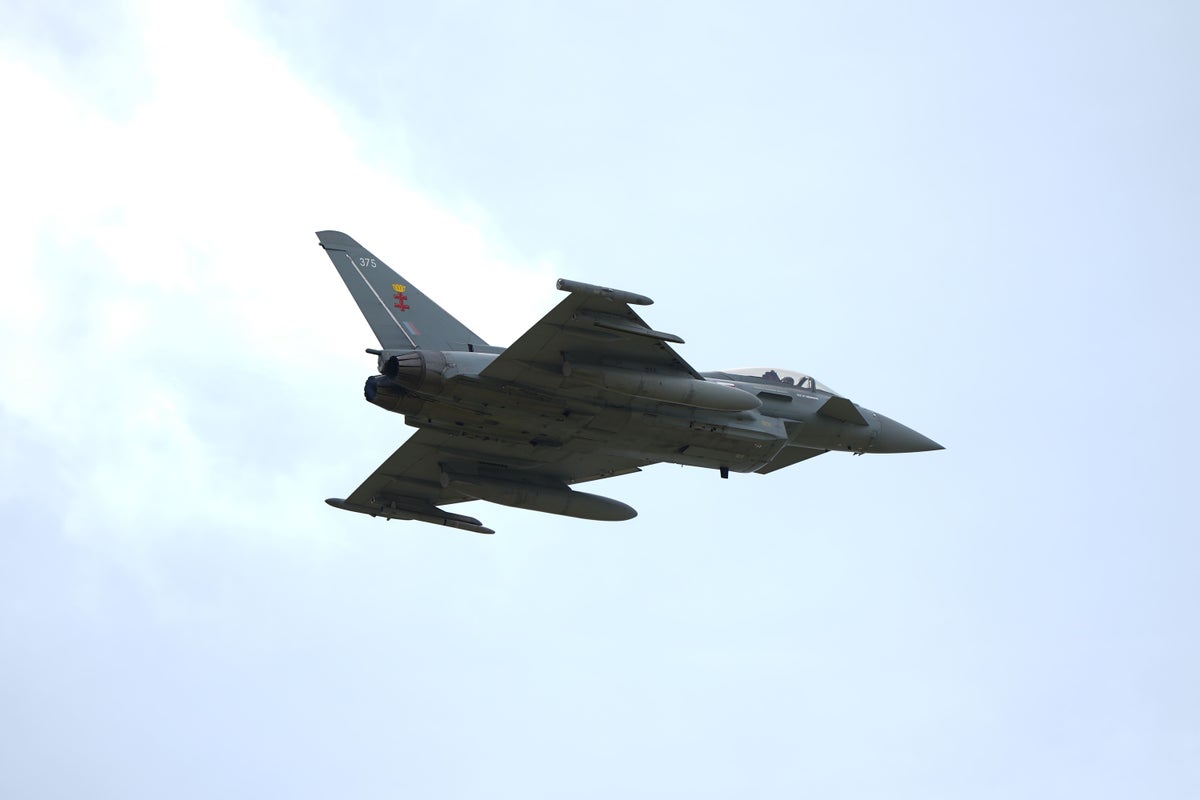
The cockpit of a Typhoon FGR4 is not a place for philosophy. It is a pressurized, high-G environment where the air smells faintly of recycled oxygen and the subtle, metallic tang of electronics. At thirty thousand feet, the world below dissolves into a shimmering abstraction of desert gold and the deep, deceptive blue of the Persian Gulf. For the pilot—let’s call him Miller—the mission was supposed to be a standard combat air patrol, a routine policing of the invisible lines we draw across the sky.
But lines are being crossed more frequently now.
Below Miller, the small peninsula of Qatar was a hive of frantic, joyful energy. Thousands of people were gathered for an international event, eyes fixed on pitches and scoreboards, oblivious to the physics of high-speed interception unfolding above their heads. They were there for a game. Miller was there because the game of global brinkmanship never actually has an offseason.
The alert came not as a scream, but as a series of cold, digital pulses. A radar track had blossomed on the tactical display—a slow, persistent blip moving with mechanical intent. It wasn't a commercial liner off course. It wasn't a stray weather balloon. It was an Iranian-made one-way attack drone, a low-cost, high-impact messenger of chaos launched from hundreds of miles away.
Modern warfare has a strange, detached intimacy. Miller didn’t see the face of an enemy. He saw a thermal signature on a screen, a grainy silhouette of a Shahed-style loitering munition. These drones are often described as "mopeds in the sky" because of the lawnmower-like drone of their engines, but that folksy comparison dies the moment you realize they carry forty kilograms of high explosives. They are designed to be cheap enough to lose and dangerous enough to ignore at your own peril.
The intercept happened in a heartbeat.
There is a specific, gut-wrenching tension in the moments before a kinetic engagement. You aren't just pulling a trigger; you are managing a diplomatic incident. Every move is scrutinized by a chain of command that stretches back to a darkened room in Whitehall. The authorization was clear: the drone was a direct threat to the safety of the crowds below.
Miller maneuvered the Typhoon, a machine costing nearly $100 million, into a position of absolute dominance over a drone that cost less than a mid-sized SUV. The disparity is jarring. We are living in an era where the most sophisticated aerial platforms in human history are being forced to swat at mechanical insects.
The missile left the rail with a sharp thud and a streak of white light.
In the vacuum of the high altitude, the explosion was a silent bloom of orange and black. For a second, the drone existed as a coherent threat. A second later, it was merely a shower of carbon fiber and scorched circuitry tumbling toward the uninhabited wasteland.
Peace, in the modern age, is not the absence of conflict. It is the successful, invisible management of it.
The people in the stadium never heard the explosion. They never saw the streak of the ASRAAM missile or the frantic maneuvering of the Royal Air Force jet. They simply kept cheering. This is the paradox of security: when it works perfectly, it feels like nothing happened at all. We have become accustomed to a world where the "shield" is so effective that we’ve forgotten the sky is actually raining arrows.
Consider the logistics of that single intercept. To stop one drone, a multi-national web of satellite surveillance, Aegis-class destroyers, ground-based radar, and elite pilots had to synchronize perfectly. It is a staggering investment of human ingenuity and capital used to defeat a flying box of spare parts.
The threat isn't just the drone itself; it's the exhaustion. If a rival can force you to spend a million-dollar missile to destroy a twenty-thousand-dollar drone, who is actually winning the war of attrition? We are entering a phase of history where the "democratization of destruction" means that small actors can project power that once required a national treasury.
As Miller banked his jet back toward the carrier, the sun began to set over the horizon, painting the clouds in bruised purples and vivid crimsons. He could see the lights of Doha flickering on, a grid of electricity and human ambition. From his vantage point, the fragility of it all was overwhelming.
We tend to think of peace as a solid foundation, something baked into the earth. It isn’t. It’s a performance. It’s a daily, hourly effort maintained by people who spend their lives looking at screens, waiting for a blip that shouldn't be there.
The drone was gone, but the intent remained. Somewhere, in a facility across the water, another technician was likely prepping another launch. Another flight path was being programmed. Another gamble was being weighed.
The sky is vast, but it is getting crowded with the ghosts of our disagreements. We rely on the "Millers" of the world to keep the silence, to ensure that the only things falling from the clouds are raindrops or the occasional stray ball kicked too high from a pitch.
But as the technology of disruption becomes cheaper and more accessible, the weight on that thin blue line grows heavier. We are one missed radar track, one sensor malfunction, or one delayed authorization away from the narrative changing forever.
The Typhoon touched down on the tarmac, the engines whining as they cooled. The pilot climbed out, his legs heavy from the G-force, his mind already beginning to decompress. He would go to sleep, and tomorrow he would do it again.
Outside the base, the world kept spinning. The scores were tallied. The fans went home. The victory was celebrated. And high above, where the air is thin and the silence is absolute, the invisible guard stood ready for the next blip to appear.
The most successful missions are the ones that never make the evening news, the ones that remain a footnote in a military briefing, a flash of light that nobody saw, preventing a tragedy that nobody had to mourn.