Forty-two dollars.
That was the exact number blinking in red neon on the sign outside the Texaco station on Route 9 in West Texas, back in the autumn of 2015, when the crude oil bust turned a boomtown into a ghost town overnight. I remember the smell of that autumn. It wasn't the sharp, metallic tang of fresh crude venting from pumpjacks; it was the stale, dusty odor of idle diesel engines sitting in dirt lots, waiting for work orders that never came. In Midland and Odessa, men who had bought lifted pickup trucks with cash in June were handing the keys back to the bank by November. A barrel of West Texas Intermediate had plunged from over a hundred dollars to under forty, and every single penny of that drop translated into a quiet, devastating subtraction from someone's kitchen table.
Fast forward to the closing weeks of 2026, and the fluorescent lights inside the glass towers of Wall Street are humming with a very familiar, very cold arithmetic.
Goldman Sachs—the investment bank whose commodity desks are treated like scripture by everyone from sovereign wealth funds in Riyadh to independent wildcatters in Oklahoma—has issued a stark warning about what awaits the global energy market when the calendar turns to 2027. Strip away the institutional jargon, the basis points, and the polite phrasing of equity research notes, and their message is blunt. A massive wave of crude oil is building out on the open ocean, and when it hits the shore in 2027, there simply won't be enough engines, factories, or airplanes burning fuel to absorb it.
They call it a "sizeable surplus."
If you work in finance, those two words sound like a spreadsheet entry. If you live in the real world—if you commute forty miles each way to a warehouse, if you run a small trucking fleet out of Ohio, or if you work sixty hours a week on a drilling rig in the Permian Basin—those two words represent a tectonic shift in your financial survival. Cheap oil feels like a gift when you are standing at the pump with a nozzle in your hand, watching the gallon counter spin faster than the dollar counter. Yet history teaches us that an oil glut is never a simple fairy tale. Every barrel of excess crude carries a hidden price tag, and by the time 2027 arrives, almost every household on earth will be paying—or profiting—from the collision between too much supply and a world that is slowly learning to burn less of it.
The Anatomy of an Invisible Ocean
To understand why Goldman Sachs is sounding the alarm about 2027, you have to stop thinking about oil as a static resource sitting underground and start picturing it as a giant, pressurized plumbing system spanning six continents.
Consider a hypothetical character named Marcus, a forty-six-year-old completions engineer living in Williston, North Dakota. For the past three years, Marcus has watched American oil production climb to levels that energy analysts once swore were physically impossible. Even when prices hovered in the seventy-dollar range, technology kept getting sharper. Drill bits bit deeper. Horizontal wells stretched three miles laterally through dense shale rock. Efficiency became an obsession, and the result was a relentless, steady stream of American crude pouring into pipelines toward Cushing, Oklahoma, and the Gulf Coast export terminals.
Marcus isn't alone, and the United States isn't the only faucet stuck in the open position.
Across the Atlantic and down into South America, offshore platforms off the coast of Guyana and Brazil are pumping millions of barrels a day from deepwater reservoirs that were barely discovered a decade ago. Unlike shale wells, which deplete quickly and require constant drilling to maintain output, these massive offshore projects are built like aircraft carriers. Once you spend tens of billions of dollars to anchor them into the seabed, you do not turn them off because the price of Brent crude dips by ten dollars. You keep pumping to pay off the debt.
Then there is the elephant sitting at the head of the table in Vienna. For years, OPEC+—the cartel of oil-producing nations led by Saudi Arabia and Russia—has acted as the world’s central bank for crude, holding millions of barrels off the market to prop up prices and fund their national budgets. You can only hold back a river with a makeshift dam for so long before the water starts spilling over the top—or before your neighbors start sneaking buckets out the back. As non-OPEC nations like the United States, Canada, Brazil, and Guyana flood the market with fresh supply, OPEC+ faces an agonizing trap. If they keep cutting production to defend prices, they hand over their global market share on a silver platter. If they open the taps to reclaim their territory, they drown the market in crude.
Goldman Sachs looked at the math of these converging pipelines—rising non-OPEC production, the eventual unwinding of cartel cuts, and the sluggish appetite of global buyers—and arrived at a sobering conclusion. By 2027, global supply is projected to outpace global demand by a margin wide enough to push inventories into overflow.
Why the Engines Are Slowing Down
A surplus requires two conspirators: too much stuff being made, and not enough people buying it. If the supply side of the 2027 oil equation is a story of relentless engineering triumph, the demand side is a story of quiet, irreversible habit change.
Think of global oil demand like a massive freight train rolling down a slight incline. For a hundred years, the rule was simple: whenever the global economy grew, oil consumption grew right alongside it. More factories meant more diesel. Rising middle classes in Asia meant millions of first-time car buyers lining up at dealerships in Shanghai, Mumbai, and Jakarta.
That old correlation is breaking down right in front of our eyes.
Take China, the undisputed engine of global commodity demand for the last quarter-century. For decades, whenever oil traders worried about a slowdown in Europe or North America, they comforted themselves by looking at Chinese import numbers. Not anymore. Walk down any major avenue in Shenzhen or Chengdu today, and the change is audible—or rather, eerily silent. Electric vehicles and plug-in hybrids now account for roughly half of all new passenger car sales in China. Add to that a massive fleet of heavy-duty commercial trucks running on liquefied natural gas rather than diesel, plus an expanding network of high-speed rail lines replacing short-haul domestic flights, and the picture becomes crystal clear. China’s appetite for road fuel isn't just slowing down; in several sectors, it has already peaked.
Meanwhile, in the United States and Europe, the post-pandemic travel boom has cooled into a steady, unremarkable plateau. Cars made today squeeze far more miles out of a single gallon than the sedans of fifteen years ago. Remote and hybrid work schedules still keep millions of commuters off the highways on Mondays and Fridays.
I used to think that the transition away from fossil fuels would look like a dramatic revolution—a sudden cliff where oil simply became obsolete. Looking at the data heading into 2027, I realize how wrong that assumption was. The transition doesn't look like a cliff. It looks like a slow leak in a tire. You don't notice it over a single afternoon, and the car still drives fine down the highway. Then one morning you walk out to the driveway and realize the rim is sitting flat on the concrete.
When Goldman Sachs projects a sizeable surplus for 2027, they aren't predicting the death of oil. The world will still burn roughly one hundred million barrels of the stuff every single day. What they are pointing out is that in a market priced at the margin, you don't need demand to collapse to crash the price. You only need two million barrels a day looking for a storage tank that doesn't exist.
The Kitchen-Table Paradox
Let us bring this down from thirty thousand feet and put it inside a real living room. Imagine Elena, a single mother living outside Columbus, Ohio, who drives a twelve-year-old Honda Civic forty-five minutes each way to her job as a hospital admissions coordinator.
For Elena, the news of a 2027 oil surplus sounds like an answered prayer. Over the past few years, watching the price of regular unleaded bounce between three-fifty and four dollars a gallon felt like a silent tax on her existence. Every trip to the grocery store, every drive to her son’s soccer practice, required mental arithmetic. If a global crude glut pushes Brent and WTI prices down into the low sixties—or even the fifties—in 2027, Elena’s monthly fuel bill drops by eighty or a hundred dollars. Multiply Elena by a hundred million drivers across North America, Europe, and Asia, and lower oil prices act like a massive, unlegislated tax cut for consumers. Airlines trim fuel surcharges. Shipping companies ease freight rates. The stubborn inflation that haunted supermarket aisles begins to lose its teeth.
So why shouldn't everyone throw a party?
Because in the global economy, one person’s relief is another person’s pink slip.
Return for a moment to Marcus, our completions engineer in North Dakota, or his counterparts in Houston, Aberdeen, and Calgary. When crude prices drop below the breakeven threshold required to drill new wells, the capital markets slam the door shut overnight. Oil companies slash their capital expenditure budgets to protect their dividends. Drilling rigs get stacked in yards. Steel pipe manufacturers in Pennsylvania see orders vanish. Hotel occupancy rates in oil-patch towns plummet, taking local restaurant servers, mechanics, and real estate agents down with them.
Even more unsettling is the geopolitical whiplash that follows a prolonged oil slump. Entire nations—from Saudi Arabia and Iraq to Nigeria, Venezuela, and Russia—build their national budgets around an assumed price per barrel. Saudi Arabia, for instance, has poured hundreds of billions of dollars into ambitious domestic megaprojects like Neom, requiring oil prices well above eighty or ninety dollars a barrel just to balance its books without borrowing heavily or selling off sovereign assets. When a sizeable surplus drags prices down for an extended stretch, petrostates face an ugly choice: slash public subsidies and risk domestic unrest, or pump even more oil at bargain-basement prices just to keep cash flowing into the treasury.
History shows us what happens when oil producers panic. In 1986, in 1998, in 2014, and again in 2020, attempts to defend market share during a glut triggered ruthless price wars that wiped out trillions of dollars in equity value and left entire regions economically scarred.
The Trap of Cheap Energy
There is a deeper, quieter danger lurking inside a 2027 oil glut, and it has nothing to do with stock tickers or drilling rigs.
Human beings have terrible memories when energy gets cheap.
Think back to the late 1990s, when crude oil dipped near ten dollars a barrel. Detroit automakers stopped investing in fuel efficiency and flooded dealership lots with massive, gas-guzzling SUVs. Consumers bought them happily, convinced that cheap gasoline was a permanent birthright. Ten years later, when supply tightened and oil rocketed toward a hundred and forty-seven dollars a barrel in 2008, those same families were trapped with vehicles they could barely afford to fill, right as the broader financial system imploded.
A sizeable surplus in 2027 threatens to spring the exact same psychological trap.
If gasoline becomes cheap and abundant again over the next eighteen months, the urgency to insulate homes, upgrade aging power grids, build out charging infrastructure, and invest in next-generation energy storage will inevitably fade. Politicians will quietly shelve long-term energy reforms because voters stop complaining about fuel prices at town halls. Oil majors, starved of cash flow during the downturn, will cancel the very exploration projects needed to replace aging fields five years down the road.
That is the cruelest irony of the commodity cycle: the cure for low prices is low prices.
Every dollar of investment cut during the 2027 surplus plants the seed for a violent supply crunch in 2029 or 2030. Oil fields are not like software platforms; you cannot scale them up with a few lines of code when demand suddenly spikes. It takes years of geological surveys, permitting, steel fabrication, and drilling to bring a major new field online. When companies stop drilling today because oil is too cheap, the world wakes up three years later wondering why there isn't enough fuel to go around.
Navigating the Coming Tide
So what do you actually do when one of the most powerful financial institutions on earth tells you a tidal wave of crude is heading toward 2027?
First, you stop treating oil prices like a permanent weather forecast. Whether you are an investor holding energy stocks, a small business owner budgeting for shipping costs, or a family deciding whether your next vehicle should be a hybrid, an electric car, or a traditional gas burner, you have to look past the temporary discount at the pump.
If you are managing a household budget, treat the coming dip in fuel costs not as extra spending money, but as a temporary windfall. Use the savings at the gas station to pay down high-interest debt or build a buffer, knowing full well that commodity markets never stay on sale forever. If you are looking at energy investments, remember that during a surplus, the survivors aren't the flashiest growth stories—they are the companies with fortress balance sheets, rock-bottom production costs, and the discipline not to chase bad money after good.
Wall Street analysts will spend the next year arguing over whether the 2027 surplus will be eight hundred thousand barrels a day or two million barrels a day. They will tweak their models, adjust their twelve-month price targets, and debate the exact wording of OPEC communiqués over expensive lunches in Manhattan and London.
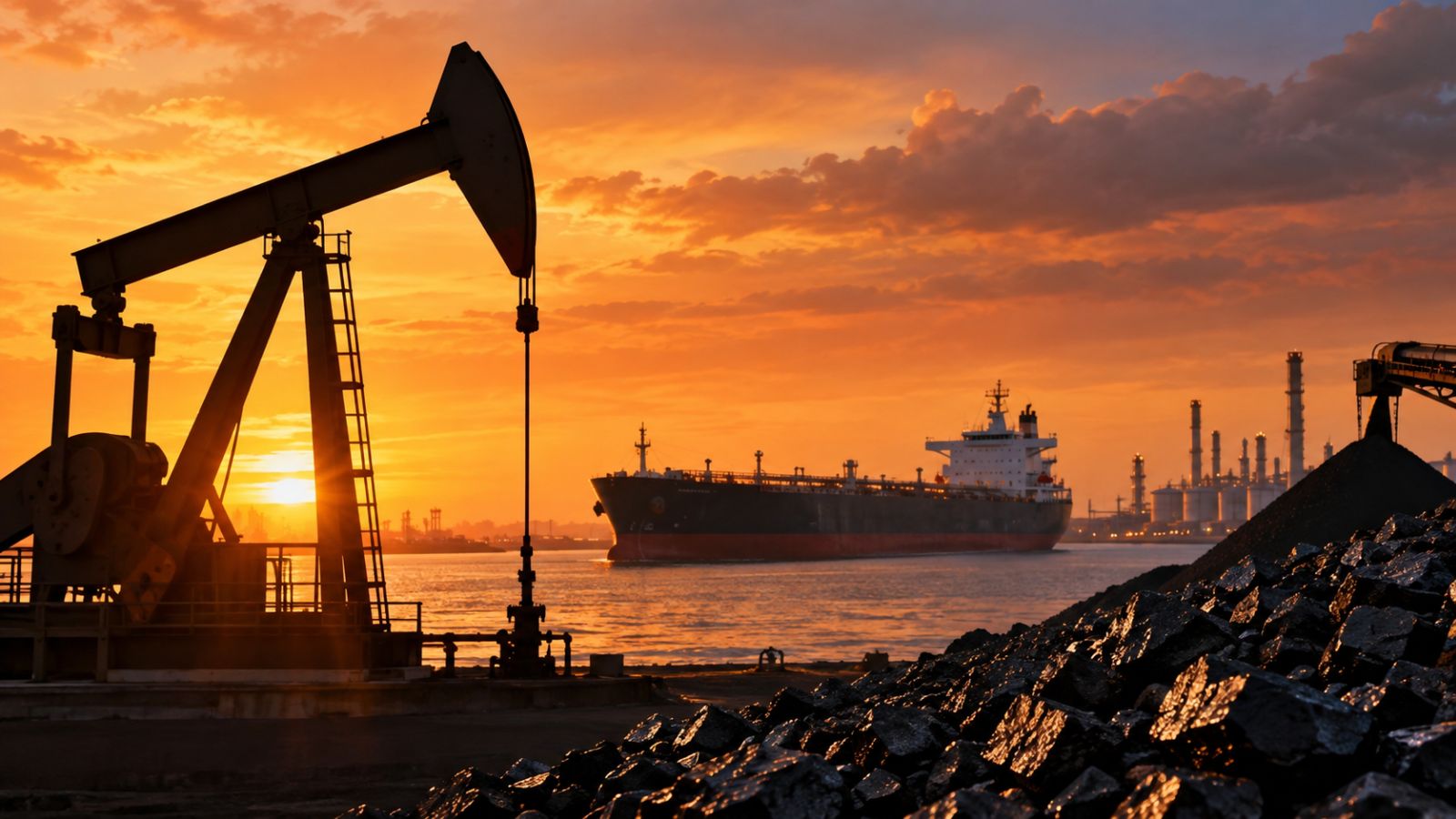
Out in the real world, the verdict will arrive much more quietly. It will show up as a falling number on a glowing sign beside a darkened highway, a stalled pumpjack silhouetted against a flat horizon, and a world standing at a crossroads—deciding whether to use a moment of cheap energy to build its future, or simply burn through it all over again.