Rain-slicked pavement in London has a way of reflecting the orange glow of streetlamps, turning the luxury boutiques of Hans Crescent into a blurry, golden watercolor. If you walk past the Harrods storefront and turn toward the quiet residential squares, you feel the shift. The air gets heavier. The noise of the city dies. This is the realm of the "ghost mansion"—properties worth forty million pounds where the lights are rarely on, and the owners are never seen.
Behind one of these heavy, lacquered doors, a paper trail begins. It doesn't lead to a local aristocrat or a tech entrepreneur. It stretches across the English Channel, over the peaks of the Alps, and settles in the dry, heated air of Tehran.
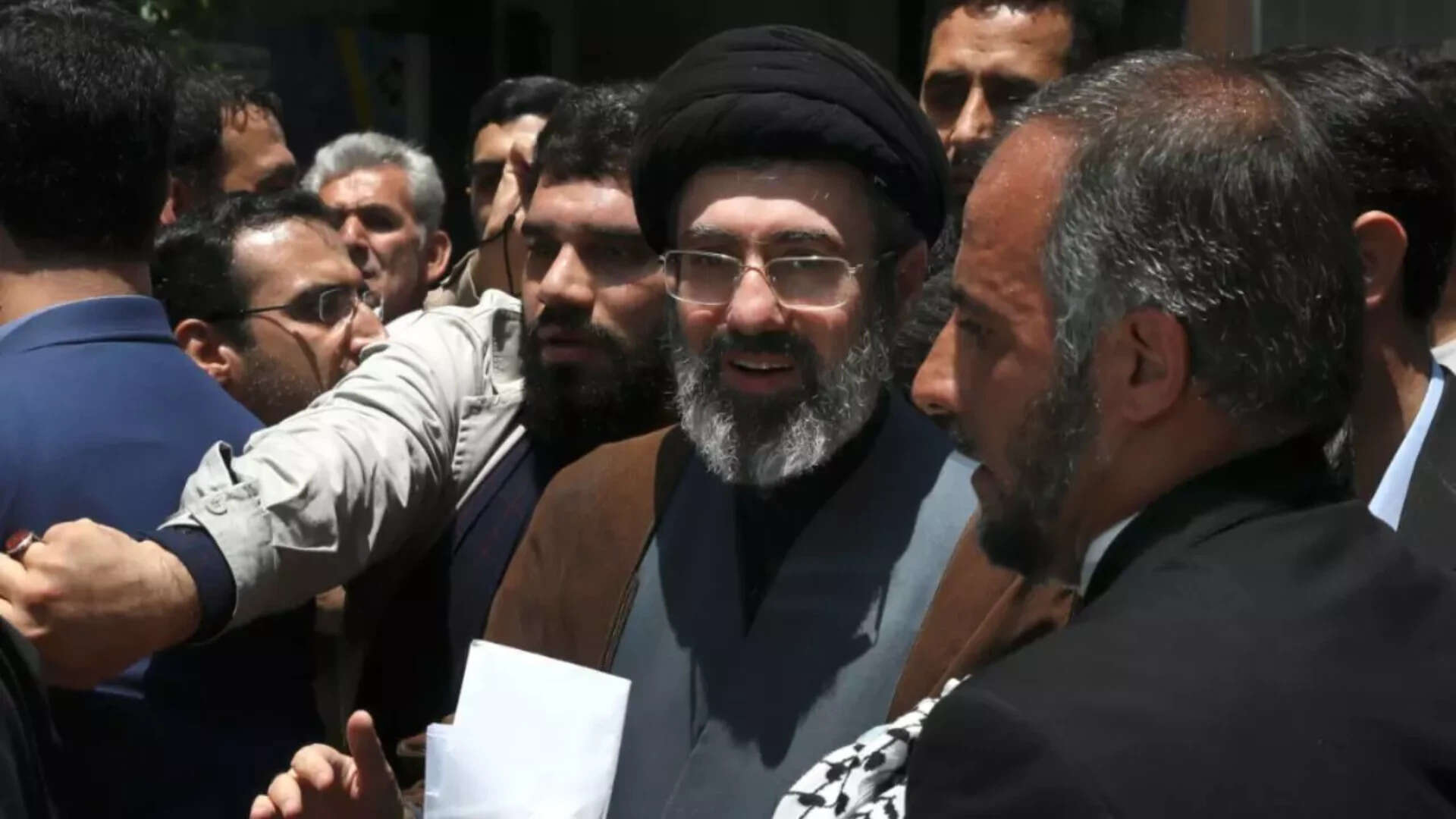
We are taught that power is loud. We expect it to shout from podiums or flex its muscles through military parades. But true, modern power—the kind that survives revolutions and sanctions—is quiet. It is a signature on a shell company document in the British Virgin Islands. It is a deed to a villa in Dubai’s Palm Jumeirah. It is the invisible architecture of an empire built by Mojtaba Khamenei, the second son of Iran’s Supreme Leader.
While the streets of Iran have often been defined by scarcity and the grinding weight of international isolation, a different reality was being constructed abroad. This is not just a story about real estate. It is a story about how the world’s most guarded political elites use the very systems they publicly denounce to anchor their family’s future in the West.
The Paper Fortress
Money is a fluid. It seeks the path of least resistance. When you are the son of a man who sits at the apex of a theocratic state, your money is subject to immense pressure. It cannot stay in local banks; it is too vulnerable to the whims of internal rivals or the eventual collapse of a regime. So, it leaks out.
Imagine a hypothetical accountant in a glass tower in Dubai. Let’s call him Elias. Elias doesn't ask where the wire transfer originated. He only sees the numbers. His job is to make the money "legally" disappear. He creates a company called "Azure Horizon" (a fictional name for a very real process). Azure Horizon is owned by a holding company in Cyprus, which is in turn owned by a trust in the Cayman Islands.
By the time that money reaches a real estate agent in London, it is scrubbed clean. It looks like "international investment."
Through these layers, the Khamenei family has allegedly secured a foothold in the world’s most expensive zip codes. Reports from opposition groups and investigative journalists point to a portfolio that defies the ascetic, humble image the Supreme Leader’s office projects to the Iranian public. We are talking about assets estimated in the billions.
The irony is thick enough to choke on. The rhetoric coming from the pulpit in Tehran decries the "decadent West" and the "Great Satan." Yet, when it comes time to park the family's wealth, they choose the legal protections of British property law and the stability of the Emirati dirham. They want the safety that only a free-market democracy can provide, even as they work to insulate themselves from those same values at home.
The View from the Palm
Dubai is a city built on the audacity of the impossible. It is a place where you can ski indoors while the desert sun bakes the sand to 110 degrees. It is also the world’s favorite safety deposit box.
In the fronds of the Palm Jumeirah, villas sit like ivory monuments against the turquoise water. For Mojtaba Khamenei, these properties represent more than luxury. They are lifeboats. If things go wrong in Tehran—if the delicate balance of power shifts or the streets rise up in a way that can no longer be suppressed—a private jet is a short flight away from a life of uninterrupted comfort.
Consider the human cost of this safety. While these villas sit empty, maintained by a rotating staff of South Asian workers who will never see the inside of the master suite, the average citizen in Mashhad or Tabriz is watching the value of their life savings evaporate.
The Iranian rial has plummeted over the last decade. Inflation isn't just a statistic there; it’s a thief that steals the meat from the table and the medicine from the cabinet. When the currency loses half its value in a year, the person holding rials is ruined. But the person holding a ten-million-dollar villa in London? They have actually grown wealthier. Their "struggle" against the West has been remarkably profitable.
The Invisible Heir
Mojtaba is often described as the gatekeeper. In the labyrinthine halls of Iranian power, he is the one who whispers in the ear of the Supreme Leader. He controls access. He manages the shadowy financial wings of the Setad, an organization that oversees a massive conglomerate of assets seized after the 1979 revolution.
Setad was originally intended to help the poor. Over decades, it morphed into a gargantuan hedge fund for the elite, operating with zero transparency and answerable only to the Supreme Leader’s office.
This is where the expertise of the empire lies. It isn't in manufacturing or innovation. It is in the mastery of the "gray market." It is the ability to navigate the complex web of global sanctions, using middlemen and shadow tankers to sell oil, and then laundering those proceeds into brick and mortar.
It’s a game of shadows. One day, a tanker turns off its transponder in the middle of the ocean. A week later, a luxury apartment in a London skyscraper changes hands. To the casual observer, these two events are unrelated. To those who track the flow of illicit wealth, they are two ends of the same golden thread.
The Psychology of the Hoard
Why does a man who already has absolute power need a mansion in a city he may never visit?
The answer lies in the fundamental insecurity of autocracy. In a democracy, your protection is the law. In a dictatorship, your protection is your proximity to the throne. But thrones are unstable. History is a graveyard of "eternal" leaders who found themselves fleeing with suitcases of cash in the middle of the night.
The global property empire is a psychological hedge. It is the physical manifestation of the phrase "just in case."
But there is a deeper, more cynical layer. By embedding their wealth in the West, these elites create a form of "mutually assured destruction." If the British government moves to seize these assets, they risk exposing the thousands of other shell companies that prop up the London real estate market. The system is designed to be too tangled to unravel without breaking the needle.
The Silence of the Squares
Walk back to that London square. Look at the windows. They are dark.
The tragedy of the "Silent Landlord" isn't just the corruption or the hypocrisy. It is the emptiness. These homes are not lived in. They don't contribute to the community. The local bakery doesn't see these owners; the local schools don't see their children. They are merely "stores of value," like gold bars buried in the ground.
Meanwhile, the Iranian people are told that their suffering is a badge of honor, a necessary sacrifice in a grand geopolitical struggle. They are told that the West is their enemy.
But the deeds don't lie.
The deeds tell us that when the elite look for a place to call home, they don't look toward the East. They don't look toward the revolutionary ideals they preach. They look toward the very streets they claim to despise. They look for the orange glow of a London streetlamp, reflecting off the rain, lighting the way to a front door that was bought with the future of a nation.
The lights are off. The house is empty. But the bill is being paid by millions of people who will never see the view from the balcony.
The empire is not a map of territory. It is a map of exits.
Next time you see a dark window in a wealthy neighborhood, don't wonder who lives there. Wonder who is hiding there.
The silence is the loudest thing about it.