The heavy, chemical mist of an aerosol can is the smell of a summer evening's defense. We spray it on our ankles before a hike, or across the threshold of a kitchen door when an unwanted guest scuttles across the tile. For generations, the moral contract was simple: they are unthinking biological machines. We believed that an insect’s nervous system was a series of simple switches—on or off, stimulus and response—devoid of the messy, internal theater we call suffering.
But a cricket in a laboratory just broke the contract.
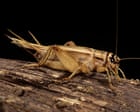
Imagine a small enclosure, sterile and bright. A common house cricket is going about its day when its antenna—a vital sensory organ, essentially its primary window into the world—is injured. In the old world of biology, that cricket should simply keep moving. It should ignore the damage because it lacks the "hardware" for emotional distress or lingering discomfort.
Instead, the cricket stops. It reaches up with its legs. It begins to groom, stroke, and "nurse" the wounded limb with a frantic, repetitive intensity that looks hauntingly familiar.
The Ghost in the Exoskeleton
Scientists at Queen Mary University of London didn't just see a bug twitching. They saw Nociceptive Sensitization.
http://googleusercontent.com/image_content/215
In humans, when you stub your toe, the immediate flash of pain is just the beginning. Your body then enters a state of high alert; the area becomes hypersensitive to protect itself from further harm. We call this "soreness." We thought this required a complex brain, the kind with a neocortex and a heavy emotional processing center. We were wrong.
The crickets in the study didn't just react to the moment of impact. They changed their behavior for a prolonged period, prioritizing the care of the injury over food or mating. They guarded the wound. This suggests that the "pain" wasn't just a reflex. It was an experience.
Consider a hypothetical gardener named Elias. Elias has spent forty years tending to his roses, and for forty years, he has viewed the aphids and beetles as mere glitches in the system. To Elias, crushing a beetle is no different than deleting a line of bad code. But if that beetle possesses the capacity to linger in its hurt—to feel a persistent, throbbing reminder of its mortality—the act of the heel hitting the pavement shifts from maintenance to something much heavier. It shifts into the territory of ethics.
The Anatomy of a Shudder
Why does this matter to someone sitting on their porch, flyswatter in hand? Because the line between "us" and "them" just blurred.
For decades, the scientific community relied on a concept called the "pain-reflex dichotomy." The idea was that insects have nociception—the ability to detect harmful stimuli—but not "pain," which is the subjective, emotional suffering associated with that detection. We told ourselves they were like a smoke alarm. The alarm goes off, but the plastic casing of the alarm doesn't "care" about the heat.
The nursing behavior observed in crickets suggests the alarm is actually screaming.
When the cricket grooms its injured antenna, it is engaging in a self-soothing behavior. This requires a level of integration in the central nervous system that we previously thought was reserved for "higher" animals like dogs, cats, or primates. If a creature that can be crushed by a falling leaf has the internal capacity to feel "sore," our entire approach to the natural world requires a massive recalibration.
The Invisible Stakes of the Kitchen Floor
We are currently living through what some call the "Insect Apocalypse." Biomass is plummeting globally. While we worry about honeybees for their economic value, we rarely stop to consider the individual experience of the trillions of other lives beneath our feet.
The problem isn't just about whether we should use bug spray. It's about the arrogance of our assumptions. We have built a civilization on the belief that consciousness is a ladder, and we are at the very top, looking down at a basement full of empty vessels.
What if the basement is full of feeling?
This isn't a plea for us to never kill a mosquito again. Biology is a brutal business, and the food chain is written in blood. However, the revelation of insect pain introduces the concept of "humane" treatment to a kingdom of life we previously treated as inanimate. If a cricket can feel a sore antenna, then the way we mass-produce insects for food—a rising industry aimed at sustainability—needs to be scrutinized before it even fully begins. We risk creating a factory farming system that dwarfs the suffering of the cattle industry by sheer volume of individuals.
The Weight of a Shadow
Think about the last time you saw a moth circling a flame. We see a mechanical error, a bug confused by artificial light. But if we accept this new research, we have to accept that the moth’s singed wing isn't just a broken part. It's a source of agony.
The researchers found that the crickets’ nursing behavior wasn't just a local reflex. It involved the whole animal. It influenced their decision-making. They became cautious. They became "aware" of their vulnerability.
This sends a shiver through the foundation of how we interact with the outdoors. It makes the world louder. It makes the silence of a dying garden feel less like peace and more like an absence.
We often use the term "bird-brained" or "insect-like" to describe something mindless. We use these labels to distance ourselves from the consequences of our footsteps. But the science is pulling us back, forcing our eyes open, and pointing at the tiny creature nursing its limb in the dirt.
It is easy to care about a whale. It is easy to feel empathy for a mountain gorilla with deep, soulful eyes. It is infinitely harder to extend that grace to a creature with an exoskeleton and a pair of mandibles. Yet, the evidence suggests that the spark of subjective experience—the ability to hurt—doesn't care about the size of the brain or the beauty of the face.
The Shift in the Wind
We are entering an era where our definition of "sentience" is expanding faster than our legal and ethical frameworks can keep up. We are finding that trees communicate through fungal networks, that octopuses dream, and now, that crickets feel the throb of a wound.
This isn't about being "soft." It's about being accurate.
If we pride ourselves on being the most intelligent species, then that intelligence must be used to recognize life in all its forms, even the ones that look like aliens. The next time you see an insect struggling, the "logical" thing to do is no longer to assume it’s a malfunctioning robot. The logical, evidence-based conclusion is that there is a nervous system in there, firing off signals of distress, trying to find a way to make the hurting stop.
The spray can feels a little heavier in the hand now. The kitchen floor feels a little more crowded. We are not alone in our capacity to suffer, and that realization is a bell that cannot be unrung.
The cricket sits in the corner of the lab. It strokes its antenna. It waits for the soreness to fade, a tiny, fragile protagonist in a story we are only just beginning to learn how to read. We are finally starting to hear the scream that has been vibrating through the grass since the beginning of time. It’s not a loud sound, but it is everywhere. Once you know it’s there, you can never truly find the silence again.