The air inside the cleanroom smelled of nothing.
It was a cold, ionized nothingness, scrubbed of every stray particle, every human breath, every trace of the chaotic world outside. Mei stood behind a viewing window, her eyes tracing the amber glow of robotic arms moving with terrifying, inhuman precision. They were picking up silicon wafers thinner than a soap bubble, wafers destined to become the nervous system of modern civilization. In related updates, we also covered: Why Britain Keeps Handing Palantir No Bid Public Contracts.
She looked down at her own hands, gloved in heavy nitrile. She had spent twelve years perfecting the art of packaging these microscopic cities. Twelve years of watching the geopolitical tectonic plates shift beneath her feet.
Mei lived in Penang, an island once known mostly for its spices and beaches, now better known as the Silicon Valley of the East. But today, the hum of her factory floor carried a different resonance. It carried the sound of a new alliance, forged quietly across the South China Sea. Ars Technica has provided coverage on this important topic in extensive detail.
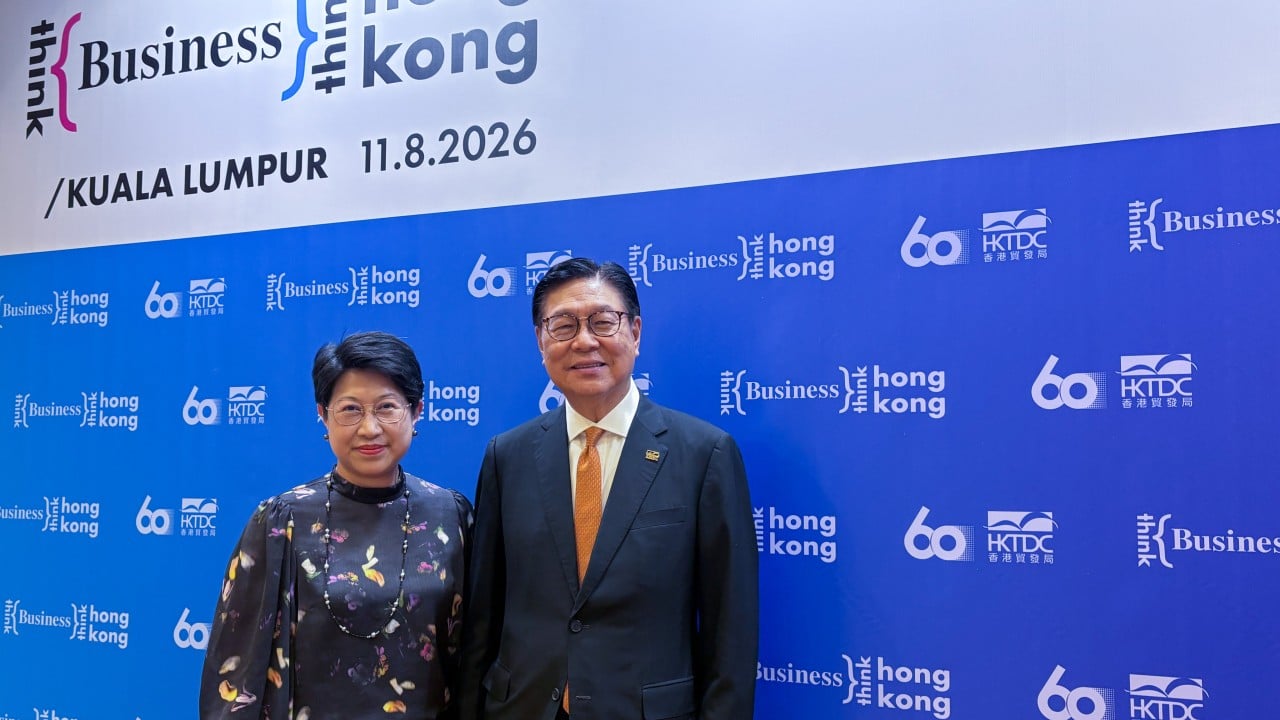
Hong Kong and Malaysia were shaking hands.
To understand why this matters, you have to forget the dry spreadsheets of trade deficits and gross domestic product. You have to look at a grain of sand.
Silicon is everywhere. It is the dirt beneath our feet. Yet, transforming that dirt into a microchip that can calculate trajectories, render photorealistic worlds, or drive a car autonomously is arguably the most complex alchemy humanity has ever attempted. It requires a choreography of precision so absolute that a single speck of dust is a catastrophe.
No single nation owns this process. That is the vulnerability of our modern age.
For decades, the supply chain of technology operated like an invisible clockwork. Design happened in one place, fabrication in another, packaging and testing somewhere else. It was efficient. It was cheap. And it was fragile. When the world fractured, the clockwork jammed.
Mei watched an automated cart glide past, carrying a cassette of wafers. She thought of her counterpart, a engineer named Kenneth, sitting in a high-rise office overlooking Victoria Harbour in Hong Kong. Kenneth did not wear a cleanroom suit. His realm was finance, logistics, and capital allocation. He spent his days staring at Bloomberg terminals, trying to figure out how to fund the next wave of technological infrastructure without crashing against the shores of international trade restrictions.
Hong Kong has capital, legal scaffolding, and deep financial roots that stretch into the heart of mainland China. Malaysia has land, water, decades of entrenched manufacturing muscle, and an ecosystem of test-and-package facilities that few nations can rival.
Separately, they face headwinds. Together, they form a closed circuit.
Consider what happens when capital meets capacity.
In the past, Hong Kong was viewed primarily as a financial tollbooth, a gateway for money entering and leaving China. But as the tech landscape rewrites itself under the pressure of global realignments, Hong Kong is shedding its purely financial skin. It needs real-world anchors. It needs places where things are actually built, tested, and shipped.
Malaysia, meanwhile, has long possessed the brawn of semiconductor assembly. Walk through the Bayan Lepas Free Industrial Zone in Penang, and you hear the clatter of machinery that has been running nearly nonstop since the Carter administration. Yet, Malaysian firms have often hungered for deeper venture capital infusions, high-end research partnerships, and direct conduits to the massive markets of the Greater Bay Area.
The new agreements signed between these two territories are not just bureaucratic handshakes. They are life rafts.
When Hong Kong and Malaysia deepen their ties in semiconductor making, they are building a bypass around the choke points of global trade. They are creating a corridor where financial engineering and physical engineering shake hands.
Let us be honest about the stakes. This is not about smartphones getting faster by five percent. This is about sovereignty. This is about who gets to decide which hospital gets its monitoring equipment, which power grid stays online, and whose economy survives the next global shock.
Mei remembers the panic of 2020. She remembers standing in this very room, staring at empty racks where specialized resins and lead frames were supposed to be sitting. The phones were ringing off the hook. Clients in Detroit, Seoul, and Frankfurt were shouting through the receivers, asking for parts that simply could not be manufactured overnight.
A microchip takes months to build. It passes through dozens of hands across multiple continents. A disruption in Kuala Lumpur ripples straight to a assembly line in Shenzhen. A regulatory shift in Hong Kong sends tremors through the test floors of Penang.
That is why this partnership is different. It is an attempt to shorten the distance between the idea and the silicon.
Imagine, for a moment, a startup in Hong Kong dreaming up a revolutionary AI chip designed to optimize energy grids. In the old world, that startup would face a labyrinth of fragmented contracts, shipping hurdles, and regulatory gray zones just to get their design tested on physical silicon.
Under the new framework, that friction dissolves. The capital flows seamlessly from Hong Kong's financial veins into the physical facilities of Malaysia. The design is transmitted in milliseconds. The packaging is executed by veterans who have spent decades perfecting the microscopic wire bonds that connect the silicon die to the outside world.
It sounds clinical. On paper, it is just policy language about "economic cooperation" and "sectoral integration."
But walk the floor with Mei. Look at the young apprentices standing beside her, kids fresh out of local universities who thought they would have to leave Malaysia to find a career worthy of their intellect. They are not thinking about geopolitics. They are looking at a screen that shows a tiny, flawless grid of transistors, marveling at the fact that they helped build the invisible engine of the twenty-first century.
Technology is often discussed as if it were a disembodied spirit, floating through fiber-optic cables and cloud servers. We talk about code, data, and algorithms as though they require no human sweat.
We are wrong.
Silicon has weight. It has scars. It has the smell of heated resin and the quiet hum of air filtration units that never sleep.
The deepening ties between Hong Kong and Malaysia represent a tacit acknowledgment of this truth. The digital world cannot exist without the physical world, and the physical world cannot survive without trust.
As the shift changes, Mei peels off her nitrile gloves and tosses them into the recycling bin. She walks out of the cleanroom airlock, stepping back into the humid, vibrant heat of Penang. The traffic is thick. The street vendors are firing up their woks, filling the evening air with the scent of garlic and chili.
Thousands of miles away, neon lights are reflecting off the dark waters of Victoria Harbour, where financial analysts are balancing ledgers that will fund tomorrow's factories.
The gap between them is closing. The silicon bridge is holding. And somewhere in the dark, a tiny, perfect square of sand is waking up to change the world.