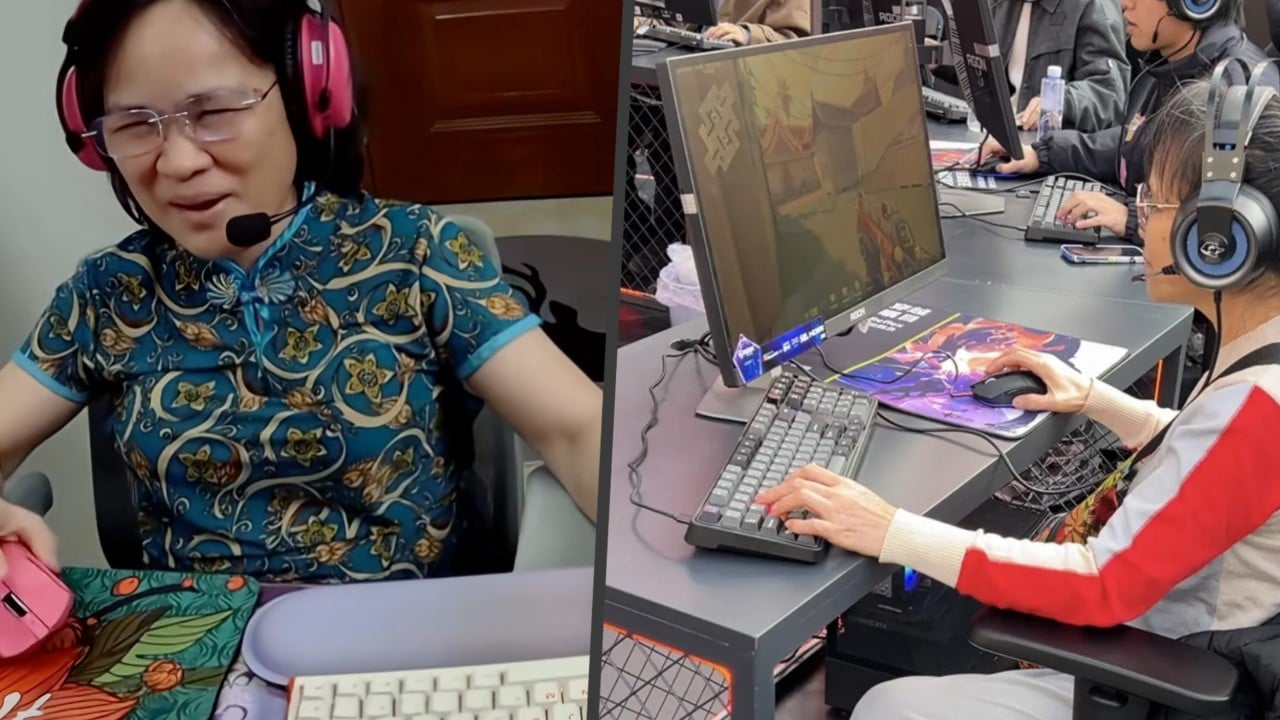
The screen glows in the dark room, casting a cold, blue sheen across wrinkled hands that have spent decades peeling garlic, mending clothes, and cradling grandchildren.
Silence. Then, the rhythmic clack of a mechanical keyboard.
Sixty years old. Most people at sixty are preparing for stillness. They are winding down, stepping back, exchanging the frantic pace of productivity for quiet mornings on the porch and afternoon naps. They are told that the digital world belongs to the young, that the neon-lit arenas of competitive gaming are reserved for lightning-fast reflexes and teenagers fueled by energy drinks.
Then there is Auntie Juan.
She does not fit the mold. Nobody warned the internet that a grandmother from China would pick up a controller, master the chaos of digital battlefields, and quietly amass an audience of 5.27 lakh followers—translating to over half a million digital disciples hanging on her every move.
Consider what happens next: the world looks at her and laughs, assuming it is a novelty act, a fleeting algorithmic glitch. But look closer. Underneath the vibrant streaming overlay and the roaring chat box lies something far more profound than viral fame.
Age is supposed to mean irrelevance. Society has built a quiet conveyor belt designed to herd older adults toward the margins, stripping them of agency, public visibility, and cultural currency. We celebrate youth as the sole custodian of innovation. If you did not grow up with a smartphone glued to your palm, the cultural narrative goes, you are locked out of the future.
Auntie Juan smashed that door off its hinges.
She did not start playing video games to make a statement. She started because the world can be a lonely place when the nest empties. The quiet after children grow up and move away is deafening. The hours stretch out like an unpaved desert.
So, she pressed start.
At first, her thumbs fumbled. The controllers felt foreign, clumsy, entirely unsuited for hands that knew the precise weight of a kitchen knife and the delicate balance of a carrying pole. Every button press was deliberate. Every defeat was absolute.
Yet she stayed.
There is an invisible grit that comes with living six decades through shifting economies, family migrations, and the quiet endurance of daily life. When a teenager rage-quits after three consecutive losses, Auntie Juan simply adjusts her posture, sips her warm water, and queues up again. She has survived far worse than a digital defeat.
That resilience translates on screen. Viewers do not tune in because she possesses the twitch-reflex speed of an esports prodigy. They tune in because she possesses something far rarer in the sterile, hyper-polished ecosystem of modern streaming: authenticity.
She speaks with the cadence of an elder who has seen it all. When her virtual character falls in battle, she does not scream obscenities into the microphone. She chuckles, shakes her head, and offers a gentle piece of wisdom about patience. She treats her chat room like an extension of her living room. Her followers are not just consumers of content; they are digital grandchildren, pulling up virtual chairs to listen to a woman who refuses to fade into the background.
The numbers are staggering. 5.27 lakh followers. Half a million people waking up, opening an app, and deciding that watching a sexagenarian woman navigate digital landscapes matters to them.
Why?
Because we are starving for connection that isn't manufactured by a corporate focus group. We are exhausted by influencers whose lives look like glossy catalogs of unattainable perfection. Auntie Juan represents the antidote. She represents the fierce, quiet rebellion of aging on one's own terms.
Think about the sheer courage it takes to step into a digital arena dominated by youth, where anonymous commenters can be mercilessly cruel. The internet is not always a kind place. Trolls lurk in every chat window, armed with ageist jabs and dismissive sneers.
She ignores them. Or worse for them, she smiles at them with the pitying affection of a grandmother who has dealt with unruly toddlers before.
Her rise forces us to confront our own deep-seated biases about technology and aging. We have compartmentalized our elders, shoving them into passive roles. We expect them to consume culture, never to create it. We design interfaces with giant fonts and call it a day, assuming the digital frontier is too complex for silver hair.
Auntie Juan proves the frontier was never closed. We just built the walls ourselves.
Her streams are a masterclass in cross-generational bridging. In a society fractured by technological divides—where teenagers and grandparents often struggle to find a single shared reference point—she stands in the center. She speaks the language of the modern internet while embodying the timeless values of patience, perseverance, and maternal warmth.
When she logs off, the blue light fades from her face, leaving the warm, familiar shadows of her evening room. The computer hums softly, cooling down from hours of intense processing.
She takes off her headset, rubs her neck, and smiles at the empty room.
The stream has ended, but the echo remains. Half a million people are walking around with a slightly different idea of what sixty is supposed to look like. They are looking at their own parents, their own grandparents, with a new lens of possibility.
The game is still running. The server is always open. And the grandmother with the controller is already planning her next move.